Articles, Events & Reviews, Work that Reconnects (WTR)

Ripples of Remembrance

In Memoriam, Continued

Last month, on 23rd August I had the pleasure to hear more heartfelt stories – and the song below – from some of Joanna Macyโ€™s closest friends and family, in a public remembrance hosted by the Purpose Guide Institute online.

I invite you to have a new look at the In Memoriam page of the Work that Reconnects to read more testimonies and discover or learn more about the founder of the WTR.
https://workthatreconnects.org/joanna-macy-in-memoriam/

It felt intimate and generous to learn more about her from those who knew her most and it also held testimony of the impact of her teachings on everyone.

Far from being as grand as the Dalai Lama, or as austere as her friend Thich Naht Hahn was, she was down to Earth and honest with all her feelings, extremely passionate and not shy of her crazy (we all have it though some of us hide it, right?:-)). Those of us who spiral the Work that Reconnects and who knew her direct or indirectly have laughed and cried at her intense capacity to intensely love every being on the Earth, not always in a โ€˜niceโ€™ way, but always generously.

I am becoming suspicious of guru figures, especially as I am worried lately about the danger oI am quite suspicious of guru figures, especially as I am worried lately about the danger of โ€˜spiritual bypassingโ€™ taking the focus away from the pressing calls of ecocide. We are most adept nowadays to follow the Western dominant culture and therefore to busily create new solutions that may often themselves become part of the problem, following the same old โ€˜business as usualโ€™ growth patterns. We need to continually remember to question why we do what we do, and honestly think what we can do differently, each step of the way in this Great Turning we share.

Joanna Macy, though famous, felt like a simple channel of honest, fierce love. She expressed Life through her own powerful heart-mind and her wise words, yet at the same time she had lost attachment to her body and to her own beliefs, swimming skilfully in what she called โ€œthe collective moral imaginationโ€.

I have only met Joanna Macy once in person in a break out room and in those few minutes I felt that she could โ€˜readโ€™ through me. I think she could read love in all its colours, in all its textures and all its manifestations. She could decipher love when present in humans or โ€˜more than humansโ€™, either in a leaf, or in a song. She could also detect love in the pain that it causes and not only its joys. From the darkest night of the soul, Joanna Macy would be able to bring back the gold. And that is why she said she was sad to leave us – although sometimes she felt like humanity was the captain of a โ€œsinking shipโ€- for she would have loved (wholeheartedly, with both grief and awe) to be a part of the next chapter of humanityโ€™s adventure, as uncertain as the outcome may be.

We hosted a Song that Reconnects Circle in remembrance of Joanna last month on 12th August in Glencairn. It was as always very connecting to open our hearts and voices simulteneously. And this time was specially moving, as we scattered quotes extracted from some of Joanna’s books: World as Lover, World as Self, Widening Circles, Coming Back to Life, Active Hope. I am sharing them hereunder, for your reflection.

These gatherings online and in person, and all the readings I have done lately as I delve into fresh archival memories, have reminded me yet again – as does the writing of this WTR newsletter loyally each month – how affirmed I feel by the depth and the reach of this moving body of work and the people who work it. As diverse as are the constituents of the beloved moving body of Earth. Always looking for ways to reconnect life, to reconnect to life.

by Joanna Tomkins

QUOTES BY JOANNA MACY: (read during Songs that Reconnect, 12th August 2025, Glencairn, Cape Town)

โ€œGratitude for the gift of life is the primary wellspring of all religions, the hallmark of the mystic, the source of all true artโ€ฆ. It is a privilege to be alive in this time when we can choose to take part in the self-healing of our world.โ€:

โ€œIn the face of impermanence and death, it takes courage to love the things of this world and to believe that praising them is our noblest calling.โ€

โ€œGratitude is liberating. It is subversive. It helps us to realize that we are sufficient, and that realization frees us.โ€

โ€œYour pain is the breaking of the shell that encloses your understandingโ€ฆ could you keep your heart in wonder at the daily miraclesโ€ฆ your pain would not seem less wondrous than your joy.โ€

โ€œit is ok for our hearts to be broken over the world. What else are hearts for? Thereโ€™s great intelligence in thatโ€™.

โ€œTruth-telling is like oxygen. It enlivens us. Without it we grow confused and numb. It is also a homecoming, bringing us back to powerful connectionsโ€™

โ€˜The heart that breaks open can contain whole universe..โ€™

โ€œTo see all life as holy rescues us from loneliness and the sense of futility that comes with isolation. The sacred becomes part of every encounter when you open to it and let it receive your full attention.โ€ โ€“ in World as Lover, World as Self

โ€œO you who will walk this Earth when we are gone, stir us awake. Behold through our eyes the beauty of this world. Let us feel your breath in our lungs, your cry in our throat. Let us see you in the poor, the homeless, the sick.

Haunt us with your hunger, hound us with your claims, that we may honor the life that links us.

You have as yet no faces we can see, no names we can say. But we need only hold you in our mind, and you teach us patience. You attune us to measures of time where healing can happen, where soil and souls can mend.

You reveal courage within us we had not suspected, love we had not owned.

O you who come after, help us remember: we are your ancestors. Fill us with gladness for the work that must be done.”

โ€” in Widening Circles

โ€œThe future is not in front of us, itโ€™s within us.โ€

โ€œBy inviting in these experiences of interconnectedness we can enhance our sense of belonging to our world. This mode of being widens and deepens our sense of who we are.โ€

โ€œYou donโ€™t need to do everything. Do what calls your heart; effective action comes from love. It is unstoppable, and it is enough.โ€

โ€œIf the world is to be healed through human efforts, I am convinced it will be by ordinary people, people whose love for this life is even greater than their fear.โ€

Community of Practice (CoP), Extracts from Active Hope, Practices, Resources & Networks, Uncategorized

Seeing with New and Ancient Eyes Home Practice: Listening to our World

Adapting the words of Active Hope facilitator Madeleine Young

Choose – or create – a space that you can repeatedly go to – a place where you can be quiet and receptive and listen to the world. Ideally this will be a spot in Nature, but it is more important that it is a place that is easily visitable by you, and it is entirely possible to create your โ€˜Nature spotโ€™ inside your home. Make it somewhere that you feel safe and can relax.


There are many ways to refer to this place – it could be your listening spot, your Nature spot, your Gaia spot, your sit-spot, or whatever feels right for you. This is your place to acknowledge the greater whole that you are a part of.
Set aside an amount of time that you are going to spend at your spot. We suggest starting small, to make it achievable that you spend time there each day.
Each time you arrive at your spot, relax, breathe, feel yourself in your body, and practice
engaging your senses – look, listen, feel, smell (possibly even taste, if you have chosen a spot where edible things are growing!) – be receptive to all the details.
If you feel fidgety or unsettled at first, or your mind is full of thoughts, just observe this, without judgement, and keep gently bringing yourself back into your senses. This practice is about building up receptivity and relationship over time and not about seeking to come too readily to clarity.
Whilst at your spot, you could try slowing your movements right down, as this is a great way to signify to yourself that this is a space outside of your everyday. Allow yourself to be playful – let your imagination be wide open, like a satellite dish, and let your critical rational mind take a back seat while you are here. As much as you can, let go of expectations, as communication from the greater whole may come in unexpected ways.


Let your relationship with your spot develop over time – returning as regularly as you can. Just as with any relationship, you will need to get to know each other first and may start off โ€˜making small talkโ€™ – with invested time together, your intimacy will begin to deepen. This practice is all about making ourselves available, being quiet, and listening.
If it feels useful, you could try out sentence starters, like these, while listening at your spot:
If our world could speak to me, what it might say isโ€ฆ
If the collective intelligence of our world were to guide me, what it might invite me to consider isโ€ฆ


Personal Reflection
There is the doing of this practice – actually turning up, repeatedly, at your spot – but, also, thereโ€™s a potential for reflection on the practice, enabling any guidance to ripple out by exploring it further in different ways.
Journaling, drawing or doodling, can be a great tool here – either whilst at your spot, or after. Let your hand take over and create whatever feels to come without overthinking it- colours, or mandalas can be particularly powerful to play with.


Background
The โ€œListening to Our Worldโ€ practice is situated within the third stage (or station) of the spiral of โ€œthe Work that Reconnectsโ€. In the first stage, we developed strong roots through experiencing and expressing our gratitude and appreciation for life. One aspect of experiencing such appreciation is a deeper knowing of our interconnectedness. This knowing is deepened further still in stage 2 of the Spiral of the WTR, when we honour our pain for the world – welcoming it as a sign of our ability to feel with this world – a world that we are an integral part of.
This third stage: โ€˜Seeing with New and Ancient Eyesโ€™, is all about inviting in a fresh perspective. In a way, by experiencing this integrated nature of our human experience, we have already been โ€˜seeing with new (and ancient) eyesโ€™. Living with an awareness of our interconnectedness is a radical shift in perspective from the separate view of ourselves that is encouraged within โ€˜business as usualโ€™. As we step into stage 3 of the spiral, we are deepening this shift in perspective.
In this practice, we are encouraged to begin to dedicate some time and space, within our daily lives, to receive guidance. This is based on an understanding that we are part of a complex living system and that there will be aspects of this system that may wish to emerge through us. By โ€˜listening to our worldโ€™ we begin relating to Nature, like a good family member – acknowledging our belonging, and cultivating an understanding of it by just being quiet and letting insights
surface.

Articles, Legal Rights, Work that Reconnects (WTR)

African Animist Antidotes

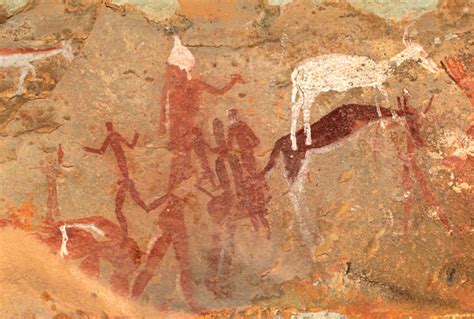
In animist traditions, such as those practiced by the Khoisan or the Xhosa for example, who settled and prayed on this Southern tip of Africa I inhabit, nature is viewed as animated and alive with spirit. Every river, tree, animal, and mountain has life-force and agency. Humans are not separate from nature; rather, they exist in a reciprocal relationship with it, shaped by mutual respect, responsibility, and acknowledgment of interconnectedness. This worldview supports practices that honour the Earth, such as rituals to ask permission from the spirits of plants and animals before hunting or harvesting, ensuring balance and respect for all forms of life.

Spirituality and respect for ancestors also play a vital role in Southern African animism. Ancestors are seen as mediators between the human world and the natural world, guiding and protecting their descendants. Through ceremony, people maintain relationships with ancestors, believing that their wisdom and presence can provide insights, blessings, and protection. In these ways, animism emphasises a holistic understanding of existence where spiritual, social, and ecological health are inseparable.

“The term animism was coined by an early anthropologist, Edward Burnett Tylor, in 1870. Tylor argued that Darwinโ€™s ideas of evolution could be applied to human societies; he classified religions according to their level of development.

He defined animism as a belief in souls: the existence of human souls after death, but also the belief that entities Western perspectives deemed inanimate, like water, rocks and trees, and plants had souls.

Animism was, in Tylorโ€™s view, the first stage in the evolution of religion, which developed from animism to polytheism and then to monotheism, which was the most โ€œcivilizedโ€ form of religion. From this perspective, animism was the most primitive kind of religion, while European, Protestant Christianity was seen as the most evolved of all religions.” [1]

By embracing animist traditions, without claiming they pertain to any particular religion, which tends to create polarity, we can contribute to revalorise them, overcoming these old colonial judgements of inferiority. As this worldview gets adopted more widely, we become more free to embrace gratitude for natureโ€™s abundance and reinforce our right to connect to the environment and cultivate respect, without being judged. Animist beliefs are at the core of our humanity and do not contradict the alignment with any particular religion.

Our Western religious dominion theologies gave humans โ€“ first through Adam and Eve for example โ€“ dominion over the Earth. They set up a dichotomy between inanimate matter and animate spirit that lifts humans above creation and turns the rest of the world โ€“ from animals and plants to soil and water โ€“ into โ€œresourcesโ€ to be used. Unfortunately this vision has given shape to the Business as Usual story we participate in today.

By shifting perception from an isolated, human-centered worldview to one that honors the spirit within all living things, we can access a deeper, animist-inspired understanding of interdependence. This expanded awareness fosters empathy, reverence, and responsibility toward the natural world.

The Work That Reconnects invites individuals to cultivate a similar reverence and sense of kinship with the Earth. Rooted in systems thinking and inspired by Buddhist concepts of interconnectedness, Joanna Macyโ€™s work incorporates animist traditions in its recognition of the living, interconnected nature of existence. It seeks to restore relationships between individuals, communities, and the more-than-human world, helping people to heal disconnections and remember their place within the larger ecological web.

“Animism is not a religion one can convert to but rather a label used for worldviews and practices that acknowledge relationships between nature and the animal world that have power over humans and must be respected.

These practices […] can also be forms of environmental care, farming practices or protests, such as those conducted by water protectors [around the world]. New Zealandโ€™s 2017 act recognizing the Whanganui River as a legal person, the culmination of decades of Maori activism, could be described as animism taking a legal form.

Animist practices are as variable as the peoples and places engaging in such relationships.” [1]


[1]Justine Buck Quijada for theconversation.com

Articles, Uncategorized

‘The heart that breaks open can contain the whole universe.’

By Joanna Tomkins

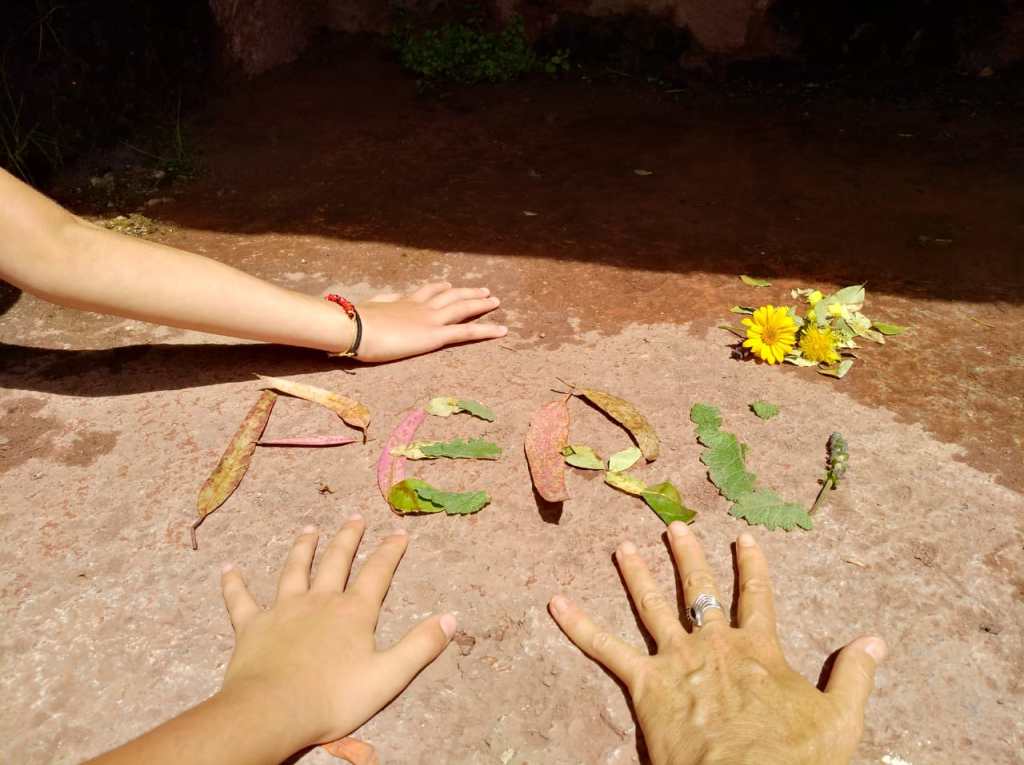
Today we took yet another ‘combi’, this time from Chinchero, our last stop in Peru, where my kids and I have spent 5 weeks, during our visit to South America.

I feel my heart breaking during the ride. It’s not a bad feeling at all, it’s a feeling of openness, a sensitivity around the heart. I will miss these trips in public transport. These trips in public. It’s been very useful for me to speak Spanish, but I know that the warmth of these intimate connections of people on the go, together, would have melted any language barrier.

A very old man, with a cane, hails the bus.
‘Necesita ayuda’, he needs help, a lady says from behind. One lady bends over to open the door, I bend over to help him up by his other blackened hand, immediately enveloped by the scents of boiled corn cobs and infinite layers of wood smoke. I remember entering a Himba hut. He asks me if we are at ‘la terminal’ a few times and I help to prop him up when he slips on the seat in the abrupt Andean bends in the road. He sips on the ‘chicha morada’ (black corn fermented drink) he brought for the ride in an ancient 20cl Inka Cola bottle, reused time and time again.

‘Gracias Mamita!’โ€ฆ He trusts me like his daughter. When we all get off in Cusco he can’t find his money, and remembers he forgot to remember his other bag. ‘Pago para los cuatro’ I say as my kids slip out from the front row, where they had found two free seats. It seems natural to all. And we drift off in between the busy Saturday market stalls.

I wonder if he remembers where he is going. I wonder who will help him find his way home today. I wonder when he lost his wife. I wonder who will take care of him, when his eyesight and his memory get worse, yet I know there will be care for him, for there is community. 

Nowadays, my heart breaks open in a similar way when it feels sorrow and when it feels joy. Sorrow feels like gladness when there exists a non dual sense of greatness that binds them both together. That I have felt strongly here in the Andean mountains and the creases of the Sacred Valley: the greatness of the mountains, revered for their divinity, named Apus. And how men can ‘move mountains’ when led by a vast and sacred sense of purpose. This purpose was driven for the Incas by their trust in their kings and leaders, trust in their elders, trust in the nature gods, and trust in themselves. I quote Robert Bly, whose book ‘Iron John’ I took on travel: ‘The inner King is the one in us who knows what we want to do for the rest of our lives, or the rest of the month, or the rest of the day.’ 

Each stone in the Incan temples in Peru is a masterpiece. Some of them weigh several tons (one in the Sacsayhuaman -pronounce ‘sexy woman’- weighs 125 tons!) and have been quarried several kilometres away. It is a miracle of human will power that we can admire here today. The Spanish used these works of art as convenient bricks for their monotheist humancentric churches, with the added excuse of ‘extirping idolatry’ from the minds and hearts of the invaded. But they could not move the greater of the stones!

Some of the original Incan pieces have up to 20 different angles that are adjusted without mortar to the next stones, forming a mosaic that not only is creatively diverse in its assembly but also has the perfect structure to resist the earthquakes that the dramatic Pachamama bestows upon this region every few decades. Archaeological prowess is everywhere: in the exact inclination of each temple wall, the drainage of each terrace, the elaboration of door hinges and jambs so that each element collaborates with the others to defy the tricks of gods.

What I have felt all around in the communities that inhabit the Andes is a great sense of belonging, deeper than the Western scattered, individual pursuit of purposefulness. What wisdom the atrocious conquests tried to eradicate is still alive with roots as deep as the mountains are high. Quechuan sounds powerful, indigenous rhythms transpire in the musicโ€ฆ, there is no legacy from Spain that has not been blended and sublimed with Incan heritage, more ancient, seeped with spirit, hence more coherent.

And what makes more sense than to revere the nature gods, Inti/Sun the highest of all? And what is more kingly than to present them with the gift of a lifetime of labour? These walls were not built for oneself, for one’s own, they were built for the generations to come, for the Empire, for the Sun itself. Imagine how many lives communed to place each Intipuntu/Sun gate in the exact position where Sun can kiss through it at the exact hour that honours Him?

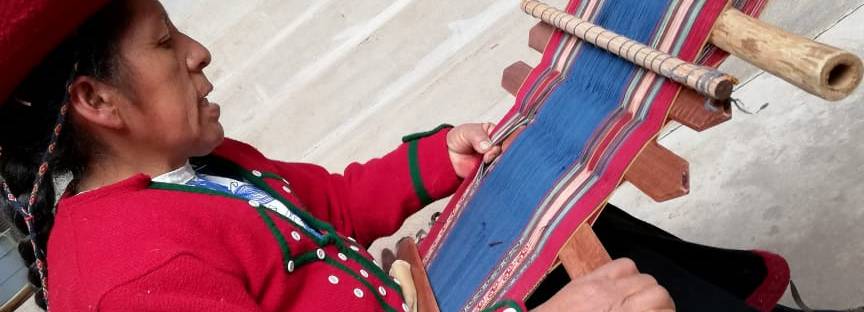
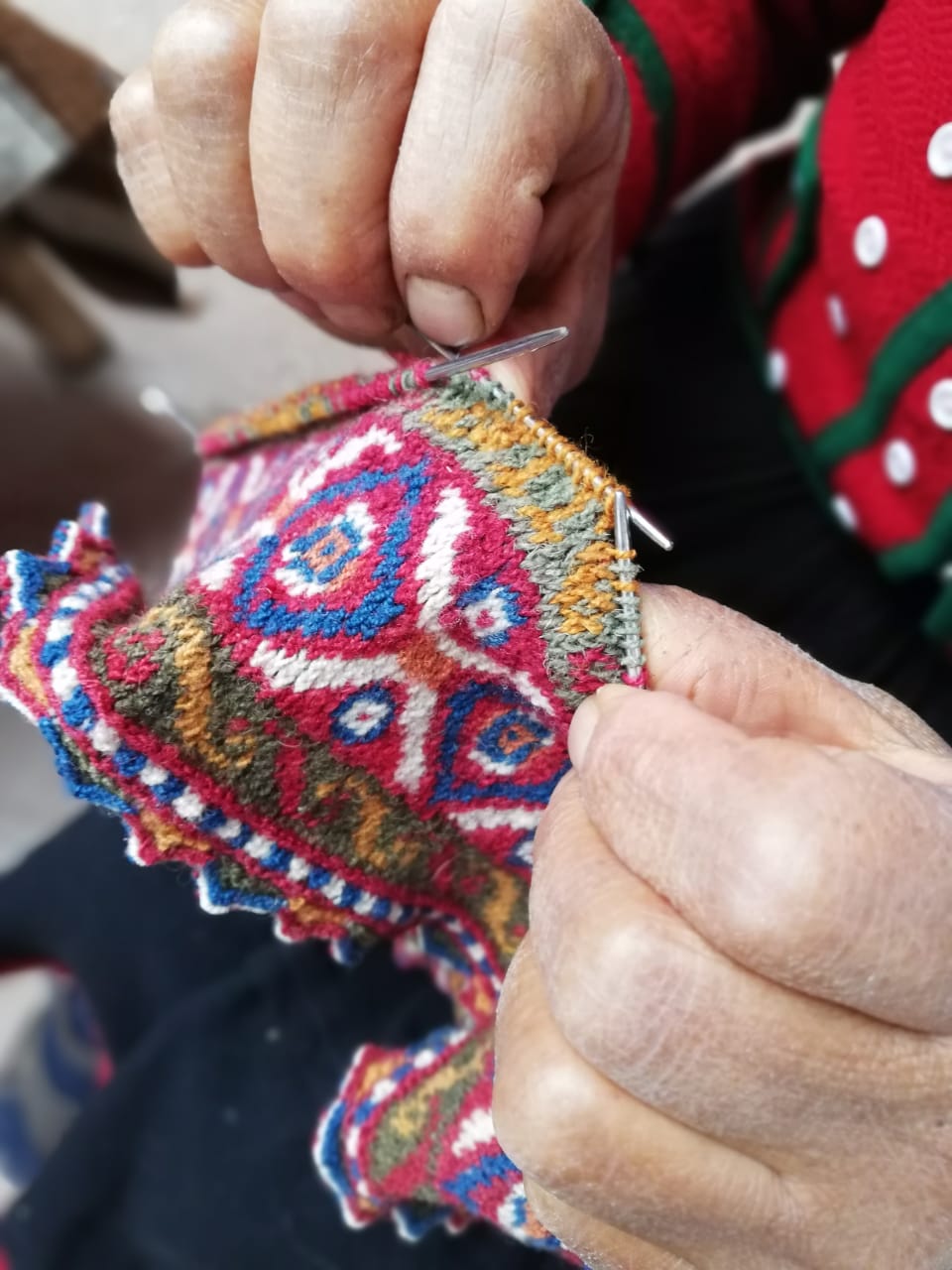
Yesterday we watched Mama Sonia weave, the inner King in her thumbs knowing which string to move next, which colour to represent her tribe, which shape to represent her land. The tradition of weaving withholds the passing of time in the communities of Chinchero, young women still queuing to learn from the elders the traditional ways, fully aware of the privilege of their culture.

In different ways, this witnessing breaks my heart.

The heart that breaks open can contain the whole universe.

A Quote by Joanna Macy
Articles, Poems, Resources & Networks, Uncategorized

The Empty Bowl and the Alchemy of Uncertainty

by Barbara Ford

To listen to this article read by the author, please visit the Deep Times Journal where it was originally published last year: https://journal.workthatreconnects.org/2023/09/02/the-empty-bowl-and-the-alchemy-of-uncertainty/

Last year, I had the great good luck to visit my beloved friend and teacher, Joanna Macy, a brilliant elder of our time. We spent the afternoon together, catching up on family and news in the dappled sunshine in her backyard. Ukraine was on her mind. She traveled throughout Russia after the Chernobyl nuclear disaster in 1986 and had dedicated herself to supporting the communities there as they coped with the physical, emotional, and cultural injuries of that event. (As an aside, some communities there are still using Geiger counters to find the least radioactive spots in their environs, so that they can plant gardens and guard the children from the ongoing threat of exposure as toxic particles move with the wind and the dust.)

At some point after this deep and thoroughly unvarnished conversation about the state of the world, she looked up into the tree branches above us, newly opening buds filtering the sunlight, turned to me smiling widely and said, โ€œI am so grateful to be alive at this moment in history!โ€

how to stay present in the face of those reckonings, and the unavoidable truth of uncertainty as our constant companion on the journey. 

This is not uncharacteristic of her, to be honest, but I was sitting with a kind of stunned awe, again, at this person who, while willing to stare deeply into the abyss of the pain of the world, still found herself in this place of deep gratitude. That statement, and that moment, reminded me of all the times over the years she talked about the reckonings our world was bound for, the tumult of fires, literal and cultural, that threaten our world. Her work, and mine, is largely centered on how to stay present in the face of those reckonings, and the unavoidable truth of uncertainty as our constant companion on the journey. 

In the Work That Reconnects, a body of practices developed by Joanna, there is one practice called the Truth Mandala, or Circle of Truth. Within a circle of witnesses, a person enters and interacts with objects symbolic of emotional states that might arise in confronting oneโ€™s pain for the world. For example, a pile of dead leaves symbolizes grief. A large stick, tightly held, symbolizes anger. One of the objects I have a great resonance with is an empty bowl, which is connected to confusion, uncertainty, numbness. Each object has a correlating quality to each emotional state. Grief is connected to love. Anger, to oneโ€™s passion for justice. The emptiness in the bowl makes a space for the new to arise.

That empty space is a kind of scrying bowl, a place to seek new meanings, new ways of being with the unknown.

For me, the empty bowl has been a deeply meaningful image in my life and creative work. It comes up in dreams, in paintings, in poetry. That empty space is a kind of scrying bowl, a place to seek new meanings, new ways of being with the unknown. As such, the bowl becomes the container of process that helps transform my struggles with uncertainty and reclaim qualities that are born out of that alchemy.

Iโ€™ve been a climate activist for over twenty years now, and the climate crisis has been a difficult but important teacher in this endeavor. We are still learning so much along the way, including how the climate crisis intersects with so many other crises of the human and more-than human world. As more and more communities start to experience, first-hand, the unprecedented changes in climate phenomena, more of us are faced with a deep uncertainty about everything: Where can we live, safely? What will our children have to contend with? What is worth focusing on? And, lastly, is there a future at all?

Climate futurist Alex Steffen is a voice Iโ€™ve come to appreciate in this moment. He writes, 

โ€ฆthe planetary crisis ainโ€™t the Apocalypse. We do not face the End of Everything. We face the obliteration of our certainties, sure. We also face the destruction of many of the wonders of nature. And we face the reality that for billions of people, life will feel pretty damned apocalyptic, even as humanity as a whole staggers along. We live now in a trans-apocalyptic world. (1)

I need to breathe here, as I write. To breathe, and to also mention that the word โ€œapocalypseโ€ does not mean the end of everything, but, in fact, comes from the Greek words that mean โ€œto uncover or reveal.โ€

So much is being revealed.

The truth is, whole communities of people have gone through some version of apocalypse

All the cultural crises of our timeโ€“climate chaos, fascism, racism, inequalityโ€“have deep roots in time, and in consciousness. The truth is, whole communities of people have gone through some version of apocalypse, whether it is the genocide of Native American communities, the enslavement of African people, or the Holocaust. Worlds have ended, if not the world. The results of colonization and domination cultures have spread to the entire planet. While some communities are disproportionately affected, whatโ€™s new is that, now, all people, species, landscapes, and living systems are threatened by the effects of the mindset that put climate chaos into motion.

Alex goes on to say:

Itโ€™s important to live when we are. Being native to now, I think, is our deepest responsibilityโ€ฆ being at home in the world we actually inhabit means refusing to consign ourselves to living in the ruins of continuity, but instead realizing we live in the rising foundations of a future that actually works. It may be a fierce, wild, unrecognizable future, but that doesnโ€™t mean itโ€™s a broken future. Indeed, itโ€™s the present thatโ€™s broken beyond redemption. (1)

 Itโ€™s not that our future is broken, but our present. And, if enough people find a way to offer themselves to this present brokenness, a viable, less broken, and more just future might be built.

Nothing has ever been certain, actually. Crops fail. Health fails. Accidents happen. This has always been true. Joanna Macy says this: 

I know weโ€™re not sure how the story will end.  I want so much to feel sure. I want to be able to tell peopleโ€ฆitโ€™s going to be alright.โ€ And I realize  that wouldnโ€™t be doing anybody a favor. First of all, we canโ€™t know. But secondly, ifโ€ฆ we could be given a pill to be convinced, โ€œdonโ€™t worry, itโ€™s going to be okayโ€, would that elicit from us our greatest creativity and courage? No. Itโ€™s that knife edge of uncertainty where we come alive to our greatest power. (2)

We all have different lived experiences of uncertainty, and varied capacities to cope. People are facing houselessness, disability, family difficulties, oppression. Iโ€™m not here to tell anyone how they should be strong in any adversity. However, some folks might find comfort in the exploration of ways to navigate these times.

Letโ€™s talk about the connection between uncertainty and creativity, for example. The writer Meg Wheatley says that we canโ€™t be creative if we refuse to be confused. She states: โ€œChange always starts with confusion; cherished interpretations must dissolve to make way for whatโ€™s new. Great ideas and inventions miraculously appear in the space of not knowing.โ€ (3)

Fire bowl by Barbara Ford

Artists of all kinds have always known this. The very act of creating is dependent in a large part on opening to possibility, to emergence, to unpredictable discoveries.  As an artist and a poet, I find that the best work is born out of not knowing what the hell Iโ€™m doing, honestly. I continue to struggle with the process. Itโ€™s not an easy path. It is humbling and sometimes disorienting. At the same time, when something unexpected and wonderful arises, it feels like I have been a vessel for some other, larger truth teller. Call it Muse, or God, or Trickster, it is a feeling of deep connection.

One creative practice Iโ€™ve tried is improvisational singing. Thatโ€™s when you literally open your mouth and sing sounds or words and you donโ€™t know what they will be until they are sung. In the beginning, I was afraid- of sounding bad, of getting it wrong, even of being boring. But the truth is, the more you just throw yourself out there, risking shame and oblivion, there are moments of clarity and communion between all the so-called โ€œbadโ€ notes. The power of those moments can eclipse the fear of failure.

two of the gifts of uncertainty are artistry and emergence, the empty bowl that holds all that can be born

So, I posit that two of the gifts of uncertainty are artistry and emergence, the empty bowl that holds all that can be born. Releasing ourselves from โ€œneeding to knowโ€ in order to act can lead us through a portal to the mystery, a sometimes messy, divine truth.

And, as you might imagine, this portal also can lead to wonder. What is wonder, after all, but a kind of beautiful, embodied acknowledgement of the workings of mystery? The fact of a sunset isnโ€™t what makes us wonder. The confluence of color, space, the moment as it meets our open heart is where wonder arises.

Another gift of uncertainty is honesty. Many of us have grown up with a bias towards facts over truth. Our educational systems reward the learning of facts, sometimes more than the gifts of curiosity and wonder. If more of us were taught the valuable skill of honoring what we donโ€™t know, of being okay with the vulnerability of that stance, I think our capacity for rich and honest relationships, for experimentation, for creativity, would grow our hearts and communities in some lovely ways. 

Ironically, if we were honest about our not-knowing, we would be more in touch with our own truth and the truth of others.

Right now, around the world, there is a growing tide of fascism. Fascism, in effect, is a kind of evil sureness of oneโ€™s right to absolute power over a populace and the planet. We watch in horror as Russia invades Ukraine. We see in the United States actions by politicians and plutocrats asserting similar ideals. This kind of toxic certainty, coupled with a disdain for empathy and mutuality, is at the heart of so much unnecessary pain and destruction. It is the antithesis of justice. It is the antithesis of care.

The ones who embrace uncertainty are the ones who, through their vulnerability, reap the twin gifts of humility and empathy.

The ones who embrace uncertainty are the ones who, through their vulnerability, reap the twin gifts of humility and empathy. Humility reminds us of what we still need to learn, and what to unlearn. It softens our armor, our resistance to change the parts of ourselves who, unknowingly, have learned habits and assumptions that perpetrate harm. Hereโ€™s one example from my life: As a white person striving to unlearn the racism I absorbed growing up, I strive to read and learn as much as I can about racism. However, it has taken some experiences that broke me a little, interactions and truth-telling that brought me into a deeper conversation with my humility. At first it was difficult. I resisted. I was attached to my innocence. When, over time, I became more comfortable with not-knowing, and less attached to protecting myself, I found myself better able to learn, more grateful for the learning. Itโ€™s definitely an ongoing journey, but one, now, I value as some of the deepest learning of my life.

Humility and empathy dwell together. They both depend on focusing outside of the self, on the willingness to see and honor other viewpoints. Both remind us of our true belonging to each other and the world, and of the pointlessness of perfection. Both are born out of an acceptance of the uncertainties we all face, and the truth that we need each other to face and navigate them together.

The writer Rebecca Solnit has made it her business to address ideas of hope, courage, and what she calls โ€œradical uncertaintyโ€. Her book, Hope in the Dark, is essential reading. She writes:

Hope locates itself in the premise that we donโ€™t know what will happen and that in the spaciousness of uncertainty is room to act. When you recognize uncertainty, you recognize that you may be able to influence the outcomes โ€“ you alone or you in concert with a few dozen or several million others. Hope is an embrace of the unknown and the unknowable, an alternative to the certainty of both optimists and pessimists. Optimists think it will all be fine without our involvement; pessimists adopt the opposite position; both excuse themselves from acting. (4)

Did you notice how she links uncertainty with possibility? And how she links certainty, in either direction, as a potential limitation to take action in the world?

โ€œWho shall I be, no matter what?โ€

As a result of this kind of inquiry, my deepest question right now as an activist, and, indeed, just as an individual, is โ€œWho shall I be, no matter what?โ€ It releases me from the false binary choice of success or failure. What is courage, after all, but the heartโ€™s strong dance forward in the face of uncertainty? In fact, uncertainty is a parent of courage, and the sibling of hope. Not a passive, waiting kind of hope, but an active hope that compels us toward the future with agency and love.

Hereโ€™s another quote from Rebecca that I hold dear:

Hope is not a lottery ticket you can sit on the sofa and clutch, feeling lucky. It is an axe you break down doors with in an emergency. Hope should shove you out the door, because it will take everything you have to steer the future away from endless war, from the annihilation of the earthโ€™s treasures and the grinding down of the poor and marginalโ€ฆ To hope is to give yourself to the future โ€“ and that commitment to the future is what makes the present inhabitable. (4)

Creativity. Vulnerability. Honesty. Humility. Empathy. Courage. Hope.  May these alchemical qualities guide us into the complicated and tumultuous future, and may we find joy in the company of brave, artful, and loving friends in the journey.

Song for the Empty Bowl

we fill the emptiness with stones
with firewith memory and bones
with fury songs and quiet poems
and prayers for all the quiet ones

this emptiness can hold a drum
a knife, a seed, a place to hide
but mostly what I fear has come
a bowl of tearsa rising tide

uncertainty is my lament
my prayermy homemy quiet friend
the spells of all the breaths we hold
the songs unsung, the tales untold

to find this dance, to sing this song
an ancient sphere, to waltz upon
this empty bowl, my deep unknown
my curve of grace, my silent koan


References:

  1. Steffen, A.,โ€We All Live in California Now,โ€ essay at:   https://alexsteffen.substack.com/p/we-all-live-in-california-now. June 10, 2022.
  2. Macy, J., interview Joanna Macy and the Great Turning in film by Christopher Landry, 2016.
  3. Wheatley, M. J., Turning to One Another, Berrett-Koehler Publishers Inc., 2009, p.45.
  4. Solnit, R., Hope in the Dark: Untold Histories, Wild Possibilities, Haymarket Books, Chicago IL, 2016.


Barbara Ford is a longtime WTR facilitator, artist, writer, and activist living in Portland, Oregon. She has been active in the climate justice movement for over twenty years as an arts organizer, as well as supporting the activist community with WTR inspired events to grow a culture of self and community care. She has created the Radical Gratitude model for expanding our ideas about gratitude, and is offering new writings in her Substack newsletter called Cultural Artisanship in a Changing World (https://barbaraford.substack.com). 

Check out Barbara’s new artist website at:
www.confluence-arts.net
Articles, Events & Reviews, Uncategorized

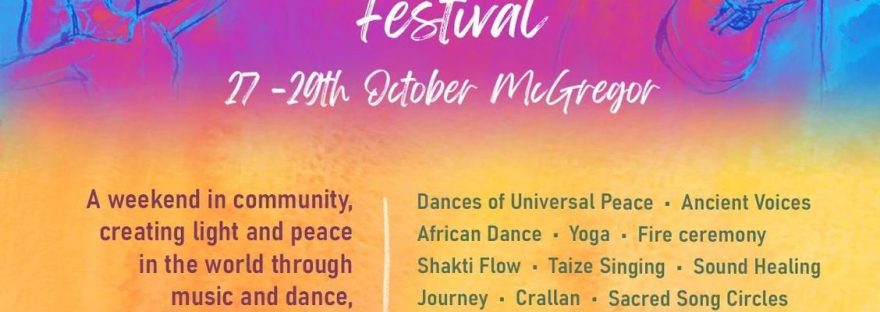
SAMAD 2023 – The Sacred Music and Dance Festival in McGregor last week

Here are a few images of the Sacred Music and Dance Festival that Gaia Speaking took part in last week. Participants and facilitators danced and sang, shared movement, poems and prayers, and all came together in a multicoloured multifaceted work of art and soul. It was truly a pleasure to be a part of this co-creation.

The festival, which was born out of a deep love for music, spirituality, humanity, and a reverence for all of life, is non profit and is held in McGregor, a village nestled in the Klein Karoo, 2 to 3 hours from Cape Town. It is a great setting for this festival, where the events are held in two exceptional venues: Temenos – a retreat centre and absolute treasure embraced by the Gardens of the Beloved – and the Wisdom School, at slow walking distance, housed in historical buildings, which have been carefully and tastefully restored.

It was nice to amble around the village and enjoy its scattered and quaint coffee shops and restaurants and then a little bit strange to watch rugby on Saturday night, for the World Cup final that South Africa won.

Rachael and I participated in the opening ritual around the fire, which ended at dusk with a performance from the Zolani choir from Ashton.

Wisdom School Courtyard above and Hall below

Both our Songs that Reconnect circles felt very resonant with the vision of the festival. They were were both held at Temenos, First in the Caritas Library, surrounded by the wealth of knowledge contained in thousands of spiritual books, and then at the very special venue called “The Well”. We are grateful for our participation in SAMAD for many reasons and in particular because we felt a lot of connection with the embodied forms of the Work that Reconnects that Rachael and I practice.

We celebrated and strengthened with powerful songs Coming From Gratitude into the Spiral, the soft sound of sacred water reminding us of the essence of impermanence and flow. At the Well itself, in the centre of the temple, we facilitated the ritual of the Bowl of Tears as we sang the soft chant “Rivers of Tears” to Honour our Pain for the World. Seeing with New Eyes and Going Forth around the Spiral, we sang and danced a little and we shared some words of reconnection too. It is always an honour to provide these offerings inspired by the Work that Reconnects, in our own particular style, and this festival and these venues were very auspicious places to do so. All our events and all those that I had the privilege to participate in were so unique and filled my heart with a sense of appreciation of community. I felt an upsurge of energy and gratitude for all the gifts that we carry and how this fosters in me hope for a more beautiful world for all. Thank you.

As we come together to sing and dance in this way, through sound, movement, meditation and consciousness, we touch something deeply within our beings. In such moments it is the soul which is dancing. In those rare moments of recognising that it is that great Love which is present behind all that exists, one experiences a kind of ecstasy. So it is with the experience of sacred music and dance that brings us back to the unity of community, the unity of being.

This festival is a celebration of all spiritual paths. The time we find ourselves in at present reveals that there is a greater need than ever before to find common ground, to unite and bring peace to the world. By coming together we can learn about, open to, and sing and dance the unity of creation, while respecting and honouring each unique spiritual path toward the One. This is a journey of creativity and joy.

Harold Epstein

If you want to join next year’s festival, you can stay connected with the organisers, Harold and Anja, on the following website or facebook:

https://www.healing-waters.co.za/about-3

https://www.healing-waters.co.za/sacred-music-and-dance-festival

https://www.facebook.com/waters.healing

https://www.temenosretreat.co.za/

Resources & Networks, Uncategorized

The Vows of the Work That Reconnects

King Protea

We were reminded of these vows yesterday during the Gaian Gathering. These are words that we can voice aloud while witnessed in a workshop or to ourselves, as we are always witnessed by the Earth and each other in a myriad of ways. They are such profound anchors for our collective in this time of Great Turning…

I vow to myself and to each of you to commit myself daily to the healing of our world and the welfare of all beings. 

 I vow to myself and to each of you to live on Earth more lightly and less violently in the food, products and energy I consume.

 I vow to myself and to each of you to draw strength and guidance from the living Earth, the ancestors, the future beings and our kin of all species. 

I vow to myself and to each of you to seek liberation from patriarchy, colonialism, and racism in all dimensions of my life.

 I vow to myself and to each of you to support you in your work for the world, and to ask for help when I need it.

 I vow to myself and to each of you to pursue a daily spiritual practice that clarifies my mind, strengthens my heart and supports me in observing these vows.

Uncategorized

Good Grief: Truth Rituals for Our Times

We are living in challenging times. The systems and culture we have created in our world are showing themselves for the destructive force they are for our planet. Increasing consumption, coupled with population increases means that our human speciesโ€™ use of resources exceeds the Earthโ€™s capacity by an increasing margin year on year. Today we need around 1.75 planets to provide the resources to meet our demand for consumption and to absorb our waste. According to WWF, by 2050, or even sooner, this will have increased to the need for 2 planets, โ€˜borrowing natureโ€™ from future generations.

Many of us feel the burden of the irreversible loss of eco-systems, degradation of soils, loss of wild places, pollution of fresh water, and other ecological losses, and experience feelings of deep grief, coupled often with regret for our own lifestyle practices that have contributed towards this.

For others there is continued and growing anxiety about the trajectory the human species is currently following, and further losses that are feeling inevitable- including runaway climate change and species extinctions, even the fear of our own extinction. ย  For many there is a growing feeling of urgency, coupled with the pain of feeling somehow paralysed or powerless.

As we see war unfold again in the Middle East this week, and violence and suffering continuing in many countries across the world, including South Sudan and Ethiopia, the sense of despair and helplessness can feel extremely acute.

Here in South Africa, these feelings of grief and anxiety, present themselves on top of extreme societal โ€˜complex traumaโ€™, a traumatic history that for many remains unprocessed and unresolved. The adverse living conditions of many South Africans, extreme poverty (currently 45% of South Africaโ€™s population) and extreme inequality (the richest 10% hold 71% of the wealth), compounds this trauma. 

All of this can feel extremely distressing and overwhelming.

Itโ€™s no surprise it feels this way. The planet Earth is our home, our place of shelter, our provider of all that we need. When we see her change and come under stress, itโ€™s only natural to grieve and to feel concerned. Our fellow people are our brothers and sisters and we all have the capacity to show and receive compassion, deeply rooted in our mammalian instinct of caring.
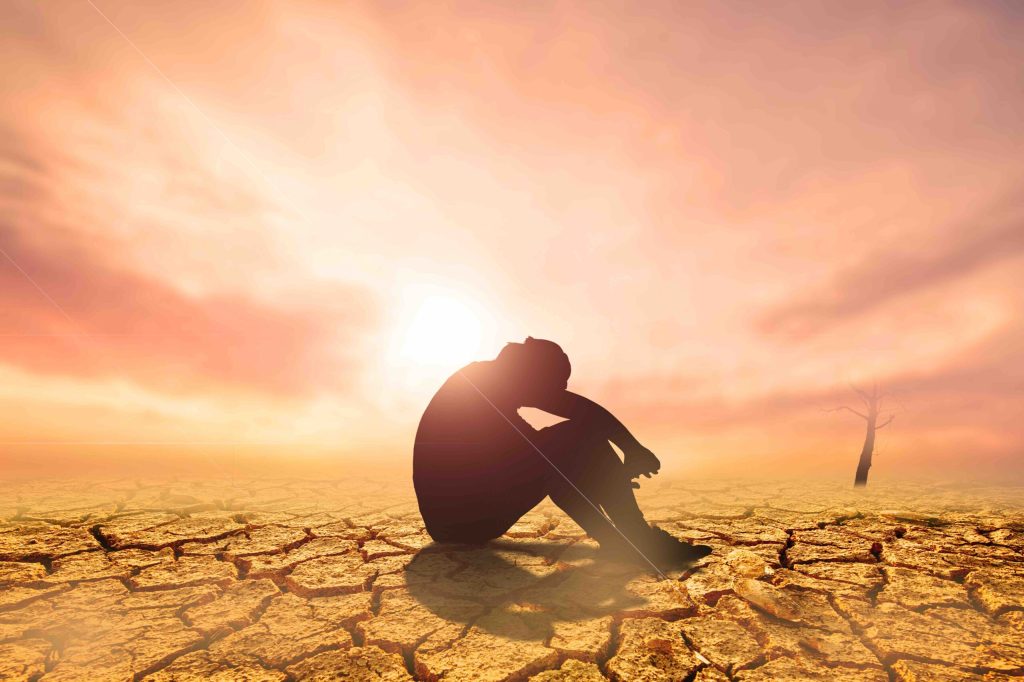
And yet, thereโ€™s also something much deeper here. All of the losses, the trauma, the destruction, the pain we cause, results from a narrative that still governs our thinking and actions, in a deeply subconscious way โ€“ the story of separation. A deep-rooted separation, that stretches back over centuries, from our very selves and our true nature, from each other and from the Earth. This worldview that we exist as individuals, separate from all other individuals and from all other beings in nature, has ripped apart the fabric of what it means to be fully human, and to feel our full belonging first and foremost as members of the Earth community, and to live in the truest sense of โ€˜Ubuntuโ€™. For many of us, this separation is where our deep grief originates, and it is through holding this grief in community that we will be able to find our way back home.  

Grief is not typically invited in our society. The typical responseย  is rather to numb our feelings, finding ways to distract ourselves so we donโ€™t feel the pain. Yet deep grief is a way for us to be present for the world, and to come into our full authentic power to make and support change, with no pretense that we can carry on the way that we are.
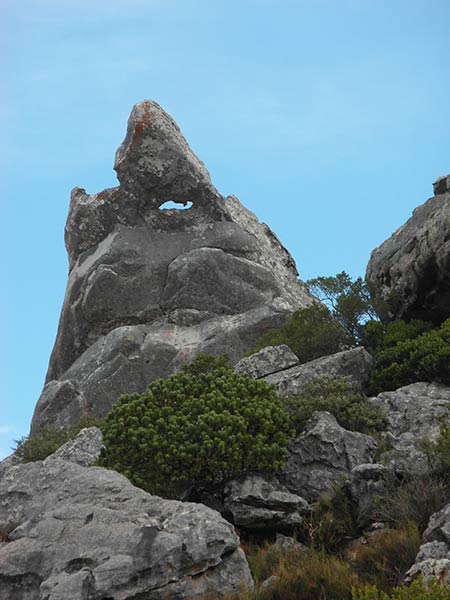
We invite you to join us for a series of Truth Rituals, based on the Work That Reconnects by Buddhist Scholar and Earth Elder, Joanna Macy, and adapted to suit our South African context. These Truth Rituals will be held outdoors in sacred spaces and are open to all. Through coming together and expressing our rage, fear, despair and emptiness, we will find our way back to our hearts and to a way of living in right relation with ourselves, all other beings, and our home planet Earth.

Join us on Sunday 22nd October: 9am โ€“ 11.30am for our first ritual of this series, at a very special sacred site –  All Seeing Pyramid Rock, Blackhill.  Meeting point is at the car park near the top (Sunvalley side) of the Glencairn Expressway and we will all move towards the site together. For more information and bookings please contact us on 061 864 6799 or  gaiaspeaking@gmail.com.  Recommended donation: R200 – R300

Resources & Networks

The Sanity Project by Charles Eisenstein

Rachael and I joined the Sanity Project in June. Hereunder some words from its emissary….

Introduction to the Sanity Project (on the network New And Ancient Story – NAAS)

“With this offering, I aim to establish an oasis of sanity, a studio of sanity, and an incubator of sanity for coming times. We have seen in recent years a mounting madness that took on a new and virulent form during the Covid era. Though that particular expression of madness has abated, the social and psychic conditions that spawned it are still in place. Our politics, our culture, and our public discourse swing to new extremes of derangement.

Getting swept up in mass hysteria is just one type of insanity. Resisting it takes a psychic toll. Those who try often succumb instead to despair, depression, addiction, extremism, and conspiracy theories.

I speak here from experience โ€“ I too went a little crazy during the Covid years. The experience confirmed that I cannot stay sane alone. At key moments, friends and allies said the right thing to me at the right time and brought me back to sanity. With this program, I aim to pass that gift onward and to create conditions by which many of us can stay sane together.

What do I mean by staying sane?

  • To hold center, and return to it when you lose it
  • To hold a good and true story of self and world
  • To be able to abide in not-knowing for as long as it takes for authentic knowing to emerge
  • To hold peace amid information warfare
  • To distinguish and hold your truth in the midst of hysteria
  • To build sustaining connections with human and other-than-human beings, to have an ongoing experience of kinship.
  • To build resistance to manipulation and covert fundamentalism
  • To access a wholesome wellspring of sense, meaning, and identity
  • To fortify the integrity of body/mind/spirit
  • To mutually reinforce all of these with others, to form islands of sanity in a world that is still far from sane
  • To be a seed crystal that brings a higher level of sanity to all you touch”

Join here | The Sanity Project (charleseisenstein.org)

Hereunder also is an animation that he directed and his interpretation under that…

“Hi everyone, I am so proud to share with you this short film, the first I’ve written and directed myself. It has deep relevance to the theme of this program. I won’t comment on it yet, because I think the story itself exercises more power than any interpretation of it can. So please take it in as you would any other film. Maybe watch it a few times.” 
โ€“ Charles Eisenstein โ€“

“The choice that [this film] represents isnโ€™t only a choice made before lifetimes. It is an ongoing choice, day to day, moment to moment, about how to engage the world.

One way to engage (or really, not engage) is to stay in whatever temporary comfort realm one can manage with distractions, entertainment, addiction. Yet none of these can be permanent, and even the most sublime experiences of immersion in nature or lovemaking cannot be prolonged beyond their right span. At some point, the awareness grows that we are on the brink of a pit, that right beneath us, just a shift of attention away, is a world that begs our service. To rest, to recharge, is important in order to render that service well, but when the batteries are full, restlessness will seize even the most indolent among us. So, the choice to attempt a permanent disengagement from the world to abide in its pleasurable precincts is futile.

A second way to engage is with a heavy spirit of duty, overcoming by force of will a reluctance to enter the fray, carrying a subtle distaste for the lower realms. It comes from a false sense of superiority, and leads as well to a partiality of engagement. One stays half in, half out, never fully committing to embodiment.

The film portrays a third choice. The luminous beings plunge into the pit โ€” all the way in. And they do so in peace, in joy, in serenity. They do not feel sorry for themselves as they take the plunge. They meet their mission gladly.

I will confess โ€” I didnโ€™t actually make this film for you. I made it for me. Iโ€™m the one who has so often hung back from life, stayed timidly a little bit above the fray. Iโ€™m the one who often engages life joylessly, with too heavy a sense of duty. Iโ€™m the one who, sometimes, sees people with ungenerous eyes blind to the truth that they here on the same mission I am.

As I enter more deeply into the โ€œfrayโ€ of a political campaign, I hope to do so as the people in the film do โ€” fully, but not as a fighter, not to become a creature of the Pit. I will watch this film from time to time to help me stay serene in the knowledge of what I and all others are really here for. May this film help you, as it has helped me, to see with generous eyesย and speak with generous words that summon what is seen into manifestation.”

Articles, Resources & Networks, Uncategorized

Nurturing New Paradigm Qualities in our Children

This beautiful blog post is an excerpt from the bookย โ€œRaising Children in the Midst of Global Crisis: A Compassionate Guidebook for Parenting in Turbulent Timesโ€ย 

by Jo delAmor, Work that Reconnects facilitator


โ€œIn a very real way we are writing our own future, the future of our world, on the hearts and minds of our children. Letโ€™s think deeply, love selflessly, and act intentionally to write messages of peace and goodness and generosity of spirit on the hearts and minds of our children, our messengers, our hope for a better tomorrow.โ€โ€” L.R. KNOST, WHISPERS THROUGH TIME

Messages to the Future

As we come to terms with the brutal intensities of the world our children have been born into and feel all the feelings that realization stirs in us, we can begin to see our place in the world with new eyes. We can begin to see that, as parents, we are planting seeds for the future in every moment of our childrenโ€™s lives. We understand that the impressions that they form as young children about the world and who they are within it will inform who they are as adults. They will create the parameters of what they think is possible and how they choose to show up in the world. We see that we are writing the future, as L.R. Knost says โ€œon the hearts and minds of our children.โ€

Moving beyond the Power Over Paradigm and into the cultivation of a Life Sustaining Society will require children who grow into adults with a commitment to collective wellness and mutual thriving. Creating this future in which our children can thrive, along with the rest of the Family of Life, will call for a completely different way of thinking and behaving than the dominant paradigm that weโ€™ve been living in. It will require a deep healing of wounds and dismantling of lies. It will require raising human beings who are not driven by fear, scarcity, trauma and patterns of woundedness. It will require creating different conditions for our children and cultivating particular qualities and strengths in them that will allow them to be capable of truly caring for the Earth, each other and themselves.

The Power Over Paradigm has obscured our perception of the world. It has caused harm and trauma and polluted our minds and hearts as much as it has polluted the water, soil and air. But it has not destroyed the beauty and brilliance in our souls and in the Soul of the World. There is so much beauty still resiliently alive and waiting to be restored. The magic of Life still exists and will persist as we bring ourselves to its loving care. As we dream into the vision of this new Life Sustaining Society letโ€™s consider the characteristics of a paradigm and the human qualities that would sustain life, justice and wellness for all so we can nurture them in our young ones.

Iโ€™m sure the list below doesnโ€™t cover every possible quality that the new paradigm will need but as I dream into this potentiality and reflect on the children Iโ€™ve cared for these are the qualities that come to my mind and heart. When I look at this list as a whole and imagine a generation of children within whom these qualities flourish, I see a world in which all beings can thrive. I know, from direct experience, that even here in the midst of this dysfunctional society, itโ€™s possible for us, as parents, to influence the development of these qualities in our children. We may or may not be able to knock each and every one of these out of the park, but the more of these qualities our children develop the more resiliently they will navigate their lives and the more healing they will bring to the world.

Wonder, Awe, Reverence and Gratitude

As children of a magnificent, miraculous Universe our most natural and authentic state is awe. I love that Rachel Carson wishes she could call on the fairies to preserve this inborn sense of wonder but recognizes that, in lieu of that, the companionship of an adult who is willing to experience wonder and awe alongside the growing child is what is needed. We are those adults. We are being invited to practice awe and swim in wonder as our children grow. A person in awe is connected to the Source of Life, the sources of our strength and not one easily manipulated by the power plays of the dominant paradigm.

[…]Teaching our children how to live in a practice of radical gratitude and reverence is a powerfully subversive way to detach from the Power Over Paradigm. It is also a brilliant way to deepen our connection with Life, itself. As our children experience appreciation for the ways in which their life is sustained they learn how the sustenance of Life works and can find their role in the great Web of Life more easily.

Loving Connection, Empathy and Compassion

Children are full of love when they are little. They love their parents and siblings to the moon and back. When that love is returned and children are raised in a loving environment, with encouragement for positive connection they become capable of growing that love far beyond the edges of their immediate families. โ€œPro-socialโ€ human beings that are comfortable with loving connection will definitely be required in order to cultivate a Life Sustaining Society.

As our children grow it is also important to foster their natural tendencies toward empathy and compassion. Most of the children Iโ€™ve worked with display an amazing ability to feel for others and a desire to help. As we heal from the damages done by the Power Over Paradigm we need a generation of people who are willing to put themselves in each otherโ€™s shoes and help each other grow into a more equitable and mutually beneficial way of living.

Respect, Consent, Equity and Justice

From a very young age (even 1 or 2 years old) children can learn that they have autonomy over their own bodies and other people have autonomy over theirs. We can teach children that each person has a right to their own choices and that, as we make our choices, we need to consider whether they cause harm to others. Teaching our children how to ask permission before touching or taking helps our kids grow into adults that respect themselves and others. This awareness of consent protects our children from predators and keeps our children from being harmful to others.

Making the dismantling of oppression and an understanding of privilege and bias a central part of your parenting will help your children break free from the Power Over Paradigm and see the world through the lens of equity and justice. As we attempt to plant the seeds of a new paradigm in the hearts and minds of our children it is essential to reframe our orientation to power and agency so we can grow a culture in which all are empowered. This work is particularly important if you and your children are part of the dominant, privileged class or sector of a society based on the genocide, enslavement and/or disenfranchisement of others (like if you are white in the USA or Australia, for example). Raising our children to understand that we have inherited an unjust system that needs to be fixed is critical to a future of equity and justice.

Reciprocity, Cooperation and Collaboration

Reciprocity [is] an expression of gratitude for the Earth and towards other people. As we raise our children within this practice we can teach our children to see themselves as being part of a team. Whether the team is made up of a single parent and a single child or itโ€™s a whole big family or itโ€™s a classroom or a neighborhood or the Family of Life, weโ€™re always working with others. This orientation in teamwork helps our kids learn how to bring their gifts to the team generously and graciously receive the gifts of others in the collaboration and cooperation thatโ€™s necessary for a Life Sustaining Society.

Humility, Vulnerability and Emotional Fluency

As we move beyond the Power Over Paradigm we begin to understand that true power doesnโ€™t come from force and dominance and that putting on a tough image doesnโ€™t get us very far. True power is a connection to the Source of Life that comes through our intuition and emotions. We can help our children maintain and strengthen their access to these inner channels by teaching them that it is okay to be vulnerable and express their feelings.

You can create a safe environment for expression in your own home by modeling humility and vulnerability and by holding a respectful, loving space for them when they express themselves. As they get older, you can also teach them skills for regulating their energy, staying tuned in to their intuition and inner guidance and expressing their emotions effectively to others. These are the skills necessary for healthy adults and the leaders we need to guide us into a functional way of living.

Curiosity, Critical Thinking, Creativity and Innovative Problem Solving

Our world is full of seemingly unsolvable problems and we basically have to create an entirely different way of living if we are going to survive the collapse of the Power Over Paradigm. We are in need of some very creative problem solving. Fortunately, our children come into the world with a natural propensity for curiosity, critical thinking and creative problem solving. If we encourage this natural gift, rather than squelch it the way conventional education does, there is no telling what remarkably innovative responses they may have to the situation in which we find ourselves.

As our children learn and grow we can stand beside them in wonder. Instead of giving them the answers and showing off what we think we know we can stimulate meaningful inquiry by guiding them through the discovery process. We can suspend our โ€œknowledgeโ€ momentarily while they wrestle with a new thought and see what they come up with.

Courage, Confidence, Self-worth, Honor and Dignity

Our childrenโ€™s lives are not going to be easy. They will encounter many obstacles and many forces that seek to diminish them and make them feel powerless. One of the central tactics of the Power Over Paradigm is to rob its subjects of their honor and dignity. Every single one of us descends from human beings who, at one time, maybe very long ago, knew that they were brilliant, beautiful, sacred members of the Family of Life. Although people like this are wonderful stewards of a Life Sustaining Society, they are not easy to control. As the forces of oppressive empires and colonization ravaged the surface of the Earth they stripped the people of their honor and dignity in every way they possibly could.

For our children to grow beyond the constraints of this dominant paradigm and create a future that feeds Life they will need their natural honor, dignity and self-worth intact. Fortunately it is another natural endowment of every little being and can be cultivated and encouraged as they grow. Teach your children that they are needed in this world. Teach them that they have a purpose and that their lives matter so they can move forward with the courage and confidence theyโ€™ll need.

Honesty, Authenticity and Self Expression

Along with self-worth and dignity comes the ability to be honestly and authentically yourself. Each and every one of us comes to Earth with our own special gifts, our own way of seeing and understanding, our own particularities that make us who we are. The world needs each and every one of us, exactly as we are. It is in this diversity of perspective and expression that we really thrive. Diversity makes every system stronger. And, when we are not hemmed in by the prejudices and boxes of an oppressive society we can be much more powerfully beautiful stewards of Life.

There are countless ways that our Power Over Paradigm enforces these boxes and tells our children that they need to hide parts of themselves and fit into one of the pre-programmed boxes that has been designed for them. From relentless genderization and fashion trends to compliance with a consumer economy and political ideologies our kids are inundated with expectations and fabricated answers to the questions of who they are. As parents, we can insulate them to some extent from these external pressures and consciously create space in our homes and families for them to blossom as the authentically individual human beings that they are.

Resilience and Adaptability

We canโ€™t even begin to imagine how much change our children will have to navigate in their lifetimes. All we know is that things are not going to continue on as they have. The Earth simply doesnโ€™t have the resources to keep sustaining an extractive capitalistic human society. So, one way or another, everything is going to change and our kids will have to be resilient and adaptive in order to make it through and be of any use to the world. This is why itโ€™s so essential for us to teach our children how to deal with challenges and hardship gracefully and healthfully. Everyone knows that facing and working through real life challenges is character building, but modern parents often have a hard time staying out of the way enough to allow their children to build character in this way.

Even if we have plenty of money, we should not bend over backwards to create a fantastical childhood of constant pleasure and gratification for our children. It doesnโ€™t serve them at all. In fact, it interferes with their growth and development terribly and creates an unnaturally insatiable appetite for ease. As part of a healthy childhood that prepares a person for the rest of their lives a child should have to learn how to wait, give others a turn, make mistakes, fall down and get hurt, experience disappointment, get bored, etc.. That doesnโ€™t mean we should intentionally create suffering for our children. And it doesnโ€™t mean we shouldnโ€™t let our kids have fun. But if we insulate them too much from the normal discomforts of life and try to make everyday and every moment a magical theme park adventure then we are actually impeding their healthy development and stunting their resilience.

Joy, Humor and Playfulness

Even as our children must struggle and learn from their struggles, they have got to have some fun too! A sense of natural joy, playfulness and an ability to see the humor in any situation may be the quality that helps our kids the most. When we feel connected to the living world and see our lives as an important, but small, part of a grand unfolding this sense of joy comes easily. Humor and lightheartedness are essential to resilience. Without an appreciation for irony, mystery and playfulness we would all be brought to our knees before we even make it through the gate. Being able to laugh at ourselves, try things out and fail, notice the ironic humor of the way life unfolds helps us make it through the more difficult moments weโ€™ll have to face. Feeling joy and carrying joy in our hearts are also essential practices for caring for and sustaining Life.


When these qualities are cultivated in young people, the natural human spirit that is so alive in them can come through even more strongly. That doesnโ€™t mean that every freedom fighter and youth activist had perfect parenting. It also doesnโ€™t mean that if you nourish these qualities โ€˜perfectlyโ€™ in your children that theyโ€™ll save the world with their activism. This is not an all or nothing scenario. This is an opportunity to understand the power, possibility and potential of young people who are informed and supported, young people who have the confidence to be courageous, who have the critical thinking skills and creativity to address some of our biggest challenges and who deeply care about our world and feel a responsibility to Life and future generations. Whether our childrenโ€™s care for the world plays out on the international stage for all to see or in small, personal, less seen ways, these qualities will guide them and support them in contributing their unique gift to the world.