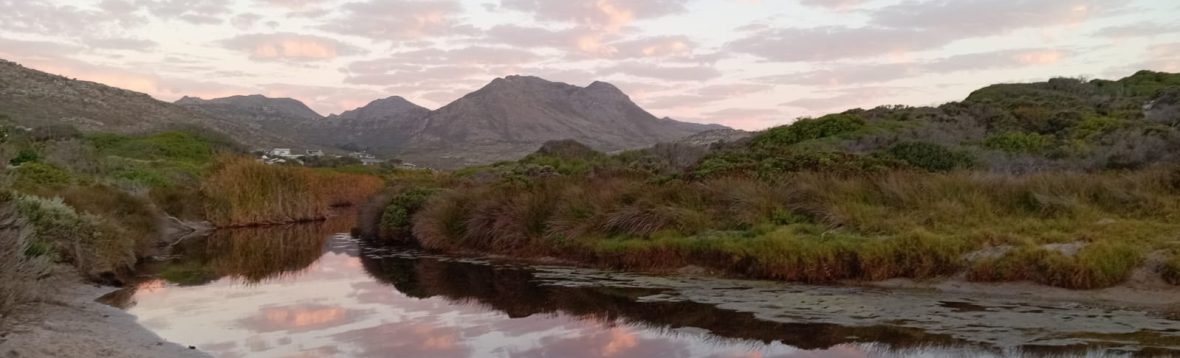
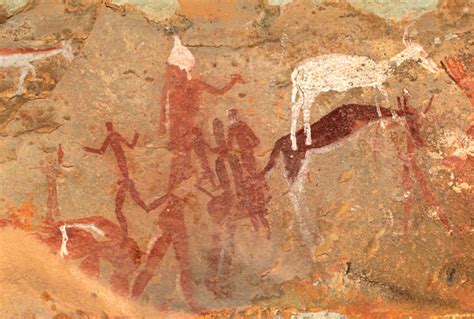
In animist traditions, such as those practiced by the Khoisan or the Xhosa for example, who settled and prayed on this Southern tip of Africa I inhabit, nature is viewed as animated and alive with spirit. Every river, tree, animal, and mountain has life-force and agency. Humans are not separate from nature; rather, they exist in a reciprocal relationship with it, shaped by mutual respect, responsibility, and acknowledgment of interconnectedness. This worldview supports practices that honour the Earth, such as rituals to ask permission from the spirits of plants and animals before hunting or harvesting, ensuring balance and respect for all forms of life.
Spirituality and respect for ancestors also play a vital role in Southern African animism. Ancestors are seen as mediators between the human world and the natural world, guiding and protecting their descendants. Through ceremony, people maintain relationships with ancestors, believing that their wisdom and presence can provide insights, blessings, and protection. In these ways, animism emphasises a holistic understanding of existence where spiritual, social, and ecological health are inseparable.
“The term animism was coined by an early anthropologist, Edward Burnett Tylor, in 1870. Tylor argued that Darwin’s ideas of evolution could be applied to human societies; he classified religions according to their level of development.
He defined animism as a belief in souls: the existence of human souls after death, but also the belief that entities Western perspectives deemed inanimate, like water, rocks and trees, and plants had souls.
Animism was, in Tylor’s view, the first stage in the evolution of religion, which developed from animism to polytheism and then to monotheism, which was the most “civilized” form of religion. From this perspective, animism was the most primitive kind of religion, while European, Protestant Christianity was seen as the most evolved of all religions.” [1]
By embracing animist traditions, without claiming they pertain to any particular religion, which tends to create polarity, we can contribute to revalorise them, overcoming these old colonial judgements of inferiority. As this worldview gets adopted more widely, we become more free to embrace gratitude for nature’s abundance and reinforce our right to connect to the environment and cultivate respect, without being judged. Animist beliefs are at the core of our humanity and do not contradict the alignment with any particular religion.
Our Western religious dominion theologies gave humans – first through Adam and Eve for example – dominion over the Earth. They set up a dichotomy between inanimate matter and animate spirit that lifts humans above creation and turns the rest of the world – from animals and plants to soil and water – into “resources” to be used. Unfortunately this vision has given shape to the Business as Usual story we participate in today.
By shifting perception from an isolated, human-centered worldview to one that honors the spirit within all living things, we can access a deeper, animist-inspired understanding of interdependence. This expanded awareness fosters empathy, reverence, and responsibility toward the natural world.
The Work That Reconnects invites individuals to cultivate a similar reverence and sense of kinship with the Earth. Rooted in systems thinking and inspired by Buddhist concepts of interconnectedness, Joanna Macy’s work incorporates animist traditions in its recognition of the living, interconnected nature of existence. It seeks to restore relationships between individuals, communities, and the more-than-human world, helping people to heal disconnections and remember their place within the larger ecological web.
“Animism is not a religion one can convert to but rather a label used for worldviews and practices that acknowledge relationships between nature and the animal world that have power over humans and must be respected.
These practices […] can also be forms of environmental care, farming practices or protests, such as those conducted by water protectors [around the world]. New Zealand’s 2017 act recognizing the Whanganui River as a legal person, the culmination of decades of Maori activism, could be described as animism taking a legal form.
Animist practices are as variable as the peoples and places engaging in such relationships.” [1]
amaMpondo environmental defenders on South Africa’s Wild Coast bring the same spirit of resistance to extractive mining interests today as their forebears did to the apartheid state in the 1960s.
Their connection with the land, and the customs that underpin this, makes them mindful custodians of the wilderness.
The amaMpondo say they welcome economic development, but want it on their own terms, many preferring light-touch tourism over extractive mining.
The amaMpondo’s worldview and values are passed down through the generations through the oral tradition.
MPONDOLAND, South Africa — The day the prospectors came, so did the storm. It was 2007, and clouds barreled toward the coast, driven by a wind that churned up dust and foretold of the downpour to come. Beyond the rusty dunes, the Indian Ocean surged with equal force.
“It was scary,” says Mamjozi Danca, a traditional healer who has lived here all her life.
Her family couldn’t bring the cattle in from grazing, and “even cooking wasn’t easy.” They hunkered down in their rondavel, a round homestead with a thatched roof not far from the mineral-dense dunes of Xolobeni on South Africa’s Wild Coast, to wait it out.
Xolobeni is a village on a 24-kilometer (15-mile) stretch of wilderness about four hours’ drive south of the port city of Durban. It has become synonymous with a two-decade-long fight by the Indigenous amaMpondo against extractive mining interests that had sights on the powdered titanium in the dunes. There have also been more recent attempts to conduct seismic surveys for offshore oil and gas.
When traditional healer Mamjozi Danca was born into a violent apartheid state that tried todispossess her people of their land and culture, the amaMpondo fought back. Now they are fighting to protect their heritage from mining corporations. Image by Leonie Joubert for Mongabay.Herbalists burn imphepho, African sage (Helichrysum odoratissimum), as an incense during prayer. This fragrant herb grows wild in the Mpondoland grasslands. Image by Leonie Joubert for Mongabay.
On the day the mining prospectors came for their sand samples, the storm drove them away, Danca says. It was frightening. But it was a sign, she says, a miracle even.
This, by her interpretation, was the spirits of the ancestors bringing a message to the people, using the vocabulary of the elements.
“If we allow [mining], [we] will never be able to access any medicine, the beach, the sea, or food,” Danca says. According to her, it was a message of solidarity: we, your forebears, will fight alongside you, the living, who are protecting our ancestral lands.
When the government later granted a prospecting license to Mineral Sand Resources, an Australian company, the community challenged its legality in court, resulting in the license being suspended.
The spirit of resistance to these would-be profiteers is the same one that fueled the amaMpondo’s fight against the apartheid government in the 1950s and early 1960s, sources tell Mongabay. And it is their connection with “the land” — the web of life that surrounds them, and where the spiritual world is said to exist — that environmental defenders say they are willing to die for.
Some already have.
The amaMpondo want economic development, but on their own terms, with many preferring light-touch tourism over extractive mining. Some families offer rustic catered accommodation for hikers trekking up and down the coast, such as here at the popular Mtentu River mouth. Image courtesy of Travis Bailey/Siyasizisa Trust.
Nature: Where the living and the spirit realm meet
It’s no accident that this place is well preserved, the locals say. Their custodianship has kept it this way.
The land is their mother, they say; it is their identity, something they respect. In their belief system, the land owns the people; the people don’t own the land.
When the amaMpondo speak of “the land,” they aren’t referring merely to the soil beneath their feet, which can yield X bushels of corn that can be sold for Y dollars at the market.
They’re talking about the rains that roll in on a storm, and the water filtering into the wetland where the grass aloes grow. They’re talking about the springs where they collect bathwater, the grasslands where their herds graze, and where they gather plants for medicines and mystical charms. They speak of the forests that burst with fruit, and offer firewood or timber. They mean the rivers that run into the ocean where they cast their fishing lines, and the fish that nourish them.
Xolobeni’s rusty titanium-rich coastal dunes are synonymous with the amaMpondo’s 20-year battle to keep extractive mining out of their ancestral lands. Image by Leonie Joubert for Mongabay.
The Pondoland Centre of Endemism is globally recognized for its unique plant diversity, with rarities such as the Pondoland coconut (Jubaeopsis afra), the Pondoland conebush (Leucadendron pondoense) and the Pondoland ghost bush (Raspalia trigyna).
It is also here, in nature, where the amaMpondo connect with the spirit realm.
The amaMpondo’s spiritualism is a blend of African animism and Christianity. They say that when someone dies, their spirit doesn’t go away to a far-off realm — a heaven, or hell, or a cycle of reincarnation — but lingers close by, staying near to places they loved when they were here in their physical bodies.
“Those who have passed on cling to the places close to their hearts,” says Sinegugu Zukulu, a conservationist, ecological infrastructure expert and Indigenous knowledge specialist. “Just like living people are everywhere, so are those who have passed on.
“There are those who reside in the ocean,” Zukulu says, “some are in the mountains. Some reside in waterfalls; some in beautiful, peaceful pools; some in forests.”
Everything is said to be a being. That means protecting individual species and the ecosystems in which they occur — the grasslands, forests, rivers and ocean — is as much about ensuring people can meet their daily needs as it is about protecting the spiritual places where they connect with the numinous.
To understand this, Zukulu says, a person must witness their daily practices.
Traditional healer Malibongwe Ndovela collects plants for medicines and mystical charms that grow in the grasslands and forests at the Mtentu River mouth, a popular overnight stop for hikers. Image by Leonie Joubert for Mongabay.
A walk through the grasslands uncovers the medicinal plants tucked away among the grazing, which explains why they won’t plow all the virgin land. Most of the natural veld remains intact, with just a few small vegetable beds for each family.
Healers only collect bark from the north-facing side of a medicinal tree, so it doesn’t die.
“In customary law, we are not allowed to cut down fruit-bearing trees,” Zukulu says, “because they give food to wildlife, like birds, bees and insects, and to strangers on long journeys.”
Out of respect for the ancestors, and the need to keep in good standing with them — ancestors are said to have the power to punish, if someone strays — conservation practices take the shape of a ritual or lore, becoming practical while being imbued with the metaphysical.
Losing their land to extractive development will break these lores and customs, they say.
But fighting to protect their way of life has come at a cost.
Traditional healers use the smoke from the coals of a yellow wood tree (Podocarpus latifolius) to cleanse a cattle herd of problematic spirits and stop the animals from fighting. Image by Leonie Joubert for Mongabay.
In 2016, a community leader with the Amadiba Crisis Committee (ACC) — which, together with civil society organization Sustaining the Wild Coast (SWC), helped spearhead the legal challenges to the titanium mine and other extractive development efforts — was killed. Sikhosiphi “Bazooka” Rhadebe was shot in a suspected hit linked with resistance to the titanium mine. His death has not been thoroughly investigated and his killers remain at large. Zukulu and fellow activist Nonhle Mbuthuma, another ACC leader, found their names on a purported hit list that began circulating before Rhadebe’s murder, believed to be issued by a person or people in the community who were pro-mining.
This hasn’t stopped the community. Now they continue with a protracted legal battle against the energy giant Shell, which planned offshore seismic surveys about 770 km (480 mi) south of Xolobeni to find oil and gas. So far, they’ve kept Shell’s prospecting license application snarled up in legal proceedings. Meanwhile, in April 2024, Zukulu and Mbuthuma received the prestigious Goldman Environmental Prize for the community’s efforts to thwart Shell.
The legal case centers around more than just the potential environmental impacts of the sonic blasting, such as injury to sound-sensitive marine life like dolphins, whales and the near-extinct African penguin (Spheniscus demersus).
The amaMpondo argue that it’s also a threat to their cosmology.
“Shell’s disruption of the ocean risks disrupting and disturbing those who have passed on, and the living don’t know what it may lead to in their lives,” Zukululu says.
It is no accident that Mpondoland is well preserved, the locals say. Their custodianship has kept it this way. They want economic development, but on their own terms, with many preferring light-touch tourism over extractive mining. Image by Leonie Joubert for Mongabay.
Remembering hard times
Today, Mamjozi Danca is in her 60s. Like most of her generation, she doesn’t have a precise calendar date for her birthday, but uses the oral tradition to mark her arrival in the world.
She was born, her father told her, when the amabulu, the soldiers, stormed into their home, ripped off people’s jewelry and amulets, and looted the kitchen for food. This was the kind of intimidation tactic that the state used to bully the amaMpondo to submit to a national land-grab policy that aimed to push the country’s majority Black population into reserves and keep the country’s best farmlands for the minority white elite.
Part of this included imposing “betterment schemes” on Indigenous communities that were intended to upend traditional governance structures and communal land and grazing customs. State-sponsored chiefs drove wedges between communities. Extractive taxes forced Indigenous men to head to the mines, mostly in Johannesburg, as part of a conveyor belt of exploitative migrant labor.
The amaMpondo may not live solely off the produce of their farms, but being able to keep animals and grow vegetables and maize goes a long way towards boosting their food resilience. Image by Leonie Joubert for Mongabay.
The amaMpondo were having none of it, rising up in a peasant resistance to this violent and illegitimate state in the 1950s and early 1960s. The culmination of the Mpondo Revolt came on June 6, 1960, when a group gathered at Ngquza Hill, not far from Xolobeni. The military flew in, dropped tear gas and gunned down 11 people. In the months that followed, the state hunted down and arrested others believed to be complicit, sentencing 30 to death for their part in the uprising.
It was into this maelstrom that Danca was born.
Today, Danca, a member of the ACC, is defiant. The amaMpondo were fighting to protect their land and way of life during the revolt; now they’re fighting the same system that wants to dispossess them of their inheritance today.
“I will never give up. I will never stop fighting,” she says.
Stories keep customs and cosmology alive
On the day the helicopters came, before Christmas 1960, Nozilayi Gwalagwala clutched her newborn boy as she felt the pah-pah-pah-pah-pah of the propellers’ vibrations. She recalls the choppers wobbling as they hovered near her rondavel.
Today, at 98, she crumples her housecoat into a tiny bundle to show how small her infant was, not even 24 hours old.
It was six months since the Ngquza Hill massacre, and a fortnight after the government issued draconian measures to suppress the revolt. Soldiers had returned to round up resistance stragglers who were boycotting tax payments and rabble-rousing against puppet chiefs.
Nozilayi Gwalagwala, 98, is a “living library” of stories and history. The amaMpondo’s care for the environmental is rooted in their customs and cosmology which are passed down through the oral tradition. Image by Leonie Joubert for Mongabay.Nozilayi Gwalagwala, 98, has lived off the land for a whole lifetime, growing crops such as maize, beans, and potatoes, and investing in cattle as a way to build wealth. Image by Leonie Joubert for Mongabay.
Gwalagwala’s husband was captured that day. He was locked in the back of a truck to ship the prisoners away when it got into trouble at a tricky river crossing and overturned. Many were injured. When news reached Gwalagwala, she feared her husband was dead.
It took a week to track him down, alive but seriously injured in a hospital 55 km (34 mi) away. Much of the journey to find him was on foot, carrying her infant. The baby was later named Gunyazile, because he was born during a time when the “authorities forced the people.”
These were hard times, and her child would forever carry this history in his name.
Today, Gwalagwala tells this story in the presence of her grandson, Lungelo Mtwa, born to the late Gunyazile. Mtwa is 29. After he completed his diploma in tourism management, he returned to the land of his forebears, where he now works as a tour guide.
Tour guide Lungelo Mtwa (29) is taking on the mantle of storyteller from his grandmother Nozilayi Gwalagwala (98), and brings the amaMpondo history to life for the hikers who trek along the coast. Image by Leonie Joubert for Mongabay.
Their tale encapsulates the amaMpondo’s wishes. Many welcome development, but want it on their own terms. Light-touch tourism allows them to draw on their culture and the region’s unique biodiversity by offering authentic catered accommodation and guiding services to hiking parties that trek up and down the coast.
“She is a living library,” Mtwa says of his grandmother. “You can hike the Mpondo coast alone, but it is these stories that bring the place to life.”
The amaMponodo’s stories, archived in the oral tradition, carry the customs and cosmology that have ensured the Wild Coast remains wild, then and now, and burns with the spirit of resistance to external powers that wish to profit from their inheritance.
Banner image: Traditional healers use the smoke from the coals of a yellow wood tree (Podocarpus latifolius) to cleanse a cattle herd of problematic spirits and stop the animals from fighting. Image by Leonie Joubert for Mongabay.
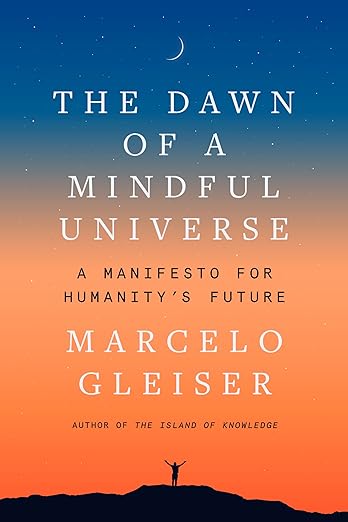
An award-winning astronomer and physicist’s spellbinding and urgent call for a new Enlightenment and the recognition of the preciousness of life using reason and curiosity—the foundations of science—to study, nurture, and ultimately preserve humanity as we face the existential crisis of climate change.
Since Copernicus, humanity has increasingly seen itself as adrift, an insignificant speck within a large, cold universe. Brazilian physicist, astronomer, and winner of the 2019 Templeton Prize Marcelo Gleiser argues that it is because we have lost the spark of the Enlightenment that has guided human development over the past several centuries. While some scientific efforts have been made to overcome this increasingly bleak perspective—the ongoing search for life on other planets, the recent idea of the multiverse—they have not been enough to overcome the core problem: we’ve lost our moral mission and compassionate focus in our scientific endeavors.
Gleiser argues that we’re using the wrong paradigm to relate to the universe and our position in it. In this deeply researched and beautifully rendered book, he calls for us to embrace a new life-centric perspective, one which recognizes just how rare and precious life is and why it should be our mission to preserve and nurture it. The Dawn of a Mindful Universe addresses the current environmental and scientific impasses and how the scientific community can find solutions to them.
Gleiser’s paradigm rethinks the ideals of the Enlightenment, and proposes a new direction for humanity, one driven by human reason and curiosity whose purpose is to save civilization itself. Within this model, we can once again see ourselves as the center of the universe—the place where life becomes conscious—and regain a clear moral compass which can be used to guide both science and the politics around it.
Today we took yet another ‘combi’, this time from Chinchero, our last stop in Peru, where my kids and I have spent 5 weeks, during our visit to South America.
I feel my heart breaking during the ride. It’s not a bad feeling at all, it’s a feeling of openness, a sensitivity around the heart. I will miss these trips in public transport. These trips in public. It’s been very useful for me to speak Spanish, but I know that the warmth of these intimate connections of people on the go, together, would have melted any language barrier.
A very old man, with a cane, hails the bus. ‘Necesita ayuda’, he needs help, a lady says from behind. One lady bends over to open the door, I bend over to help him up by his other blackened hand, immediately enveloped by the scents of boiled corn cobs and infinite layers of wood smoke. I remember entering a Himba hut. He asks me if we are at ‘la terminal’ a few times and I help to prop him up when he slips on the seat in the abrupt Andean bends in the road. He sips on the ‘chicha morada’ (black corn fermented drink) he brought for the ride in an ancient 20cl Inka Cola bottle, reused time and time again.
‘Gracias Mamita!’… He trusts me like his daughter. When we all get off in Cusco he can’t find his money, and remembers he forgot to remember his other bag. ‘Pago para los cuatro’ I say as my kids slip out from the front row, where they had found two free seats. It seems natural to all. And we drift off in between the busy Saturday market stalls.
I wonder if he remembers where he is going. I wonder who will help him find his way home today. I wonder when he lost his wife. I wonder who will take care of him, when his eyesight and his memory get worse, yet I know there will be care for him, for there is community.
Nowadays, my heart breaks open in a similar way when it feels sorrow and when it feels joy. Sorrow feels like gladness when there exists a non dual sense of greatness that binds them both together. That I have felt strongly here in the Andean mountains and the creases of the Sacred Valley: the greatness of the mountains, revered for their divinity, named Apus. And how men can ‘move mountains’ when led by a vast and sacred sense of purpose. This purpose was driven for the Incas by their trust in their kings and leaders, trust in their elders, trust in the nature gods, and trust in themselves. I quote Robert Bly, whose book ‘Iron John’ I took on travel: ‘The inner King is the one in us who knows what we want to do for the rest of our lives, or the rest of the month, or the rest of the day.’
Each stone in the Incan temples in Peru is a masterpiece. Some of them weigh several tons (one in the Sacsayhuaman -pronounce ‘sexy woman’- weighs 125 tons!) and have been quarried several kilometres away. It is a miracle of human will power that we can admire here today. The Spanish used these works of art as convenient bricks for their monotheist humancentric churches, with the added excuse of ‘extirping idolatry’ from the minds and hearts of the invaded. But they could not move the greater of the stones!
Some of the original Incan pieces have up to 20 different angles that are adjusted without mortar to the next stones, forming a mosaic that not only is creatively diverse in its assembly but also has the perfect structure to resist the earthquakes that the dramatic Pachamama bestows upon this region every few decades. Archaeological prowess is everywhere: in the exact inclination of each temple wall, the drainage of each terrace, the elaboration of door hinges and jambs so that each element collaborates with the others to defy the tricks of gods.
What I have felt all around in the communities that inhabit the Andes is a great sense of belonging, deeper than the Western scattered, individual pursuit of purposefulness. What wisdom the atrocious conquests tried to eradicate is still alive with roots as deep as the mountains are high. Quechuan sounds powerful, indigenous rhythms transpire in the music…, there is no legacy from Spain that has not been blended and sublimed with Incan heritage, more ancient, seeped with spirit, hence more coherent.
And what makes more sense than to revere the nature gods, Inti/Sun the highest of all? And what is more kingly than to present them with the gift of a lifetime of labour? These walls were not built for oneself, for one’s own, they were built for the generations to come, for the Empire, for the Sun itself. Imagine how many lives communed to place each Intipuntu/Sun gate in the exact position where Sun can kiss through it at the exact hour that honours Him?
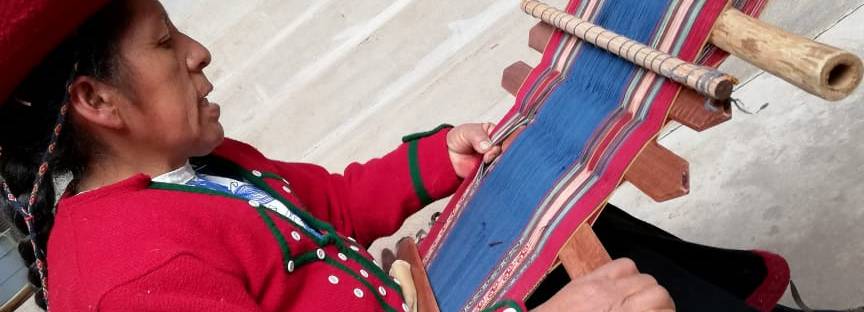
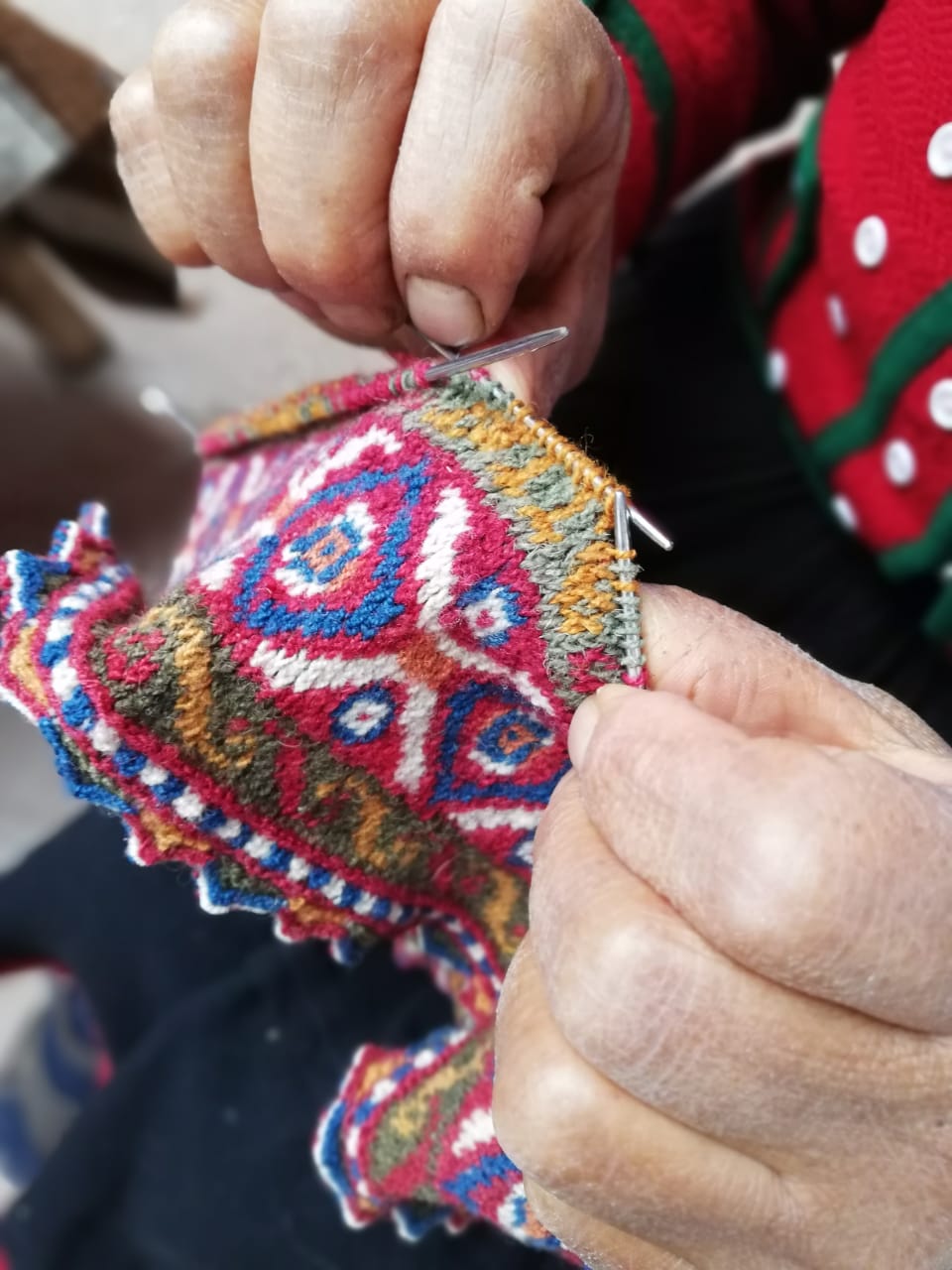
Yesterday we watched Mama Sonia weave, the inner King in her thumbs knowing which string to move next, which colour to represent her tribe, which shape to represent her land. The tradition of weaving withholds the passing of time in the communities of Chinchero, young women still queuing to learn from the elders the traditional ways, fully aware of the privilege of their culture.
In different ways, this witnessing breaks my heart.
The heart that breaks open can contain the whole universe.
We were reminded of these vows yesterday during the Gaian Gathering. These are words that we can voice aloud while witnessed in a workshop or to ourselves, as we are always witnessed by the Earth and each other in a myriad of ways. They are such profound anchors for our collective in this time of Great Turning…
I vow to myself and to each of you to commit myself daily to the healing of our world and the welfare of all beings.
I vow to myself and to each of you to live on Earth more lightly and less violently in the food, products and energy I consume.
I vow to myself and to each of you to draw strength and guidance from the living Earth, the ancestors, the future beings and our kin of all species.
I vow to myself and to each of you to seek liberation from patriarchy, colonialism, and racism in all dimensions of my life.
I vow to myself and to each of you to support you in your work for the world, and to ask for help when I need it.
I vow to myself and to each of you to pursue a daily spiritual practice that clarifies my mind, strengthens my heart and supports me in observing these vows.
We are living in challenging times. The systems and culture we have created in our world are showing themselves for the destructive force they are for our planet. Increasing consumption, coupled with population increases means that our human species’ use of resources exceeds the Earth’s capacity by an increasing margin year on year. Today we need around 1.75 planets to provide the resources to meet our demand for consumption and to absorb our waste. According to WWF, by 2050, or even sooner, this will have increased to the need for 2 planets, ‘borrowing nature’ from future generations.
Many of us feel the burden of the irreversible loss of eco-systems, degradation of soils, loss of wild places, pollution of fresh water, and other ecological losses, and experience feelings of deep grief, coupled often with regret for our own lifestyle practices that have contributed towards this.
For others there is continued and growing anxiety about the trajectory the human species is currently following, and further losses that are feeling inevitable- including runaway climate change and species extinctions, even the fear of our own extinction. For many there is a growing feeling of urgency, coupled with the pain of feeling somehow paralysed or powerless.
As we see war unfold again in the Middle East this week, and violence and suffering continuing in many countries across the world, including South Sudan and Ethiopia, the sense of despair and helplessness can feel extremely acute.
Here in South Africa, these feelings of grief and anxiety, present themselves on top of extreme societal ‘complex trauma’, a traumatic history that for many remains unprocessed and unresolved. The adverse living conditions of many South Africans, extreme poverty (currently 45% of South Africa’s population) and extreme inequality (the richest 10% hold 71% of the wealth), compounds this trauma.
All of this can feel extremely distressing and overwhelming.
It’s no surprise it feels this way. The planet Earth is our home, our place of shelter, our provider of all that we need. When we see her change and come under stress, it’s only natural to grieve and to feel concerned. Our fellow people are our brothers and sisters and we all have the capacity to show and receive compassion, deeply rooted in our mammalian instinct of caring.
“We are capable of suffering with our world, and that is the true meaning of compassion. It enables us to recognize our profound interconnectedness with all beings.” – Joanna Macy
And yet, there’s also something much deeper here. All of the losses, the trauma, the destruction, the pain we cause, results from a narrative that still governs our thinking and actions, in a deeply subconscious way – the story of separation. A deep-rooted separation, that stretches back over centuries, from our very selves and our true nature, from each other and from the Earth. This worldview that we exist as individuals, separate from all other individuals and from all other beings in nature, has ripped apart the fabric of what it means to be fully human, and to feel our full belonging first and foremost as members of the Earth community, and to live in the truest sense of ‘Ubuntu’. For many of us, this separation is where our deep grief originates, and it is through holding this grief in community that we will be able to find our way back home.
Grief is not typically invited in our society. The typical response is rather to numb our feelings, finding ways to distract ourselves so we don’t feel the pain. Yet deep grief is a way for us to be present for the world, and to come into our full authentic power to make and support change, with no pretense that we can carry on the way that we are.
“Don’t ever apologize for crying for the trees burning in the Amazon or over the waters polluted from mines in the Rockies. Don’t apologize for the sorrow, grief, and rage you feel. It is a measure of your humanity and your maturity. It is a measure of your open heart, and as your heart breaks open there will be room for the world to heal.” – Joanna Macy
We invite you to join us for a series of Truth Rituals, based on the Work That Reconnects by Buddhist Scholar and Earth Elder, Joanna Macy, and adapted to suit our South African context. These Truth Rituals will be held outdoors in sacred spaces and are open to all. Through coming together and expressing our rage, fear, despair and emptiness, we will find our way back to our hearts and to a way of living in right relation with ourselves, all other beings, and our home planet Earth.
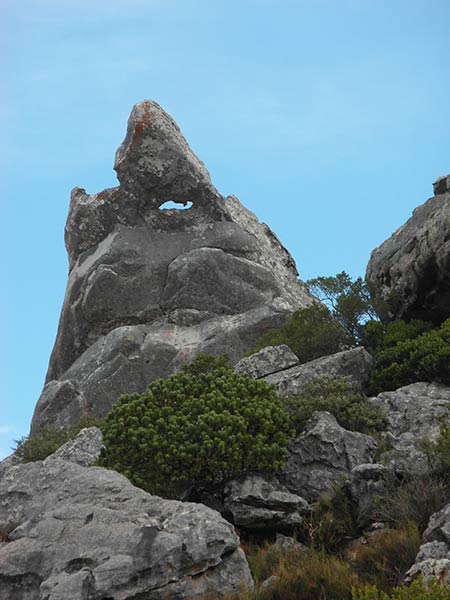
Join us on Sunday 22nd October: 9am – 11.30am for our first ritual of this series, at a very special sacred site – All Seeing Pyramid Rock, Blackhill. Meeting point is at the car park near the top (Sunvalley side) of the Glencairn Expressway and we will all move towards the site together. For more information and bookings please contact us on 061 864 6799 or gaiaspeaking@gmail.com. Recommended donation: R200 – R300
Who would have thought that doughnuts could change the world?
by Joanna Tomkins
They certainly get our attention, don’t they? In the same way we may ourselves once have been addicted to eating doughnuts, our policies are still addicted to promoting growth, even if it harms us each and and every time.
But… now we have got your attention, as you will see hereunder in the graphics, the doughnut in this model is in fact the shape that represents a “safe and just space for humanity”…
The text hereunder, originally published on the DEAL website, offers a comprehensive and convincing introduction to the Doughnut or Donut model. This umbrella is very exciting because its design has enough strength and simplicity to allow policy makers to regroup under it. I personally studied international business at university in France and Spain and I was so put off by some of the contents of the studies, particularly the economical theories, seminars with bankers and practicals in marketing, that I swore to never work for a large corporation. Much later, after I rerouted my career towards arts and also started to work in Africa as a wilderness guide, I went back to university in Barcelona to study Post-developmental African Studies. This was before I moved to Cape Town, wanting to learn about some of the original philosophies on the Continent and the forces at work behind the neocolonialism that still stifle them today. I rallied around the ideas of Serge Latouche (Farewell to Growth, 2007) and his peers. Since the 1980s, voices such as his have been loudly coining terms such as “economical footprint”, “eco-feminism, “overshoot”, etc, and claiming urgency. Yet, those voices have been drowned by the constantly renewed pressure from the Industrial Growth Society.
Finally, in the last few years, at the same time as a larger part of humanity starts to call for socio-economical justice – the one with the privilege to do so and be heard- , some strong, credible and conscious voices have created new alternative economical models that can be understood by many. They are now becoming mainstream and can offer politicians solid solutions to build resilience in the communities whose welfare they are responsible for. Gratitude.
If you are interested in learning more, please read some of the Stories on DEAL. This one for example about how the model has been adopted by 5 major cities around the world:
If you know how this model could be introduced to the University of Cape Town, or the City of Cape Town, please get in touch with me, I’d love to get involved.
Introduction
The Doughnut offers a vision of what it means for humanity to thrive in the 21st century – and Doughnut Economics explores the mindset and ways of thinking needed to get us there.
First published in 2012 in an Oxfam report by Kate Raworth, the concept of the Doughnut rapidly gained traction internationally, from the Pope and the UN General Assembly to Extinction Rebellion.
Kate’s 2017 book, Doughnut Economics: seven ways to think like a 21st century economist, further explored the economic thinking needed to bring humanity into the Doughnut, drawing together insights from diverse economic perspectives in a way that everyone can understand. The book has now been published in over 20 languages.
This 2018 TED talk gives a summary of the book’s core messages, and you can read Chapter One here..
The Doughnut’s holistic scope and visual simplicity, coupled with its scientific grounding, has turned it into a convening space for big conversations about reimagining and remaking the future. It is now being discussed, debated and put into practice in education and in communities, in business and in government, in towns, cities and nations worldwide.
Kate Raworth
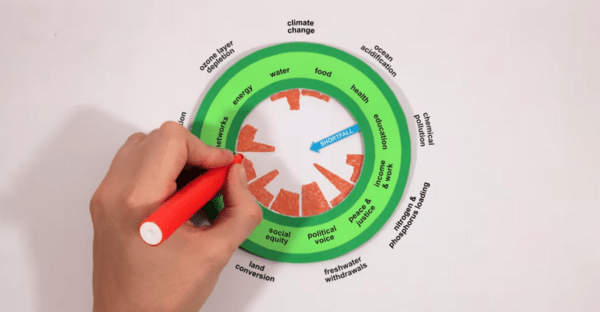
The Doughnut of social and planetary boundaries.
What is the Doughnut?
Think of it as a compass for human prosperity in the 21st century, with the aim of meeting the needs of all people within the means of the living planet.
The Doughnut consists of two concentric rings: a social foundation, to ensure that no one is left falling short on life’s essentials, and an ecological ceiling, to ensure that humanity does not collectively overshoot the planetary boundaries that protect Earth’s life-supporting systems. Between these two sets of boundaries lies a doughnut-shaped space that is both ecologically safe and socially just: a space in which humanity can thrive.
What is Doughnut Economics?
If the 21st century goal is to meet the needs of all people within the means of the living planet – in other words, get into the Doughnut – then how can humanity get there? Not with last century’s economic thinking.
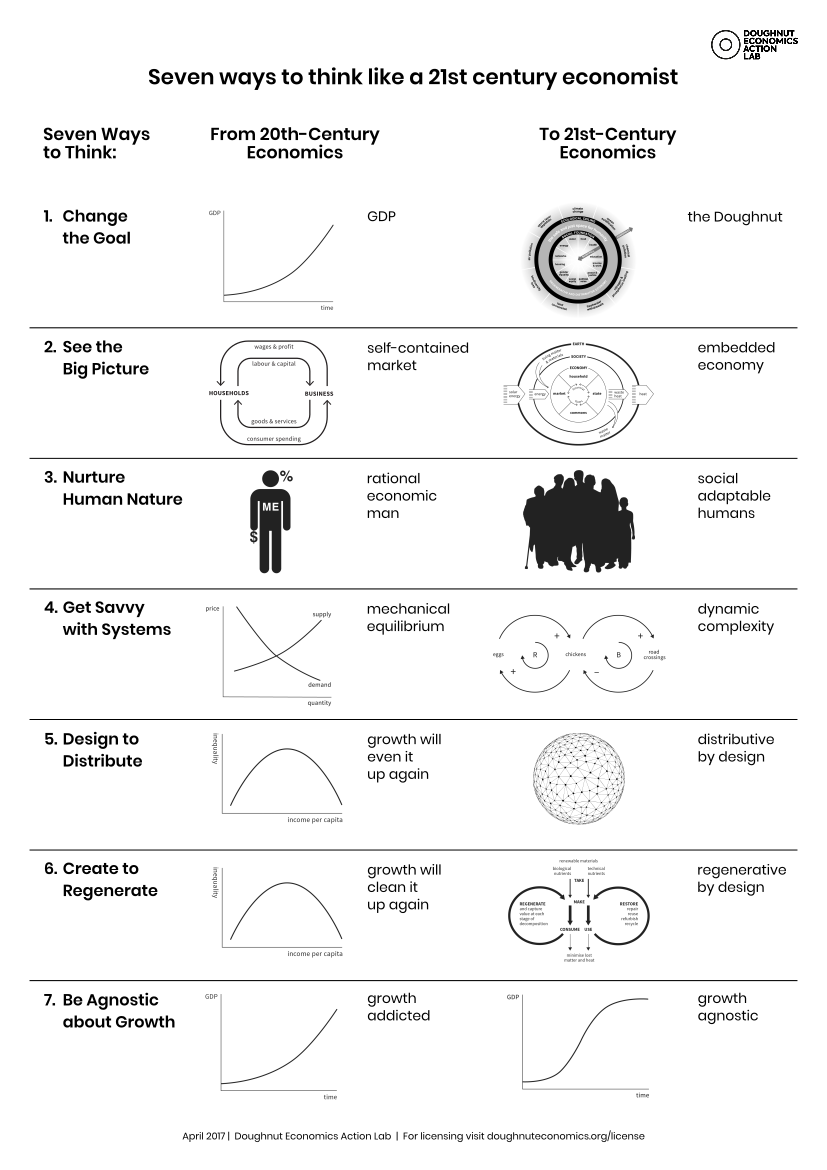
Doughnut Economics proposes an economic mindset that’s fit for our times. It’s not a set of policies and institutions, but rather a way of thinking to bring about the regenerative and distributive dynamics that this century calls for. Drawing on insights from diverse schools of economic thought – including ecological, feminist, institutional, behavioural and complexity economics – it sets out seven ways to think like a 21st century economist in order to transform economies, local to global.
The starting point of Doughnut Economics is to change the goal from endless GDP growth to thriving in the Doughnut. At the same time, see the big picture by recognising that the economy is embedded within, and dependent upon, society and the living world. Doughnut Economics recognises that human behaviour can be nurtured to be cooperative and caring, just as it can be competitive and individualistic.
It also recognises that economies, societies, and the rest of the living world, are complex, interdependent systems that are best understood through the lens of systems thinking. And it calls for turning today’s degenerative economies into regenerative ones, and divisive economies into far more distributive ones. Lastly, Doughnut Economics recognises that growth may be a healthy phase of life, but nothing grows forever: things that succeed do so by growing until it is time to grow up and thrive instead.
Dive deeper into the seven ways to think like a 21st century economist with our series of 90-second animations.
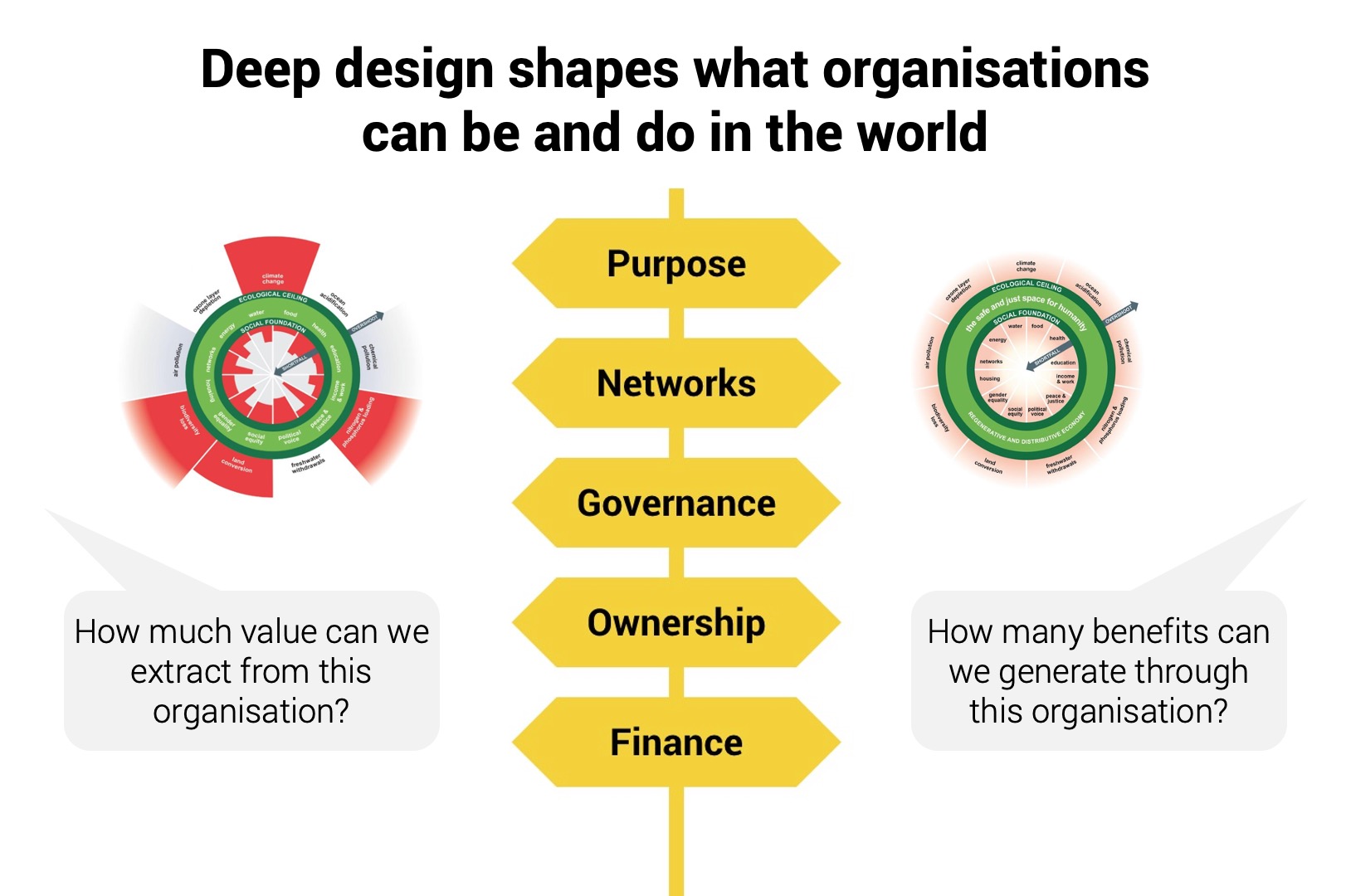
The five layers of organisational design.
Why design matters
What would make it possible for an organisation to become regenerative and distributive so that it helps bring humanity into the Doughnut? DEAL has run workshops with enterprises, city departments, foundations, and other kinds of organisations that want to explore this question, and the implications are transformational.
At the heart of these workshops is a focus on design: not the design of their products and services, or even of their office buildings, but the design of the organisation itself. As described by Marjorie Kelly, a leading theorist in next-generation enterprise design, there are five key layers of design that powerfully shape what an organisation can do and be in the world:
Together these five aspects of organisational design profoundly shape any organisation’s ability to become regenerative and distributive by design, and so help bring humanity into the Doughnut.
Doughnut Principles of Practice
To ensure the integrity of the ideas of Doughnut Economics, we ask that the following principles are followed by any initiative that is working to put the ideas of Doughnut Economics into practice.
Embrace the 21st Century Goal
Aim to meet the needs of all people within the means of the planet. Seek to align your organisation’s purpose, networks, governance, owner-ship and finance with this goal.
See the big picture
Recognise the potential roles of the household, the commons, the market and the state – and their many synergies – in transforming economies. Ensure that finance serves the work rather than drives it.
Nurture human nature
Promote diversity, participation, collaboration and reciprocity. Strengthen community networks and work with a spirit of high trust. Care for the wellbeing of the team.
Think in systems
Experiment, learn, adapt, evolve and aim for continuous improvement. Be alert to dynamic effects, feedback loops and tipping points.
Be distributive
Work in the spirit of open design and share the value created with all who co-created it. Be aware of power and seek to redistribute it to improve equity amongst stakeholders.
Be regenerative
Aim to work with and within the cycles of the living world. Be a sharer, repairer, regenerator, steward. Reduce travel, minimize flights, be climate and energy smart.
Aim to thrive rather than to grow
Don’t let growth become a goal in itself. Know when to let the work spread out via others rather than scale up in size.
Be strategic in practice
Go where the energy is – but always ask whose voice is left out. Balance openness with integrity, so that the work spreads without capture. Share back learning and innovation to unleash the power of peer-to-peer inspiration.
The size of the networks of solidarity expressing and providing support to Ukrainian refugees is another sign of the capacity of human populations to come together to share their feelings and act upon them. When we open our hearts to the other, individual or collective, human or more-than-human, we are apparently able to reverse years of injustice.
Let us take good note, as Gaia teaches us how to come together. Whilst we fight opinion wars around the scary viruses and the dark oils she produces from her bowels, we are coming together through networking. We are developing the capacity to respond en masse to disaster. We are developing resilience as we slowly come to realise that we need to drop what we are doing to run helter-skelter to the bedside of our sick Mother.
Aaah, here you are, she smiles. I Knew you would come! So you took me for granted, did you?, she cries. As Mother squeezes black oil out of her body, she moans, Can you not see me crying!?
Although our planet shows signs of illness daily with unbalanced ecosystems, biodiversity loss and climate change, she is widely ignored. So, she sent a message for all to receive, from the tyrants of the Kremlin to the humblest Amazonian tribesmen, one that at the core of our ego, one that can threaten our life if we ignore it. This hyper-sophisticated virus carries varying ethos-changing messages for all, whether awoken by fear of suffering, or toppled into passionate love for life, no-one has been left unshaken. Have we heard her plea now? Can we decrypt and put to good use the information we received as individuals, who are also part of the human collective and part and parcel of the Earth? As first world refugees are in the spotlight, do we remember the hunger-stuck refugees who have been huddling in tents in the desert for years? As we breathe through plastic ventilators or clad our beautiful faces with plastic masks, do we remember how our bodies deserve to be fed and cared for, the bodies that our Mother gave us?
Our collective Pain for the World is breaking free now so that we can prioritise and get our response armies trained and organised… Yet, can we feel the urgency in the ecological unravelling that we still perceive as intangible? Surely, yes! If we are able to feel pangs of solidarity in response to these recent crises, even at a distance, our fingers brushing our screens, we must be reviving the muscles of our natural response to danger, we must be noting that it is all connected. And when our fingers brush the leaves, our eyes sweep the horizon, our hearts will open to the realisation that we Knew, we always Knew, that this is why we are here. Close to eight billion individuals have a role to play, with two hundred thousand newcomers daily. We have been called to be a part of the Great Turning.













.png)

 Gaia Speaking