Adapting the words of Active Hope facilitator Madeleine Young
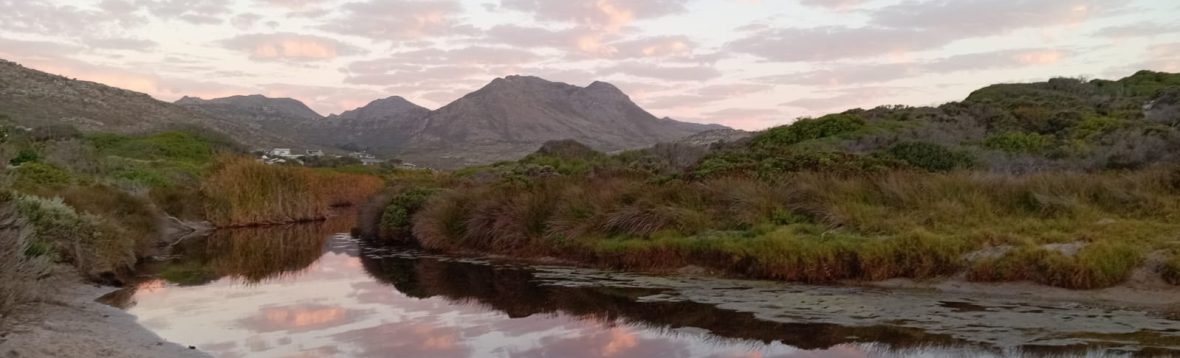
Choose – or create – a space that you can repeatedly go to – a place where you can be quiet and receptive and listen to the world. Ideally this will be a spot in Nature, but it is more important that it is a place that is easily visitable by you, and it is entirely possible to create your ‘Nature spot’ inside your home. Make it somewhere that you feel safe and can relax.
There are many ways to refer to this place – it could be your listening spot, your Nature spot, your Gaia spot, your sit-spot, or whatever feels right for you. This is your place to acknowledge the greater whole that you are a part of. Set aside an amount of time that you are going to spend at your spot. We suggest starting small, to make it achievable that you spend time there each day. Each time you arrive at your spot, relax, breathe, feel yourself in your body, and practice engaging your senses – look, listen, feel, smell (possibly even taste, if you have chosen a spot where edible things are growing!) – be receptive to all the details. If you feel fidgety or unsettled at first, or your mind is full of thoughts, just observe this, without judgement, and keep gently bringing yourself back into your senses. This practice is about building up receptivity and relationship over time and not about seeking to come too readily to clarity. Whilst at your spot, you could try slowing your movements right down, as this is a great way to signify to yourself that this is a space outside of your everyday. Allow yourself to be playful – let your imagination be wide open, like a satellite dish, and let your critical rational mind take a back seat while you are here. As much as you can, let go of expectations, as communication from the greater whole may come in unexpected ways.
Let your relationship with your spot develop over time – returning as regularly as you can. Just as with any relationship, you will need to get to know each other first and may start off ‘making small talk’ – with invested time together, your intimacy will begin to deepen. This practice is all about making ourselves available, being quiet, and listening. If it feels useful, you could try out sentence starters, like these, while listening at your spot: If our world could speak to me, what it might say is… If the collective intelligence of our world were to guide me, what it might invite me to consider is…
Personal Reflection There is the doing of this practice – actually turning up, repeatedly, at your spot – but, also, there’s a potential for reflection on the practice, enabling any guidance to ripple out by exploring it further in different ways. Journaling, drawing or doodling, can be a great tool here – either whilst at your spot, or after. Let your hand take over and create whatever feels to come without overthinking it- colours, or mandalas can be particularly powerful to play with.
Background The “Listening to Our World” practice is situated within the third stage (or station) of the spiral of “the Work that Reconnects”. In the first stage, we developed strong roots through experiencing and expressing our gratitude and appreciation for life. One aspect of experiencing such appreciation is a deeper knowing of our interconnectedness. This knowing is deepened further still in stage 2 of the Spiral of the WTR, when we honour our pain for the world – welcoming it as a sign of our ability to feel with this world – a world that we are an integral part of. This third stage: ‘Seeing with New and Ancient Eyes’, is all about inviting in a fresh perspective. In a way, by experiencing this integrated nature of our human experience, we have already been ‘seeing with new (and ancient) eyes’. Living with an awareness of our interconnectedness is a radical shift in perspective from the separate view of ourselves that is encouraged within ‘business as usual’. As we step into stage 3 of the spiral, we are deepening this shift in perspective. In this practice, we are encouraged to begin to dedicate some time and space, within our daily lives, to receive guidance. This is based on an understanding that we are part of a complex living system and that there will be aspects of this system that may wish to emerge through us. By ‘listening to our world’ we begin relating to Nature, like a good family member – acknowledging our belonging, and cultivating an understanding of it by just being quiet and letting insights surface.
by Chris Johnstone and Joanna Macy, an extract from the book Active Hope
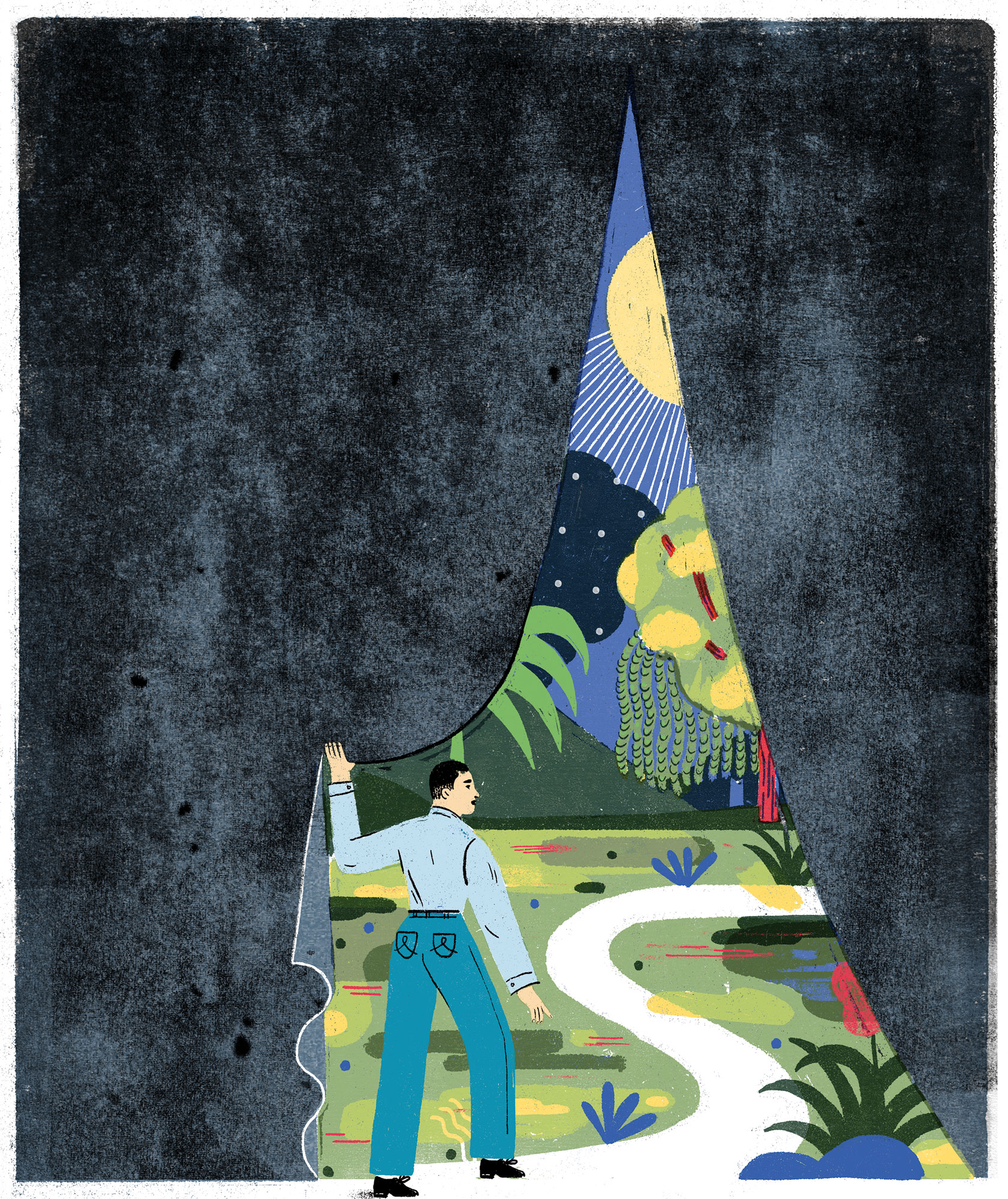
Images from the buddhist platform Tricycle, with thanks
While having our heart in what we do is an essential part of what makes life satisfying, it isn’t enough. Repeated failure, frustration, and lack of progress can leave us wondering whether we’re wasting our time. It is difficult to stick to a path if we don’t see it going anywhere. So the way we understand and experience success affects our willingness to keep going. The models of success we’re likely to have been given generally take us in the wrong direction. In the story of Business as Usual, success is measured in terms of wealth, fame, or position. A company making massive profits is regarded as successful, even when its ways of doing this harm its employees and our world. People are judged as successful simply because they have managed to acquire a vastly larger share of the world’s resources than they could ever need — at a time when hundreds of millions starve. It is the very hunger for this type of success that leads us, collectively, to plunder our planet. With the consciousness shift of the Great Turning, we recognize ourselves as intimately connected with all life, like a cell within a “larger body. To call an individual cell “successful” while the larger body sickens or dies is complete nonsense. If we are to survive as a civilization, we need the intelligence to define success as that which contributes to the well-being of our larger body, the web of life. Commercial success is easy to count, but how do we count the success of contributing to planetary well-being? Do we experience this success often? And if not, what is getting in the way?
TRY THIS: REFLECTING ON SUCCESS
Taking your definition of success as that which contributes to the well-being of our world, how often do you feel you are succeeding?
We experience success when we reach a goal that is significant to us. But what if our goal is the elimination of poverty or the transition to a low-carbon economy? If the change we want doesn’t happen in our lifetime, does that mean we will never experience success? For the encouraging boost we get when we know we’re moving forward, we need to find markers of progress we can spot more easily and often. What helps here is making the distinction between eventual goals and intermediate ones.
The progressive brainstorming process (described in chapter 9 of the Active Hope book) began with longer-range, eventual goals. These are the things we would really like to see happen, even if we can’t immediately see how they will come about. We take one of these eventual goals and list some of the conditions needed to bring it about. So if our goal is the elimination of poverty, we would need to have in place widespread political will, new taxation policies, redistribution of resources, and the like. Then, taking one of these, we ask, “What would be needed for this?” Each stage moves us closer to our present situation. Before long, we’re identifying steps that are within our reach, such as eating lower in the food chain or setting up a study-action group on world hunger. For any goal we choose to pursue, we track back in time to identify intermediate steps. Each time we take a step like this, we are succeeding. Instead of rushing on immediately to the next task, we can take a moment to savor these mini-victories. The following open sentence is a useful prompt for this process.
TRY THIS: SAVORING SUCCESS EVERY DAY with the following open sentence.
A recent step I’ve taken that I feel good about is…
There are steps we take that often don’t get counted, like the choice of where to place our attention. Just noticing that things are seriously amiss is a step on the journey. If we care enough to want to do something, that is also a significant mini-victory. Just to show up with bodhichitta is a success.
In a society that views success in competitive terms, it is usually only those recognized as “winners” who are applauded. We need to learn the skill of encouraging and applauding ourselves. We can reinforce our appreciation of the steps we take by imagining the support of the ancestors, the future beings, and the more-than-human world. When we develop our receptivity, we will sense them cheering us on. If we form a study-action group or build support in other ways, we can take time to do this for each other, noticing and appreciating what we’re doing well. When we reflect on past successes, we can ask, “What strengths in me helped me do that?” Naming our strengths makes them more available to us. However, the challenges we face demand of us more commitment, endurance, and courage than we could ever dredge up out of our individual supply. That is why we need to make the essential shift of seeing with new eyes — it takes the process of strength recognition to a new level, that of the larger web of life. Just as we can identify with the suffering of other beings in in this web, so too can we identify with their successes and draw on their strengths. There is an ancient Buddhist meditation that helps us do this. It is called “the Great Ball of Merit” and it is excellent training for the moral imagination:
TRY THIS: THE GREAT BALL OF MERIT
Relax and close your eyes, relax into your breathing…Open your awareness to the fellow beings who share with you this planet-time…in this room…this neighborhood…this town. Open to all those in this country and in other lands…Let your awareness encompass all beings living now in our world. Opening now to all time, let your awareness encompass all beings who have ever lived…of all races and creeds and walks of life, rich and poor, kings and beggars, saints and sinners…Like successive mountain ranges, the vast vistas of these fellow beings present themselves to your mind’s eye. Now open to the knowledge that in each of these innumerable lives some act of merit was performed. No matter how stunted or deprived the life, there was at the very least one gesture of kindness, one gift of love, or one act of valor or self-sacrifice…on the battlefield or in the workplace, hospital or home…From each of these beings in their endless multitudes arose actions of courage, kindness, of teaching and healing…Let yourself see these manifold, immeasurable acts of merit. “Now imagine that you can sweep together these acts of merit. Sweep them into a pile in front of you. Use your hands…pile them up…pile them into a heap, viewing it with gladness and gratitude. Now pat them into a ball. It is the Great Ball of Merit. Hold it now and weigh it in your hands…Rejoice in it, knowing that no act of goodness is ever lost. It remains ever and always a present resource…a means for the transformation of life…So now, with jubilation and thanksgiving, you turn that great ball, turn it over…over…into the healing of our world.
The more we practice this meditation, the more familiar we become with the process of drawing strengths from outside our narrow self. Knowing about the Great Ball of Merit can also change the way we think about our own actions. Each time we do something, no matter how small, that is guided by bodhichitta and contributes to our world, we know we are adding to this abundance.
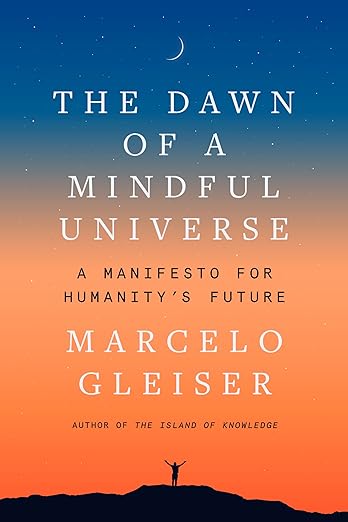
An award-winning astronomer and physicist’s spellbinding and urgent call for a new Enlightenment and the recognition of the preciousness of life using reason and curiosity—the foundations of science—to study, nurture, and ultimately preserve humanity as we face the existential crisis of climate change.
Since Copernicus, humanity has increasingly seen itself as adrift, an insignificant speck within a large, cold universe. Brazilian physicist, astronomer, and winner of the 2019 Templeton Prize Marcelo Gleiser argues that it is because we have lost the spark of the Enlightenment that has guided human development over the past several centuries. While some scientific efforts have been made to overcome this increasingly bleak perspective—the ongoing search for life on other planets, the recent idea of the multiverse—they have not been enough to overcome the core problem: we’ve lost our moral mission and compassionate focus in our scientific endeavors.
Gleiser argues that we’re using the wrong paradigm to relate to the universe and our position in it. In this deeply researched and beautifully rendered book, he calls for us to embrace a new life-centric perspective, one which recognizes just how rare and precious life is and why it should be our mission to preserve and nurture it. The Dawn of a Mindful Universe addresses the current environmental and scientific impasses and how the scientific community can find solutions to them.
Gleiser’s paradigm rethinks the ideals of the Enlightenment, and proposes a new direction for humanity, one driven by human reason and curiosity whose purpose is to save civilization itself. Within this model, we can once again see ourselves as the center of the universe—the place where life becomes conscious—and regain a clear moral compass which can be used to guide both science and the politics around it.
This last month has seen a huge community effort in our community, here at the Southern tip of South Africa. We’ve been collaborating with Poison-free Peninsula, national organisation Unpoison SA, and numerous other communities who have been working to counter the City of Cape Town’s plans to spray chemical herbicides onto streets and sidewalks across the City. In order to control the ‘weeds’ on roadsides, the City has contracted for the use of KleenUp, whose main ingredient is glyphosate. Glyphosate, most commonly known to be the main ingredient in Monsanto (now Bayer’s) product RoundUp has been under scrutiny since 2015 when the International Agency on Research on Cancer found glyphosate to ‘probably’ cause cancer. Since then many countries have restricted use, with some looking to ban it completely.
Not only is glyphosate dangerous for human health, it negatively impacts soil health and biodiversity. Glyphosate binds tightly to soil. It can persist in soil for up to 6 months depending on the climate and the type of soil it is in and has been found to kill populations of micro-organisms and fungi, changing the balance of soil ecosystems, in turn affecting longer-term plant health.
Here where we live in the iconic Cape Peninsula, there is a concentration of unique and rich biodiversity and eco-system diversity, found no where else in the world, and in Scarborough we are also guardians of a critically endangered wetland that supports precious populations of plants, amphibians and birds. Spraying glyphosate had to be stopped!
We are delighted that through a huge community effort of demonstrating the lack of support for chemical spray, and willingness within the Community to take over the responsibility for weed control on roads, Scarborough and Misty Cliffs are two suburbs that have been added to the City’s spray exemption schedule. It’s a huge local win, and at the same time, there’s lots more work to be done to remove glyphosate and other chemical herbicides entirely from South Africa. It’s still being used prolifically by the City on roads, in school grounds, on golf courses and within our food systems.
If you are interested in joining in the campaign to Unpoison South Africa, get in touch with Anna at unpoisonsa@gmail.com.
We are living in challenging times. The systems and culture we have created in our world are showing themselves for the destructive force they are for our planet. Increasing consumption, coupled with population increases means that our human species’ use of resources exceeds the Earth’s capacity by an increasing margin year on year. Today we need around 1.75 planets to provide the resources to meet our demand for consumption and to absorb our waste. According to WWF, by 2050, or even sooner, this will have increased to the need for 2 planets, ‘borrowing nature’ from future generations.
Many of us feel the burden of the irreversible loss of eco-systems, degradation of soils, loss of wild places, pollution of fresh water, and other ecological losses, and experience feelings of deep grief, coupled often with regret for our own lifestyle practices that have contributed towards this.
For others there is continued and growing anxiety about the trajectory the human species is currently following, and further losses that are feeling inevitable- including runaway climate change and species extinctions, even the fear of our own extinction. For many there is a growing feeling of urgency, coupled with the pain of feeling somehow paralysed or powerless.
As we see war unfold again in the Middle East this week, and violence and suffering continuing in many countries across the world, including South Sudan and Ethiopia, the sense of despair and helplessness can feel extremely acute.
Here in South Africa, these feelings of grief and anxiety, present themselves on top of extreme societal ‘complex trauma’, a traumatic history that for many remains unprocessed and unresolved. The adverse living conditions of many South Africans, extreme poverty (currently 45% of South Africa’s population) and extreme inequality (the richest 10% hold 71% of the wealth), compounds this trauma.
All of this can feel extremely distressing and overwhelming.
It’s no surprise it feels this way. The planet Earth is our home, our place of shelter, our provider of all that we need. When we see her change and come under stress, it’s only natural to grieve and to feel concerned. Our fellow people are our brothers and sisters and we all have the capacity to show and receive compassion, deeply rooted in our mammalian instinct of caring.
“We are capable of suffering with our world, and that is the true meaning of compassion. It enables us to recognize our profound interconnectedness with all beings.” – Joanna Macy
And yet, there’s also something much deeper here. All of the losses, the trauma, the destruction, the pain we cause, results from a narrative that still governs our thinking and actions, in a deeply subconscious way – the story of separation. A deep-rooted separation, that stretches back over centuries, from our very selves and our true nature, from each other and from the Earth. This worldview that we exist as individuals, separate from all other individuals and from all other beings in nature, has ripped apart the fabric of what it means to be fully human, and to feel our full belonging first and foremost as members of the Earth community, and to live in the truest sense of ‘Ubuntu’. For many of us, this separation is where our deep grief originates, and it is through holding this grief in community that we will be able to find our way back home.
Grief is not typically invited in our society. The typical response is rather to numb our feelings, finding ways to distract ourselves so we don’t feel the pain. Yet deep grief is a way for us to be present for the world, and to come into our full authentic power to make and support change, with no pretense that we can carry on the way that we are.
“Don’t ever apologize for crying for the trees burning in the Amazon or over the waters polluted from mines in the Rockies. Don’t apologize for the sorrow, grief, and rage you feel. It is a measure of your humanity and your maturity. It is a measure of your open heart, and as your heart breaks open there will be room for the world to heal.” – Joanna Macy
We invite you to join us for a series of Truth Rituals, based on the Work That Reconnects by Buddhist Scholar and Earth Elder, Joanna Macy, and adapted to suit our South African context. These Truth Rituals will be held outdoors in sacred spaces and are open to all. Through coming together and expressing our rage, fear, despair and emptiness, we will find our way back to our hearts and to a way of living in right relation with ourselves, all other beings, and our home planet Earth.
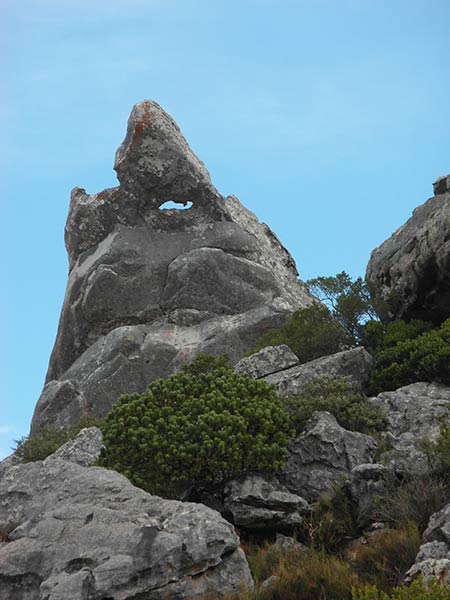
Join us on Sunday 22nd October: 9am – 11.30am for our first ritual of this series, at a very special sacred site – All Seeing Pyramid Rock, Blackhill. Meeting point is at the car park near the top (Sunvalley side) of the Glencairn Expressway and we will all move towards the site together. For more information and bookings please contact us on 061 864 6799 or gaiaspeaking@gmail.com. Recommended donation: R200 – R300
Yesterday was the UN “World Environment Day”. under the theme BeatPlasticPollution. And on 8th June it will be the World Ocean Day. Two drops of awareness in a vast ocean of Great Unravelling, which made me wonder what is being done in the country I call home, South Africa. Whilst we do have admirable local initiatives to clean our beaches, ecobrick and recycle ‘sea plastic’ into art, it made me realise I have no idea if,in the meantime, there are any lobbies working towards the actual ban of single use plastics in our country. Is the government -immersed in other energetic and economic challenges and scandals – needing more pressure from citizens? Do we not, as an economically privileged country within the continent have a certain responsibility to pioneer political and technological innovation in that field? What can we do on an individual level to make the ban happen?
Last week a small group of activists created a social media group and urged participants to request the ban of the use of harmful Round Up pesticides in the highly sensitive Cape Peninsula biodiversity hotspot we live in. It only took the support of a few hundred concerned residents writing letters to their local ward councillors and the extra initiative of a few of them to take the matter right up to the Premier of the Western Cape Province, where it was taken very seriously. It was an inspiring course of events for many, illustrating that we should not consider any action to be powerless, and how fast shift can happen nowadays. We all care, we all care for our mother. Some emerging political programmes are deeply engaged with her cause. Even if we have been programmed to believe nature is a machine, and corporate greed is still a widespread habit, in all areas there is knowing that radical change is necessary and urgent.
A shift to a more ecological civilisation is underway. Hereunder is an article published by theconversation.com
“Single-use plastic bans: research shows three ways to make them effective”
Published: January 13, 2023 8.15am SAST Authors: Antaya March, Steve Fletcher and Tegan Evans, University of Portsmouth, UK
Governments around the world are introducing single-use plastic product bans to alleviate pollution.
Zimbabwe banned plastic packaging and bottles as early as 2010. Antigua and Barbuda banned single-use catering and takeaway items in 2016, and the Pacific island of Vanuatu did the same for disposable containers in 2018.
The EU prohibited cotton buds, balloon sticks, plastic catering items and takeaway containers, including those made from expanded polystyrene, in 2021.
The UK government has followed suit by announcing a ban on the supply of single-use plastic plates, cutlery, balloon sticks, and polystyrene cups and containers supplied to restaurants, cafes and takeaways in England. The measure will start in April 2023. The same products sold in supermarkets and shops will be exempt from the ban, but subject to new regulations expected in 2024.
While the forthcoming ban is a step in the right direction, the production, use and disposal of plastics typically spans several countries and continents. The success of any policy aimed at restricting the use of plastic products in one country should not be taken for granted.
Our research continues to highlight that policies which influence what consumers buy, such as bans, taxes or charges, lack the reach to confront the global scale of pollution. The effect of banning single-use plastic items is limited to the jurisdiction in which it is implemented, unless it inspires a wider shift in public or commercial behaviour across international boundaries.
Without supporting measures, or by failing to treat the ban as the beginning of a broader phase-down of plastic, banning some items does little to change the attitudes which reinforce a throwaway culture.
The Global Plastics Policy Centre of the University of Portsmouth reviewed 100 policies aimed at tackling plastic pollution worldwide in 2022 to understand what makes them successful. Here are three key lessons which can make [bans] more effective.
Make it easy to use alternatives Consumers and businesses are less likely to comply with a ban if they are expected to go entirely without plastic overnight. Ensuring businesses can source affordable alternatives is critical. Antigua and Barbuda did this by investing in the research of more sustainable materials and listing approved alternatives to plastic, such as bagasse, a byproduct of sugar-cane processing.
To maintain public support, it helps if there are measures which prevent cost hikes being passed directly on to consumers.
Alternative materials or products must have a lower environmental impact than the banned product, but this isn’t always guaranteed. Substituting plastic bags for paper, for example, may not be the best idea when the entire life cycle of a product is accounted for.
Phase in a ban A phased approach to a ban improves how well it works but requires consistent and clear messaging about what products are banned and when. In Antigua and Barbuda, phased plastic bag bans in 2016 and 2017 generated support for banning other plastic products between 2017 and 2018.
In both cases, importing these products was restricted first, followed by a ban on distributing them, which gave suppliers time to find alternatives and use up existing stock.
This approach was used to good effect in an English ban on plastic straws, cotton buds and stirrers in 2020, allowing retailers to use up their supplies during the six months following the ban’s introduction.
Involve the public Information campaigns which explain why a ban is needed, what it means for the public and businesses and what alternatives are available serve to support a ban. This was evident from Vanuatu, where the inclusion of diapers in a ban was postponed due to public concerns around the availability of sustainable alternatives.
Working closely with the public like this can also encourage innovation. For example, in Vanuatu in 2018, weavers and crafting communities filled the gap left by banned plastic bags and polystyrene takeaway containers with natural alternatives made locally, including bags and food containers woven from palm leaves.
Single-use plastic bans can inspire wider changes to social systems and the relationship each person has with plastic. But without planned access to alternatives, a phased introduction, efforts to nurture public support and broader consideration of the entire life cycle of plastic, product bans have a limited effect on plastic pollution, and can even give the false impression of progress.
Thanks to the writers of this article. Various ideas here are examples of what could soon also happen in South Africa if we have enough voices and consensus.
If you want to read more of their articles, every Wednesday, The Conversation’s environment editor writes Imagine, a short email that goes a little deeper into a “climate” issue. Check their website.
Extracts from the book Active Hope by Chris Johnstone and Joanna Macy
Hereunder are some of my favourite extracts from the book Active Hope, some which we used for our online Gaia Speaking course “Active Hope in the Great Turning” this month during the Seeing with New Eyes session. I am drawing inspiration again from this section of the book as I prepare the section Going Forth, as it indeeds fills me with Active Hope.
It illustrates so well how we can Go Forth with the joy of being an synergetic part of humanity, one through who inevitably emergence with happen. And if we align with the concept and practice of “power-with”, this emergence will most certainly be produced in the direction that we personally wish humanity to follow. I hope these words provide as much relief as they do to me in these challenging times where we feel called to make a difference. – Joanna Tomkins
While the conversations between Mandela and de Klerk played a pivotal role in bringing apartheid to an end, this historic change wouldn’t have happened without a much larger context of support. Within South Africa, people risked their lives daily to engage in the struggle for change. Around the world, millions of people played supporting roles by joining boycotts and campaigns. If we focus only on each separate activity, it is easy to dismiss it by thinking, “That won’t do much.” To see the power of a step, we need to ask, “What is it part of?” An action that might seem inconsequential by itself adds to and interacts with other actions in ways that contribute to a much bigger picture of change. Remember our example of the newspaper photograph? When seen under a magnifying glass it appears as just a collection of tiny dots, but when, from a little distance, we see the photo as a whole, the larger pattern comes into view. In a similar fashion, a bigger picture of change emerges out of the many tiny dots of separate actions and choices. This link between small steps and big changes opens up our power in an entirely new way. Each individual step doesn’t have to make a big impact on its own — because we can understand that the benefit of an action may not be visible at the level at which that action is taken. Shared visions, values, and purposes flow through and between people. Nelson Mandela was deeply committed to a vision for his country that many were holding; the power of that vision moved through him and was transmitted to others. This type of power can’t be hoarded or held back by prison walls; it is like a kind of electricity that lights us up inside and inspires those around us. When a vision moves through us, it becomes expressed in what we do, how we are, and what we say. The alignment of these three creates a whole that is more than the sum of its parts. The words below, from Mandela’s defense at his trial in the 1960s, mean so much more because of the actions that followed them:
“During my lifetime I have dedicated myself to this struggle of the African people. I have fought against white domination and I have fought against black domination. I have cherished the ideal of a democratic and free society in which all persons live together in harmony and with equal opportunities. It is an ideal which I hope to live for and to achieve. But if needs be, it is an ideal for which I am prepared to die.”
THE POWER OF EMERGENCE
The concept of power-with contains hidden depths; so far we’ve described four aspects. First, there is the power of inner strengths drawn from us when we engage with challenges and rise to the occasion. Second, there is the power arising out of cooperation with others. Third, there is the subtle power of small steps whose impact only becomes evident when we step back and see the larger picture they contribute to. And last, there is the energizing power of an inspiring vision that moves through and strengthens us when we act for a purpose bigger than ourselves. All these are products of synergy and emergence; they come about when different elements interact to become a whole that is more than the sum of its parts. At every level, from atoms and molecules to cells, organs, and organisms, complex wholes arise bringing new capacities into existence.
At each level, the whole acts through its parts to achieve more than we could ever imagine from examining the parts alone. So what new capacities emerge when groups of people act together to form larger complex social systems? Our technologically advanced society has achieved wonders our ancestors could never have envisioned. We’ve put people on the moon, decoded DNA, and cured diseases. The problem is this collective level of power is also destroying our world. Countless seemingly innocent activities and choices are acting together to bring about the sixth mass extinction in our planet’s history. Seeing with new eyes, we recognize that we’re not separate individuals in our own little bubbles but connected parts in a much larger story. A question that helps us develop this wider view is “What is happening through me?” Is the sixth mass extinction happening through us as a result of our habits, choices, and actions? By recognizing the ways we contribute to the unraveling of our world, we identify choice points at which we can turn toward its healing. The question “How could the Great Turning happen through me?” invites a different story to flow through us. This type of power happens through what we say and do and are.
NOT NEEDING TO KNOW THE OUTCOME
The concept of emergence is liberating because it frees us from the need to see the results of our actions. Many of our planet’s problems, such as climate change, mass starvation, and habitat loss, are so much bigger than we are that it is easy to believe we are wasting our time trying to solve them. If we depend on seeing the positive results of our individual steps, we’ll avoid challenges that seem beyond what we can visibly influence. Yet our actions take effect through such multiplicities of synergy that we can’t trace their causal chain. Everything we do has ripples of influence extending far beyond what we can see. When we face a problem, a single brain cell doesn’t come up with a solution, though it can participate in one. The process of thinking happens at a level higher than just individual brain cells — it happens through them. Similarly, there’s no way that we personally can fix the mess our world is in, but the process of healing and recovery at a planetary level can happen through us and through what we do. ”
For this to happen, we need to play our part. That’s where power-with comes in.
THE HELPING HAND OF GRACE
All the individuals on a team may each be brilliant by themselves, but if they don’t shift their story from personal success to team success, their net effectiveness will be greatly reduced. When people experience themselves as part of a group with a shared purpose, team spirit flows through them, and their central organizing principle changes. The guiding question moves from “What can I gain?” to “What can I give?” We can develop a similar team spirit with life. When we are guided by our willingness to find and play our part, we can feel as if we are acting not just alone but as part of a larger team of life that acts with us and through us. Since this team involves many other players, unsuspected allies can emerge at crucial moments; unseen helpers can remove obstacles we didn’t even know were there. When we’re guided by questions such as “What can I offer?” and “What can I give?” we might sometimes play the role of stepping out in front and at other times that of being the ally giving support. Either way, we think of the additional support behind our actions as a form of grace. Based on an interview with Joanna, this poem, edited into verse by Tom Atlee, founder of the Co-Intelligence Institute, expresses well the grace that comes from belonging to life:
When you act on behalf of something greater than yourself, you begin to feel it acting through you with a power that is greater than your own.
This is grace.
Today, as we take risks for the sake of something greater than our separate, individual lives, we are feeling graced by other beings and by Earth itself.
Those with whom and on whose behalf we act give us strength and eloquence and staying power we didn’t know we had. We just need to practice knowing that and remembering that we are sustained by each other in the web of life.
Our true power comes as a gift, like grace, because in truth it is sustained by others. If we practice drawing on the wisdom and beauty and strengths of our fellow human beings and our fellow species we can go into any situation and trust that the courage and intelligence required will be supplied.
POWER-WITH IN ACTION
Here are three ways we can open to the kind of power we’ve been describing. We can: • hear our call to action and choose to answer it. • understand that power-with arises from what we do, not what we have. • draw on the strengths of others.
There will be times when we become alerted to an issue and experience an inner call to respond. Choosing to respond to that call empowers us. Once we take that first step, we start on a journey presenting us with situations that increase our capacity to respond. Strengths such as courage, determination, and creativity are drawn forth from us most when we rise to the challenges that evoke them. When we share our cause with others, allies appear; synergy occurs. And when we act for causes larger than ourselves, the larger community for whom we do this will be acting through us. We can experience our call to action in many different ways. Sometimes the uncomfortable discrepancy of realizing that our behavior is out of step with our values motivates us. Our conscience calls, and when we step into integrity, more of who we are heads in the same direction. At other times our call is more of a powerful summoning. We just know, even if we’re not sure how, that we need to be somewhere, do something, or contact a particular person. If we think of ourselves only as separate individuals, then we understand these intuitive calls purely in personal terms. Recognizing ourselves as part of the larger web of life leads to a different view. Just as we experience the Earth crying within us as pain for the world, we can experience the Earth thinking within us as a guiding impulse pulling us in a particular direction. We can view this as “cointelligence,” an ability to think and feel with our world.
Developing a sense of partnership with Earth involves listening for guiding signals and taking them seriously when we hear them.











 Gaia Speaking