My loves, we are living through fast-moving, heart-shattering times.
The looming threats of World War III and AI dystopia. Powerful pedophilic political puppeteers. ICE terrorism against our communities. Seemingly endless ongoing assaults upon human and more-than-human life…
So many of us feel defeated, fragmented, frozen. How about you?
How the hell are we supposed to hold it all? If Joanna taught me anything, it’s that we cannot do it alone.
We have been fed endless myths that teach us that individualism equals strength — the lone wolf, the fierce independent woman, the self-made hero who needs no one, and arrives at the perfect moment to save the day. These stories are dangerous because the truth of course, is that strong community, not individual strength, is what gets people through dark times such as these.
There is no script and no playbook for living through times of unraveling but the one thing I know is that if we want to lead with love we need to break our contract with insidious individualism and practice embedding and entwining ourselves in loving connection with one another.
Individualism undermines the belonging that most of us are so desperately hungry for, but breaking our contract with it is harder work than it might seem. We have been well trained by our culture.
Check in with yourself. When in the last week did you:
Swallow your heartbreak or outrage at the state of the world instead of sharing it with a loved one?
Say “I’m fine” to someone who genuinely wanted to know how you were?
Feel moved to reach out to someone and then talk yourself out of it? — It’s too much. I’m too needy. They’re probably busy.
Default to doom-scrolling over reaching out for connection — to a friend, colleague, or the natural world.
If any moments came to mind here — welcome to the club! There is nothing wrong with you. This is what it looks like to be raised in a culture of separation.Subscribe
The Great Turning is an invitation into a culture of belonging — but we have to be the ones to build that culture. No one is coming to do that part for us.
This is not easy work for people who have been wired to believe that separate = safe, but what wildly worthy work it is nonetheless.
Together, we can practice feeling the full, achy reality of what’s happening on our planet without being swallowed by it. We can remember that none of us carry this alone, so that we can start acting together. We can learn how to love ourselves and each other through the fear and vulnerability and into a lived experience of interdependence. We can redesign our lives in the pursuit of deep community, solidarity, and belonging, no matter how daunting it may feel.
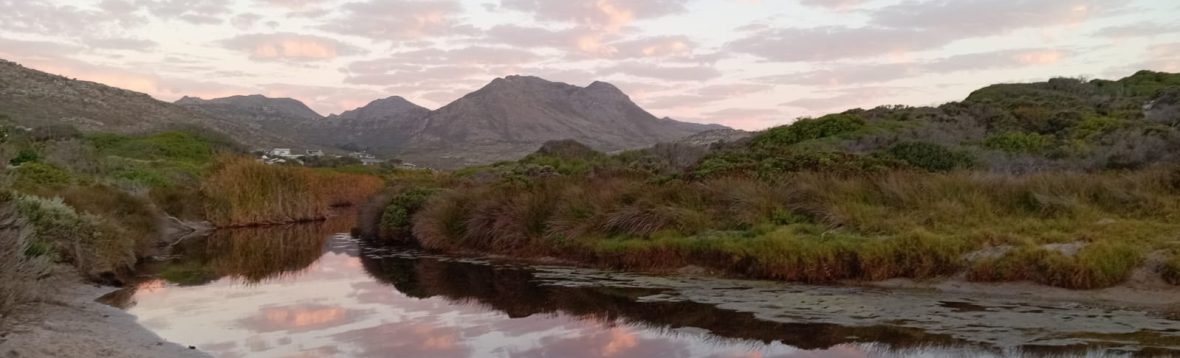
Last week, I was in Sedgefield, Western Cape, as facilitator and participant of the festival Ecolution. A small intimate festival celebrating our connection to the local environment. The festival focuses in particular on the wildlife corridors though the Well Being Sanctuary Land, in connection to wider Garden Route areas. Therefore, amidst other activities of dance, live music, drumming, talks and swims… we planted about 1000 trees, introducing more indigenous species and allowing the emergence and regeneration of ecosystems, in turn rewilding safe and natural passage for more-than-human beings.
Hereunder I reproduce a post by Mariette Carstens, the custodian of the land… And is a photo of her with her fellow being of the collective yellowwood.
I feel very emotional about this post!
It has taken me a few days just to land with and integrate the magic that folded here at Ecolution Festival 2025
This weekend, something extraordinary happened in my life and Well-Being Sanctuary.
Together—with children, elders, dreamers, and doers—we planted 1,000 trees across our sacred sand dune. The first day, 700 trees found their home in pre-dug beds of possibility. The second day, we dug and planted 300 more, each one a prayer for the earth, a promise to the future.
We did this as part of the Ecolution Project, expanding the wildlife corridor that runs through our land—linking Sedgefield and moving towards Keurbooms River, all the way to Addo Elephant Park. Imagine that… a living bridge for birds and all wild beings to roam freely once more.
This was not just reforestation. It was restoration. Celebration. Collaboration.
With deep gratitude, I want to thank:
Butterfly Foundation – you are doing incredible work accross the world. We will continue next week as the South Africa Nomads join us with Travelbase to plant even more trees. This is conscious traveling.
Antony Stone, The Rondevlei Learning Centre and Kula Malika, and the Swartvlei community—for standing with us in this vision.
And to the children of ALL AGES—who laughed, dug, danced, and planted with muddy hands and shining eyes—you are the heartbeat of this movement.
Here’s to joy, to soil, to sacred action.
“To plant a tree is to believe in tomorrow. It is to place hope in the hands of time and trust that love will grow roots.”
My is full
My partner and co-faciltator Simric Yarrow and I inaugurated a Spiral ‘playshop’ including different drama games to embody the Four Stages of the Spiral – Gratittude, Honouring our Pain for the World, Seeing with New and Ancient Eyes and Going Forth-. Again, as with previous new formats we experiences that ritual, coupled with embodied practices AND what has been called ‘Eco-poetic’ languages can intensify reconnection and understanding on more-than-intellect levels… body intelligence at work, fun and pleasure too.
Looking forward to next year’s Festival and look forward to seeing you there too.
“Arguably the greatest interview of our time with one of the wisest women of our time. Heartbreakingly inspiring, practical and transcendental, transformative words that Joanna Macy has conjoined so beautifully in her life and work.”
— Paul Hawken, author of Natural Capitalism
Joanna Macy and the Great Turning is a short film in which Joanna shares her understanding of these times we live in, when everything we treasure seems to be at risk. The film has screened at film festivals around the world and was featured in the PBS series Natural Heroes.
This is not a film about despair but one about the opportunity we have to come alive to our truest power, to “look straight into the face of our time, which is the biggest gift we can give,” and to participate in the Great Turning.
What is the Great Turning? It is, as Joanna describes it, the shift from the industrial growth society to a life-sustaining civilization. It is, she believes, the third major revolution of human existence, after the agricultural and industrial revolutions. This one, though, has to unfold much more quickly. The good news is that it is, all around the world.
“The most remarkable feature of this historical moment on Earth,” says Joanna, “Is not that we are on the way to destroying the world — we’ve actually been on the way for quite a while. It is that we are beginning to wake up, as from a millennia-long sleep, to a whole new relationship to our world, to ourselves and each other.”
This is a thoughtful, and ultimately hopeful, film for anyone concerned about the future of life on the planet.
“We imagine they’ll look back at us,” Joanna says, referring to future generations, “Living in these early years of the third millennium, and say, ‘Oh, those ancestors. They were taking part in the Great Turning.’”
Tara Brach, author of Radical Acceptance, says, “This beautiful, wise and evocative film captures the crisis and possibility of our times. The Great Turning is a global awakening to the dis-ease of our planet, our love of life and the revolution that can heal our world. Please watch this, share with all you know, and allow the inspiration and hope to fill your heart. “
ABOUT JOANNA MACY
Eco-philosopher Joanna Macy, PhD is a scholar of Buddhism, general systems theory, and deep ecology. A respected voice in the movements for peace, justice, and ecology, she interweaves her scholarship with five decades of activism. As the root teacher of the Work That Reconnects, she has created a ground-breaking theoretical framework for personal and social change, as well as a powerful workshop methodology for its application.
Many thousands of people around the world have participated in Joanna’s workshops and trainings. Her group methods have been adopted and adapted widely in classrooms, congregations, and grassroots organizing. Her work helps people transform despair and apathy, in the face of overwhelming social and ecological crises, into constructive, collaborative action. It brings a new way of seeing the world, as our larger living body, freeing us from the assumptions and attitudes that now threaten the continuity of life on Earth.
Joanna Macy has inspired thousands of people around the world who teach others about the Great Turning. You can find a lot of great resources at Joanna’s website, including all her books, and connect with others on The Work That Reconnects Facebook page.
HOW TO WATCH
Individuals and small groups can watch the film for free below. Institutions can purchase the film through the The Video Project. Questions about film festivals, streaming, and other uses can be sent to Chris Landry.
Last month, on 23rd August I had the pleasure to hear more heartfelt stories – and the song below – from some of Joanna Macy’s closest friends and family, in a public remembrance hosted by the Purpose Guide Institute online.
I invite you to have a new look at the In Memoriam page of the Work that Reconnects to read more testimonies and discover or learn more about the founder of the WTR. https://workthatreconnects.org/joanna-macy-in-memoriam/
It felt intimate and generous to learn more about her from those who knew her most and it also held testimony of the impact of her teachings on everyone.
Far from being as grand as the Dalai Lama, or as austere as her friend Thich Naht Hahn was, she was down to Earth and honest with all her feelings, extremely passionate and not shy of her crazy (we all have it though some of us hide it, right?:-)). Those of us who spiral the Work that Reconnects and who knew her direct or indirectly have laughed and cried at her intense capacity to intensely love every being on the Earth, not always in a ‘nice’ way, but always generously.
I am becoming suspicious of guru figures, especially as I am worried lately about the danger oI am quite suspicious of guru figures, especially as I am worried lately about the danger of ‘spiritual bypassing’ taking the focus away from the pressing calls of ecocide. We are most adept nowadays to follow the Western dominant culture and therefore to busily create new solutions that may often themselves become part of the problem, following the same old ‘business as usual’ growth patterns. We need to continually remember to question why we do what we do, and honestly think what we can do differently, each step of the way in this Great Turning we share.
Joanna Macy, though famous, felt like a simple channel of honest, fierce love. She expressed Life through her own powerful heart-mind and her wise words, yet at the same time she had lost attachment to her body and to her own beliefs, swimming skilfully in what she called “the collective moral imagination”.
I have only met Joanna Macy once in person in a break out room and in those few minutes I felt that she could ‘read’ through me. I think she could read love in all its colours, in all its textures and all its manifestations. She could decipher love when present in humans or ‘more than humans’, either in a leaf, or in a song. She could also detect love in the pain that it causes and not only its joys. From the darkest night of the soul, Joanna Macy would be able to bring back the gold. And that is why she said she was sad to leave us – although sometimes she felt like humanity was the captain of a “sinking ship”- for she would have loved (wholeheartedly, with both grief and awe) to be a part of the next chapter of humanity’s adventure, as uncertain as the outcome may be.
We hosted a Song that Reconnects Circle in remembrance of Joanna last month on 12th August in Glencairn. It was as always very connecting to open our hearts and voices simulteneously. And this time was specially moving, as we scattered quotes extracted from some of Joanna’s books: World as Lover, World as Self, Widening Circles, Coming Back to Life, Active Hope. I am sharing them hereunder, for your reflection.
These gatherings online and in person, and all the readings I have done lately as I delve into fresh archival memories, have reminded me yet again – as does the writing of this WTR newsletter loyally each month – how affirmed I feel by the depth and the reach of this moving body of work and the people who work it. As diverse as are the constituents of the beloved moving body of Earth. Always looking for ways to reconnect life, to reconnect to life.
by Joanna Tomkins
QUOTES BY JOANNA MACY: (read during Songs that Reconnect, 12th August 2025, Glencairn, Cape Town)
“Gratitude for the gift of life is the primary wellspring of all religions, the hallmark of the mystic, the source of all true art…. It is a privilege to be alive in this time when we can choose to take part in the self-healing of our world.”:
“In the face of impermanence and death, it takes courage to love the things of this world and to believe that praising them is our noblest calling.”
“Gratitude is liberating. It is subversive. It helps us to realize that we are sufficient, and that realization frees us.”
“Your pain is the breaking of the shell that encloses your understanding… could you keep your heart in wonder at the daily miracles… your pain would not seem less wondrous than your joy.”
“it is ok for our hearts to be broken over the world. What else are hearts for? There’s great intelligence in that’.
“Truth-telling is like oxygen. It enlivens us. Without it we grow confused and numb. It is also a homecoming, bringing us back to powerful connections’
‘The heart that breaks open can contain whole universe..’
“To see all life as holy rescues us from loneliness and the sense of futility that comes with isolation. The sacred becomes part of every encounter when you open to it and let it receive your full attention.” – in World as Lover, World as Self
“O you who will walk this Earth when we are gone, stir us awake. Behold through our eyes the beauty of this world. Let us feel your breath in our lungs, your cry in our throat. Let us see you in the poor, the homeless, the sick.
Haunt us with your hunger, hound us with your claims, that we may honor the life that links us.
You have as yet no faces we can see, no names we can say. But we need only hold you in our mind, and you teach us patience. You attune us to measures of time where healing can happen, where soil and souls can mend.
You reveal courage within us we had not suspected, love we had not owned.
O you who come after, help us remember: we are your ancestors. Fill us with gladness for the work that must be done.”
— inWidening Circles
“The future is not in front of us, it’s within us.”
“By inviting in these experiences of interconnectedness we can enhance our sense of belonging to our world. This mode of being widens and deepens our sense of who we are.”
“You don’t need to do everything. Do what calls your heart; effective action comes from love. It is unstoppable, and it is enough.”
“If the world is to be healed through human efforts, I am convinced it will be by ordinary people, people whose love for this life is even greater than their fear.”
I am part of the rainforest protecting itself– John Seed
It may seem altruistic to protect nature. For me, it’s self-preservation.
ASSUMPTION OF A DIVIDE
If I see a strong divide between me and nature, then nature can easily be seen primarily as a source of resources, a place to put waste, and a place to occasionally enjoy. If I do something to protect nature, it’s altruistic and often a bit peripheral. It’s a nice thing to do but not terribly important.
INTERCONNECTEDNESS OF ALL LIFE
If I realize the interconnectedness of all life, then I recognize – in a more visceral way – that my own well-being and my own life is utterly and intrinsically dependent on the health and existence of the larger ecosystems and this living planet I am part of. Here, protecting nature becomes self-preservation. I am dependent on the health and vibrancy of nature locally, regionally, and globally.
I AM NATURE PROTECTING ITSELF
I can also go one step further and recognize that I am nature protecting itself. I am a part of this living evolving system protecting itself. I am a separate self, and more fundamentally I am a temporary and local expression of this larger living and evolving system. I am a temporary and local expression of the living and evolving Earth. I am a temporary and local expression of the evolving universe and all of existence.
GETTING IT MORE VISCERALLY
Getting this more viscerally is a big and important shift. It brings us more in alignment with reality. It gives grounding. It’s nourishing. It makes us less dependent on the more temporary surface experiences and situations.
SYSTEM CHANGE
And, of course, it doesn’t mean I am or need to be “perfect” in terms of my own life. I am also a child of my culture. I am also embedded in our social and cultural systems.
As all of us, I live in an economic and social system that rests on the assumption that humans are somehow separate from nature, that the resources of nature are limitless, and that the ability of nature to absorb waste is equally limitless. We live in a human-created social system where what’s easy and attractive to do is also, in most cases, destructive to nature.
And we have another option. We can create an economic and social system that take our ecological realities into account, and where what’s easy and attractive to do – for individuals and businesses – supports life and our ecosystems. It’s possible. We can do it. We even know quite a bit about how to do it.
And yet, it does require a profound transformation of our whole civilization – our worldview, philosophy, economics, energy sources, production, transportation, education, and everything else. And that requires a deep collective motivation. Will we find it? Perhaps. But likely not until we are much further into our current ecological crisis. (Which is a socal crisis since all of our human systems are embedded within our ecological systems.)
John Seed is an Australian environmentalist and director of the Rainforest Information Centre, which campaigned to save the sub-tropical rainforests of New South Wales. He is also a prominent figure in the deep ecology movement and co-creator of the Council of All Beings, and other re-earthing processes.
Practice extracted from the book Coming Back to Life
This process in pairs serves to move us beyond constricted notions of who we are and what can happen through us. Of a metaphysical bent, it was originally inspired by followers of the Hindu sage Sri Ramana Maharshi. In their enlightenment intensives, persistent inquiry helps participants to free themselves from socially constructed self-definitions and attain a realization of the inherently unlimited nature of consciousness. In our workshop the process is condensed and less ambitious. We use it to remind ourselves that we are not our social roles or skin-encapsulated egos so much as participants in a larger encompassing awareness — or the awakening consciousness of Earth.
METHOD
Each pair sits close enough together and far enough from the others to avoid distraction. The partners take turns querying each other for 30 minutes each way, without comment. This is a strenuous mental exercise. It can produce extraordinary insights, sometimes with bursts of laughter, but it can feel relentless. It must be undertaken gently and with respect. Here are the instructions to Partner A, which are repeated to B later:”
“Partner A, you begin by asking B, “Who are you?” You listen. You ask again, “Who are you?” Again you listen, then repeat the question, “Who are you?” Rest assured that the answers will be different. You can vary the question, if you wish, with “What are you?” but you say nothing else. This continues for about ten minutes, until I ring the bell. Remember, you are not badgering your partner. You’re not suggesting that his responses are wrong; you’re helping him go deeper. You are in service to your partner. The tempo and tonality of your questions will vary; you’ll know intuitively when to ask again quickly and when to pause in silence. Now before you begin, bow to your partner — and to the essential mystery at the core of this being. After the first ten-minute bell, give the next instruction:
Now shift to a second question, “What do you do?” For the next ten minutes, you listen to those answers and keep repeating the query, “What do you do?” You can also phrase it, “What happens through you?” After ringing the bell, give the third instruction:”
“Please revert now to the first question, “Who (or what) are you?” Partner A bows to B once more when the cycle of questions is over. As the partners change roles, let them stand and stretch, without talking. Then repeat the process with B querying A. At the end of the entire practice, which takes an hour, allow plenty of time for people to digest what has happened for them. They may want to journal or talk quietly with their partners. Then, if there is time, bring them back together in the large group so that they reflect on the process.”
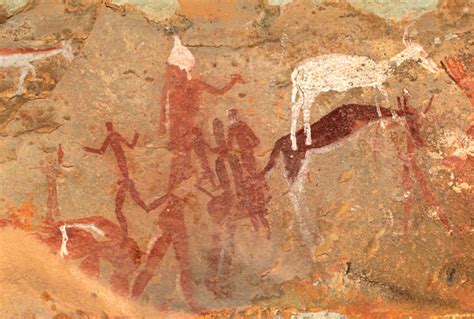
In animist traditions, such as those practiced by the Khoisan or the Xhosa for example, who settled and prayed on this Southern tip of Africa I inhabit, nature is viewed as animated and alive with spirit. Every river, tree, animal, and mountain has life-force and agency. Humans are not separate from nature; rather, they exist in a reciprocal relationship with it, shaped by mutual respect, responsibility, and acknowledgment of interconnectedness. This worldview supports practices that honour the Earth, such as rituals to ask permission from the spirits of plants and animals before hunting or harvesting, ensuring balance and respect for all forms of life.
Spirituality and respect for ancestors also play a vital role in Southern African animism. Ancestors are seen as mediators between the human world and the natural world, guiding and protecting their descendants. Through ceremony, people maintain relationships with ancestors, believing that their wisdom and presence can provide insights, blessings, and protection. In these ways, animism emphasises a holistic understanding of existence where spiritual, social, and ecological health are inseparable.
“The term animism was coined by an early anthropologist, Edward Burnett Tylor, in 1870. Tylor argued that Darwin’s ideas of evolution could be applied to human societies; he classified religions according to their level of development.
He defined animism as a belief in souls: the existence of human souls after death, but also the belief that entities Western perspectives deemed inanimate, like water, rocks and trees, and plants had souls.
Animism was, in Tylor’s view, the first stage in the evolution of religion, which developed from animism to polytheism and then to monotheism, which was the most “civilized” form of religion. From this perspective, animism was the most primitive kind of religion, while European, Protestant Christianity was seen as the most evolved of all religions.” [1]
By embracing animist traditions, without claiming they pertain to any particular religion, which tends to create polarity, we can contribute to revalorise them, overcoming these old colonial judgements of inferiority. As this worldview gets adopted more widely, we become more free to embrace gratitude for nature’s abundance and reinforce our right to connect to the environment and cultivate respect, without being judged. Animist beliefs are at the core of our humanity and do not contradict the alignment with any particular religion.
Our Western religious dominion theologies gave humans – first through Adam and Eve for example – dominion over the Earth. They set up a dichotomy between inanimate matter and animate spirit that lifts humans above creation and turns the rest of the world – from animals and plants to soil and water – into “resources” to be used. Unfortunately this vision has given shape to the Business as Usual story we participate in today.
By shifting perception from an isolated, human-centered worldview to one that honors the spirit within all living things, we can access a deeper, animist-inspired understanding of interdependence. This expanded awareness fosters empathy, reverence, and responsibility toward the natural world.
The Work That Reconnects invites individuals to cultivate a similar reverence and sense of kinship with the Earth. Rooted in systems thinking and inspired by Buddhist concepts of interconnectedness, Joanna Macy’s work incorporates animist traditions in its recognition of the living, interconnected nature of existence. It seeks to restore relationships between individuals, communities, and the more-than-human world, helping people to heal disconnections and remember their place within the larger ecological web.
“Animism is not a religion one can convert to but rather a label used for worldviews and practices that acknowledge relationships between nature and the animal world that have power over humans and must be respected.
These practices […] can also be forms of environmental care, farming practices or protests, such as those conducted by water protectors [around the world]. New Zealand’s 2017 act recognizing the Whanganui River as a legal person, the culmination of decades of Maori activism, could be described as animism taking a legal form.
Animist practices are as variable as the peoples and places engaging in such relationships.” [1]


 This weekend, something extraordinary happened in my life and
  Butterfly Foundation – you are doing incredible work accross the world. We will continue next week as the South Africa Nomads join us with Travelbase to plant even more trees. This is conscious traveling.
 “To plant a tree is to believe in tomorrow. It is to place hope in the hands of time and trust that love will grow roots.”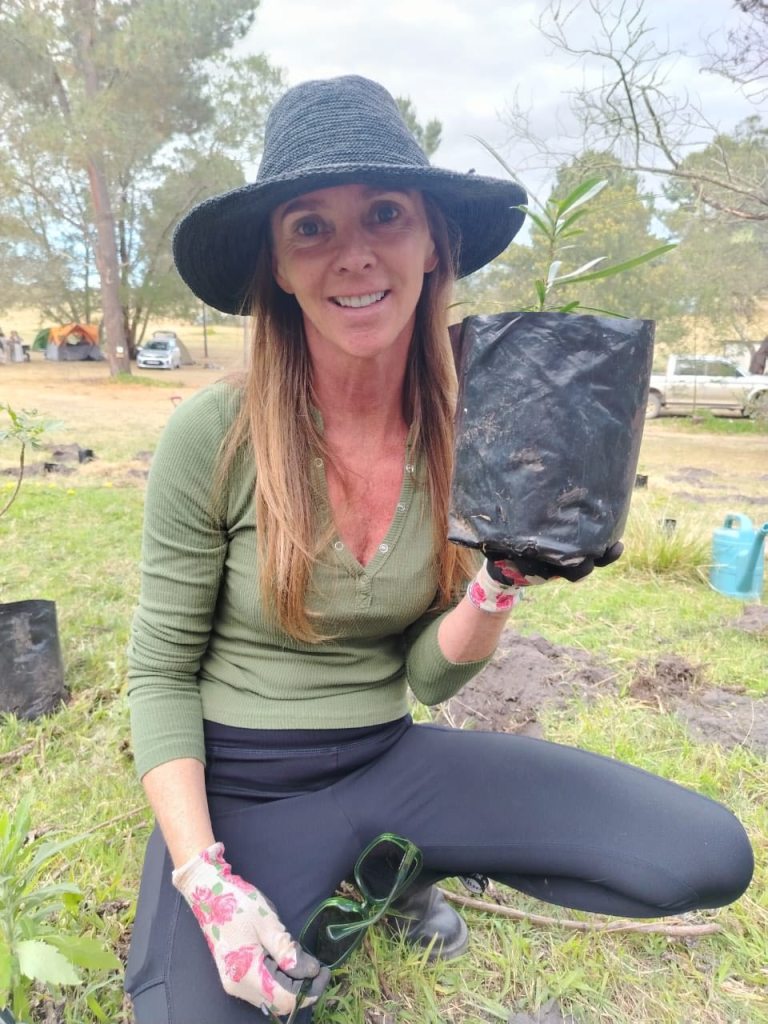






 Gaia Speaking