Uncategorized

The Nature of Our Power

Extracts from the book coming back to life, Chapter 3, “The Basic Miracle – Our True Nature and Power”, by Joanna Macy and Molly Young Brown.

Just as our pain for the world arises from our connectivity, so does our power. Yet the generative creativity operating in and through open systems is very different from our customary notions of power.

Power Over

This is a linear, unidirectional view of causality. Here power is seen as a possession — something you have and can get for yourself — and plays out in a zero-sum game: the more of it you have, the less I have; if you win, I lose.


In this view, power correlates with invulnerability. To keep from being pushed around, defenses are needed; armor and rigidity appear to make one more powerful, less likely to be influenced or changed by others.


From the systems perspective this notion of power is both inaccurate and dysfunctional. The exertion of greater force can certainly serve to defend oneself and others, but that function is one of protection, not to be confused with the kind of power that generates new forms, behaviors and potentials. That capacity emerges with and functions through relationship. We can call it power with or synergy.

Power With

To the social system, power over is dysfunctional because it inhibits diversity and feedback; by obstructing self-organizing processes, it fosters entropy or systemic disintegration.

Power with or synergy is not a property one can own, but a process one engages in.

Power Over Blocks Feedback

Democracy requires the free circulation of information for public decision-making. In the present hypertrophied stage of the Industrial Growth Society, however, even governments that call themselves democracies suppress information unwelcome to corporate interests.

Any system that consistently suppresses feedback — closing its perceptions to the results of its behavior — is committing suicide.

Synergy and Grace

It is our responsibility to give feedback to our body politic and to unblock feedback that has been suppressed. This is essential to the Great Turning from the Industrial Growth Society to a Life-Sustaining Society.

Our connectivity with others in the web of life does not mean that we should tolerate destructive behavior. On the contrary, it means we should step in when our collective health and survival are at stake.

The Power of Disclosure

The resources we need are present within the web of life that interconnects us.
This is the nature of synergy, the first property of living systems. As parts self-organize into a larger whole, capacities emerge that could never have been predicted and that the individual parts did not possess. The weaving of new connections brings new responses and new possibilities into play. In the process, we can feel sustained — and are sustained — by currents of power arising from our solidarity.
This phenomenon is similar to the religious concept of grace, but does not require belief in a God.

Grace happens when we act with others on behalf of our world.

Uncategorized

The Greatest Danger : The Deadening of Heart and Mind

Chapter 2 of the book “Coming Back to Life” by Joanna Macy and Molly Young Brown talks of the Pain for the World, what deadens our heart and mind and the cost of blocking our Pain for the World.

Here are some extracts from the book, which I have also recorded on the podcast “Coming Back to Life, Readings and Practices” (see Spotify link above)

“The Great Turning arises in response to what we know and feel is happening to our world. It entails both the perception of danger and the means to act. As conscious, embodied beings endowed with multiple senses, we are geared to respond: instantly we leap from the path of an oncoming truck, dash to douse a fire, dive into a pool to save a child. This response-ability has been an essential feature of life throughout human evolution; it allows us to adapt to new challenges and generate new capacities. It enables whole groups and societies to survive, so long as their members have sufficient information and freedom to act. In systems terms, response to danger is a function of feedback — the information circuit that connects perception to action. Appropriate response depends on an unblocked feedback loop.”

 “What we are dealing with here is akin to the original meaning of compassion: “suffering with.” It is the distress we feel on behalf of the larger whole of which we are a part. It is the pain of the world itself, experienced in each of us.

No one is exempt from that pain, any more than one could exist alone and self-sufficient in empty space. Feeling pain for the world is as natural to us as the food and air we draw upon to fashion who we are. It is inseparable from the currents of matter, energy and information that flow through us and sustain us as interconnected open systems. We are not closed off from the world, but integral components of it, like cells in a larger body. When that body is traumatized, we sense that trauma too. When it falters and sickens, we feel its pain, whether we pay attention to it or not.

That pain is the price of consciousness in a threatened and suffering world. It is not only natural; it is an absolutely necessary component of our collective healing. As in all organisms, pain has a purpose: it is a warning signal[…]”

“The problem, therefore, lies not with our pain for the world, but in our repression of it.

“So let us explore two questions. First, what causes this repression, and then what that repression costs us and our world.”

So, what deadens the heart and mind, we ask?

  • Fear of Pain
  • Fear of despair
  • Spiritual traps, like spiritual bypassing
  • Fear of not fitting in:

Sadness and regret are seen as a sign of weakness, while impassivity is seen as “cool”. Plus, no one wants to be seen as a prophet of doom or a conspiracy theorist

  • Distrust of our own intelligence
  • Fear of guilt
  • Fear of distressing loved ones
  • View of self as separate
  • Hijacked attention by all the gadgets and social media around us
  • Fear of powerlessness – What’s the point? L
  • Fear of knowing and speaking:

We cling to the image of our leaders as well meaning, even if they are incompetent, like we would cling to an abusive parent, and or fearing retaliation in some cases

  • Mass media ‘s message “CONSUME, OBEY AND BE SILENT”
  • Other factors such as time pressure and social violence and injustice that deaden our response…

And now, what is the cost of blocking our pain for the world?

“We may try to protect ourselves from feeling pain for the world, but that very effort costs us a great deal. We pay a high price in diminished awareness, understanding and authenticity.”

Impeded Cognitive Functioning

“As a doctor working with Vietnam veterans observed, “The mind pays for its deadening to the state of our world by giving up its capacity for joy and flexibility.”

“We cut ourselves off from information that contradicts our preferred assessment of the situation and that might arouse stressful feelings. Consequently, there’s less of our natural intelligence available to us.”

Impeded Access to the Unconscious

“What we ban from consciousness does not disappear. On an individual level, we store repressed material in our bodies where it may manifest as illness. And on the collective level, as Carl Jung pointed out, the distress we would banish gets acted out on the stage of history.”

Impeded Instinct for Self Preservation

“To be afraid to look at and respond to that which threatens all life constitutes a blocking of the muladhara, cutting off primal intelligence and energies essential to survival. ”

Impeded Eros

“To be cut off from this root chakra robs us of our birthright to deep ecstatic connections within the web of life. Without Eros, our lives become more desiccated and robotic, even as we dream up robots to serve us. This loss of Eros has led to a flourishing of pornography in which we pathetically try to revitalize our sexual natures in contrived and trivializing ways. The frustration of so basic an urge can lead to violence as well.

When the erotic drive is weak, we pay less respect to the aesthetic dimension of life. No longer seeing the arts as essential, we use them for embellishment and display of wealth, and we cut support and funding for art, music and drama in our schools and communities.

At the same time, we see a desperate pursuit of pleasure and short-term gratification in our culture today. There seems to be a new hedonism in the consumption of goods, entertainment, sex, alcohol. This hedonism derives from more than sheer appetite. Its frantic quality does not reflect a healthy lust for life so much as the contrary: the absence of — and yearning for — a truly erotic connection to life.”

Impeded Empathy

“Eros nourishes our rootedness in the web of life, fostering empathy, that vital connection to those with whom we share this world. Without empathy, our natural capacity to sense and identify with the joy and suffering of others is crippled. Instead, we tend to project our repressed fears and anger onto other people”

Impeded Imagination

“Free play of the imagination […] opens us to new ways of seeing and new ways of being.

This crucial source of all creativity is blocked when we resist images, ideas or feelings that might trigger moral pain”

Impeded Feedback

“Each act of denial, conscious or unconscious, is an abdication of our power to respond. It relegates us to the role of victim, before we even see what we can and want to do.”

Coming Back to Life

“ Our pain for the world […]is dysfunctional only to the extent that it is misunderstood and repressed.

[…] We don’t retrieve our passion for life, our wild, innate creative intelligence, by scolding ourselves and soldiering on with a stiff upper lip. That model of heroic behavior belongs to the worldview that gave us the Industrial Growth Society.”

“The worldview emerging now […] lets us behold anew and experience afresh the web of life in which we exist. […]It opens us to the vast intelligence of life’s self-organizing powers, ”

“It lets us honor our pain for the world as a gateway into deep participation in the world’s self-healing. ”

Excerpts From: Joanna Macy and Molly Young Brown “Coming Back to Life.”

Uncategorized

Shapeshifting by Kate Curtis

It’s an honour to share here one of Kate Curtis’ poems.

Kate is one of our facilitators. You can read her profile here.

Shapeshifting by Kate Curtis

Now I am dancing-

here is colibri,

here is butterfly,

here is tree.

Inside my body I discover

snake and whale,

hips which spiral,

fins and tail.

Some of us remember

especially when we drum,

and these memories fuel the mission

to plant for those to come.

The Earth she cries for greening

her people hear her call,

her creatures are inside us,

we must not let them fall.

They will show us when to listen,

They will show us where to work,

So many fronts are open

for us to heal this hurt.

I can feel them all awaken,

as my ancestors come forth,

weaving stories inside stories

from long before my birth.

There is much that calls for grieving,

there is much that calls for song,

many struggle to keep breathing,

many species that have gone.

As we continue with the drama

and the fighting in our minds,

while our heart just calls for loving peace

amongst the different tribes.

There are wars outside in deserts,

there are wars inside our heads,

and the rivers weeping silently

urge us, please, not to forget.

Yet the answers remain simple:

to return to love and breath,

to remember we are everything

and that nothing ends with death…

Let all life live inside me,

the shadow and the light.

May all I touch be sacred,

may my songs we clear and bright.

there is much that calls for song,

many struggle to keep breathing,

many species that have gone.

As we continue with the drama

and the fighting in our minds,

while our heart just calls for loving peace

amongst the different tribes.

There are wars outside in deserts,

there are wars inside our heads,

and the rivers weeping silently

urge us, please, not to forget.

Yet the answers remain simple:

to return to love and breath,

to remember we are everything

and that nothing ends with death…

Let all life live inside me,

the shadow and the light.

May all I touch be sacred,

may my songs be clear and bright.

Uncategorized

Meaning of the Eco-Soulcentric Stages of Life

by Bill Plotkin

Due to the loss or degradation of vibrant cultures, most contemporary people — at least 80% — get stuck in the third of the eight life stages, which is to say in early adolescence. By “adolescence,” I mean a psychosocial stage, not a chronological interval coincident with the teen years. And the early adolescence in which the majority of post-pubescent Westerners sleepwalk through the rest of their lives tends to be not even a healthy adolescence but, rather, what I’ve called a patho-adolescence. This is an egocentric existence focused upon the attempt to look good to others; to conform and/or to rebel against the ordinary and mainstream; to “get ahead” in the dog-eat-dog competition for material possessions, financial wealth, and social status; and to minimize the experience of challenging realities by way of addictions (whether to substances or to compulsive behaviors such as shopping, impersonal sex, or gambling).

The natural and wholesome virtues of a healthy adolescence have become relatively rare, virtues such as the cultivation of personal authenticity that grows hand in hand with social belonging and cooperation; the discovery of the joys and responsibilities of a healthy sexual identity and of erotic embodiment in intimate relationships; the desire and capacities to contribute to and help create a healthy, just, sustainable, imaginative, and life- enhancing human community; and an ever-developing reverence and gratitude for the web of life, with all its creatures and habitats, and a desire and capacity to protect and enhance the Earth community of which we are all natural members. In a healthy, mature culture, these virtues are defining qualities of early adolescence; their development is not postponed until adulthood.

This begs the question: What, then, is adulthood, true adulthood?

From the perspective of the Eco-Soulcentric Developmental Wheel, adulthood is a stage of life that has become progressively rare in the Western world over the past few millennia. It is not meaningfully defined in terms of the acceptance of “mature” responsibilities, or in terms of raising a family, contributing to community, earning a living, or honing a craft or vocation. All these achievements are fully realizable (and, except for raising a family, ordinary) in a healthy early adolescence. (In mature societies, although sexual exploration naturally begins in early adolescence, starting a family is normally postponed until the achievement of true adulthood.) Rather, true adulthood is the stage of life in which one consciously recognizes and embodies the unique life of one’s soul. This is a psychospiritual state that contemporary Western society would consider mystical, but would seem quite ordinary in a healthy society.

By “soul,” I mean our individual and unique place or niche in the Earth community — not our place in the human village (identified by social and vocational roles) but our place in the greater web of life (identified in terms of nature-based metaphors, human archetypes, or other mythic or poetic images). Your soul, in other words, corresponds to what poet David Whyte refers to as “the largest conversation you can have with the world” or “the truth at the center of the image you were born with.” This niche, this conversation, this truth, this image, is not primarily cultural or merely human; rather it is ecological and mythopoetic, which is to say clothed and communicated in the metaphors, symbols, images, dreams, and archetypes of nature and of our own wild minds.

Bill Plotkin, Ph.D., is a depth psychologist, wilderness guide, and agent of cultural evolution. As founder of western Colorado’s Animas Valley Institute in 1981, he has guided thousands of seekers through nature-based initiatory passages, including a contemporary, Western adaptation of the pan-cultural vision fast.

Uncategorized

The Three Dimensions of the Great Turning

The story of Business as Usual is putting us on a collision course with disaster. And by itself, the Great Unraveling can seem like a horror story that overwhelms and defeats, paralyzing us. Fortunately there is a third story, one that is becoming increasingly visible. You are probably already part of it.

As an aid to appreciating the ways you may already be part of this story, we identify three dimensions of the Great Turning. They are mutually reinforcing and equally necessary. For convenience, we’ve labeled them as first, second, and third dimensions, but that is not to suggest any order of sequence or importance. We can start at any point, and beginning at one naturally leads into either of the others. It is for each of us to follow our own sense of rightness about where we feel called to act.

  1. First Dimension: Holding Actions

Holding actions aim to hold back and slow down the damage being caused by the political economy of Business as Usual. The goal is to protect what is left of our natural life-support systems, rescuing what we can of our biodiversity, clean air and water, forests, and topsoil. Holding actions also counter the unraveling of our social fabric, caring for those who have been damaged and safeguarding communities against exploitation, war, starvation, and injustice. Holding actions defend our shared existence and the integrity of life on this, our planet home.

This dimension includes raising awareness of the damage being done, gathering evidence of and documenting the environmental, social, and health impacts of industrial growth. We need the work of scientists, campaigners, and journalists, revealing the links between pollution and rising childhood cancers; fossil fuel consumption and climate disturbance; the availability of cheap products and sweatshop working conditions. Unless these connections are clearly made, it is too easy to go on unconsciously contributing to the unraveling of our world. We become part of the story of the Great Turning when we increase our awareness, seek to learn more, and alert others to the issues we all face.

There are many ways we can act. We can choose to remove our support for behaviors and products we know to be part of the problem. Joining with others, we can add to the strength of campaigns, petitions, boycotts, rallies, legal proceedings, direct actions, and other forms of protest against practices that threaten our world. While holding actions can be frustrating when met with slow progress or defeat, they have also led to important victories. Areas of old-growth forests in Canada, the United States, Poland, and Australia, for example, have been protected through determined and sustained activism.

Holding actions are essential; they save lives, they save species and ecosystems, they save some of the gene pool for future generations. But by themselves, they are not enough for the Great Turning to occur. “For every acre of forest protected, many others are lost to logging or clearance. For every species brought back from the brink, others are lost to extinction. Vital as protest is, relying on it as a sole avenue of change can leave us battle-weary or disillusioned. Along with stopping the damage, we need to replace or transform the systems that cause the harm. This is the work of the second dimension.

  1. Second Dimension: Life-Sustaining Systems and Practices

If you look for it, you can find evidence that our civilization is being reinvented all around us. Previously accepted approaches to healthcare, business, education, agriculture, transportation, communication, psychology, economics, and so many other areas are being questioned and transformed. This is the second strand of the Great Turning, and it involves a rethinking of the way we do things, as well as a creative redesign of the structures and systems that make up our society.”

One area benefiting from such investment is the agricultural sector, which has seen a swing to environmentally and socially responsible practices. Concerned about the toxic effects of pesticides and other chemicals used in industrial farming, large numbers of people have switched to buying and eating organic produce. Fair-trade initiatives improve the working conditions of producers, while community supported agriculture (CSA) and farmers’ markets cut food miles by increasing the availability of local produce. In these and other areas, strong, green shoots are sprouting, as new organizational systems grow out of the visionary question, “Is there a better way to do things — one that brings benefits rather than causing harm?” In some areas, like green building, design principles that were considered on the fringe a few years ago are now finding widespread acceptance.

When we support and participate in these emerging strands of a life-sustaining culture, we become part of the Great Turning. Through our choices about how to travel, where to shop, what to buy, and how to save, we shape the development of this new economy. Social enterprises, micro-energy projects, community teach-ins, sustainable agriculture, and ethical financial systems all contribute to the rich patchwork “quilt of a life-sustaining society. By themselves, however, they are not enough. These new structures won’t take root and survive without deeply ingrained values to sustain them. This is the work of the third dimension of the Great Turning.

  1. Third Dimension: Shift in Consciousness

What inspires people to embark on projects or support campaigns that are not of immediate personal benefit? At the core of our consciousness is a wellspring of caring and compassion; this aspect of ourselves — which we might think of as our connected self — can be nurtured and developed. We can deepen our sense of belonging in the world. Like trees extending their root system, we can grow in connection, thus allowing ourselves to draw from a deeper pool of strength, accessing the courage and intelligence we so greatly need right now. This dimension of the Great Turning arises from shifts taking place in our hearts, our minds, and our views of reality. It involves insights and practices that resonate with venerable spiritual traditions, while in alignment with revolutionary new understandings from science.

© Constance Washburn – A Council of All Beings

A shift in consciousness is taking place, as we move into a larger landscape of what we are. With this evolutionary jump comes a beautiful convergence of two areas previously thought to clash: science and spirituality. The awareness of a deeper unity connecting us lies at the heart of many spiritual traditions; insights from modern science point in a similar direction. We live at a time when a new view of reality is emerging, where spiritual insight and scientific discovery both contribute to our understanding of ourselves as intimately interwoven with our world.

We take part in this third dimension of the Great Turning when we pay attention to the inner frontier of change, to the personal and spiritual development that enhances our capacity and desire to act for our world. By strengthening our compassion, we give fuel to our courage and determination. By refreshing our sense of belonging in the world, we widen the web of relationships that nourishes us and protects us from burnout. In the past, changing the self and changing the world were often regarded as separate endeavors and viewed in either-or terms. But in the story of the Great Turning, they are recognized as mutually reinforcing and essential to one another.

Uncategorized

The Earth Loves Us Back

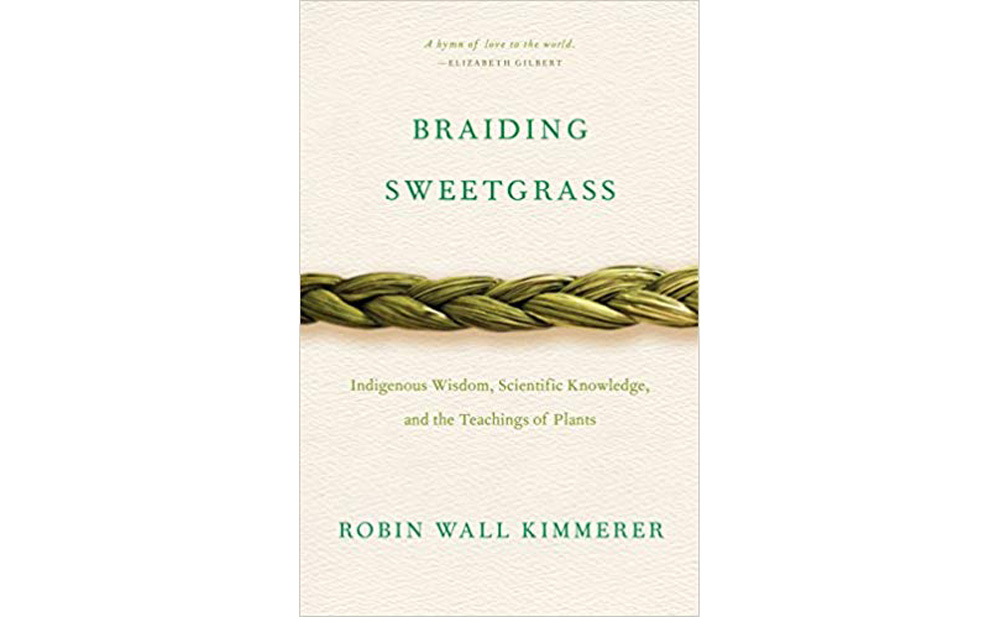
A review of the book Braiding Sweetgrass by Robin Wall Kimmerer called it a “hymn of love to the world” and indeed it is a quietly revolutionary book that calls on its readers to look closer at the natural world, and become part of it, rather than existing outside of it. Dr. Kimmerer weaves scientific knowledge with ancient indigenous wisdom and the teachings of plants, showing that they needn’t be mutually exclusive. She channels her love of the living world, with grief for the living world, into action to care for the land. It is a book we can all relate to as she weaves in personal stories and feelings of being a parent, a neighbour, a teacher and our relating to other human beings of all walks of life too.

Here is an extract from the Chapter “Picking Sweetgrass – Epiphany in the Beans”. I hope it
inspires you to purchase this book and discuss these ideas around you. In this Great Turning we are fortunate to have so many great minds around us, lifting up their voices in love for the Earth and in self love, for we are truly bonded in love, giving and receiving.

Braiding-Sweetgrass-Cover-1000x617

     Gardens are simultaneously a material and a spiritual undertaking. That’s hard for scientists, so fully brainwashed by Cartesian dualism, to grasp. “Well, how you know it’s love and not just good soil?” she asks. “Where’s the evidence? What are the key elements for detecting loving behavior?”

That’s easy. No one would doubt that I love my children, and even a quantitative social psychologist would find no fault with my list of loving behaviors:

  • nurturing health and well being
  • protection from harm
  • encouraging individual growth and development
  • desire to be together
  • generous sharing of resources
  • working together for a common goal
  • celebration of shared values
  • interdependence
  • sacrifice by one for the other
  • creation of beauty

If we observed these behaviors between humans, we would say, “She loves that person”. You might also observe these actions between a person and a bit of carefully tended ground and say, “She loves that garden.” Why then, would you not make the leap to say that the garden loves her back?

The exchange between plants and people has shaped the evolutionary history of both. Farms, orchards, and vineyards are stocked with species we have domesticated. Our appetite for their fruits leads us to till, prune, irrigate, fertilize, and weed on their behalf. Perhaps they have domesticated us. Wild plants have changed to settle alongside the fields and care for the plants – a kind of mutual taming.

 We are linked in a co-evolutionary circle. The sweeter the peach, the more frequently we disperse its seeds, nurture its young, and protect them from harm. Food plants and people act as selective forces on each other’s evolution – the thriving of one in the best interest of the other. This, to me, sounds a lot like love.

Uncategorized

To Choose Life – Choosing our Story

A weaving of extracts from Chapter 1 in the book “Coming Back to Life” by Joanna Macy and Molly Young Brown

This post goes in threes… First I am going to introduce the First chapter of the book Coming Back to Life through some wonderful quotes. I hope this inspires you to research more about these 3 inspirational authors. After that, I will explain the 3 Stories (with a capital S) that the authors describe in this chapter and, thirdly, you will hear about the 3 ways we can participate in what we call here the Great Turning.

John Seed is the founder of Rainforest Information Centre in Australia. He has dedicated his life to the protection of rainforests and their biodiversity for over 40 years. He says:

“How are we to represent the 4 billion years of living ancestry on whose shoulders we stand and whose future lies in our trembling hands?”

John Seed

Molly Young is an ecopsychologist and the co-author of the book I am extracting the following quote from:

“The whole structure of corporate capitalism participates in this kind of self deception, as we ignore and cover up the enormous harm done to the environment, our fellow creatures and to oppressed peoples around the world”

 “Living within a society that denies the pain it causes engenders deep conflict within us.” “Being nice, even being intelligent means going along with the communal deception”.

“This is not who we really are: self centered, arrogant, greedy, contemptuous of other humans and life forms. No! We have been hijacked by an insane, alien culture of our own foolish making.” MYB

Molly Young Brown

And, finally, Joanna Macy, founder of the Work That Reconnects and also coauthor of this book states:

“Buddhist social thinkers see that what is at work here are institutionalised forms of the 3 mutually reinforcing “poisons” at the root of all human suffering: greed, aggression and delusion.

These errors become institutionalized as political, economical and legal agents in their own right. They attain a degree of autonomy extending beyond the control and the conscious choices of any individuals involved.

This understanding can motivate us not to condemn as much as to work to free ourselves and others who are in bondage to these institutionalized prisons.”

“It is essential that we know this: we can meet our needs without destroying our life-support system”. “All we need is the collective will”.

Joanna Macy

If there is to be a liveable world for those who come after us, it will be because we have managed to make the transition from the Industrial Growth Society to a Life Sustaining Society. When people of the future look back, they will see more clearly than we can now, how revolutionary our actions were. Perhaps they will call it the time of the Great Turning.”

Choosing our Story:

“By story is meant our version of reality, the lens through which we see and understand what is happening now in our world. Often our story is largely unconscious and unquestioned, and we assume it to be the only reality.

In the industrialized world today, the most commonly held stories seem to boil down to three.

[…] They are all “true.” Individuals and groups and collectives choose the one they want to get behind, the one that seems to hold the widest and most useful perspective for them.

  1. Business As Usual

Business as usual is the story of the Industrial Growth Society. We hear it from politicians, business schools, corporations and corporate-controlled media. Here the defining assumption is that there is little need to change the way we live. The central plot is about getting ahead. […]

  1. The Great Unraveling

The Great Unraveling is the story we tend to hear from environmental scientists, independent journalists and activists. It draws attention to the disasters that Business As Usual has caused and continues to create. It is an account backed by evidence of the ongoing derangement and collapse of biological, ecological, economic and social systems.

  1. The Great Turning

The Great Turning is the story we hear from those who see the Great Unraveling and don’t want it to have the last word. It involves the emergence of new and creative human responses that enable the transition from the Industrial Growth Society to a Life-Sustaining Society. The central plot is about joining together to act for the sake of life on Earth.”

Let us look at how this Great Turning is gaining momentum today, through the choices of countless individuals and groups. We can see that it is happening simultaneously in three areas or dimensions that are mutually reinforcing. These are:

1. Actions to slow the damage to Earth and its beings

Perhaps the most visible dimension of the Great Turning.

2. Analysis and transformation of the foundations of our common life

In a nutshell “Understanding the dynamics of corporate capitalism and

generating structures to govern ourselves”

3. A fundamental shift in worldview and values

The actions we take — and structures we build — are a mirror of how we relate to Earth and each other and this book is meant to facilitate this third dimension of the Great Turning, creating a holding space for us to shift our perception.

“Many of us are engaged in all three dimensions, each of which is necessary to the creation of a life-sustaining society. People working quietly behind the scenes in any of these three dimensions may not consider themselves activists, but we do. We consider anyone acting for a purpose larger than personal gain or advantage to be an activist.”

Much gratitude to the authors and contributors of this life-changing book.

This is Gaia Speaking, thanks for Reading.

Uncategorized

Twenty Principles of Eco-Resilience

It’s pretty clear what isn’t working, but not so easy to envision the practicalities of a sustainable world that could really work. Craig Chalquist and I have been wrestling with this, and have developed 20 ecoresilience principles for personal and cultural adaptation to a changed planet. We’ve gathered wisdom from many sources, including the nature-based permaculture principles, ecopsychology, ecotherapy, ecospirituality, community building endeavors, indigenous wisdom, the arts and depth psychology. Our hope is to provide at least the beginnings of an integral and hopefully inspirational view of how we and “all our relatives” might survive and even thrive on our Earth homeplace as environmental, political, economic and cultural conditions become ever more challenging.

“The light is waiting to be felt by you in visions of a new paradigm and a new kind of culture that we all have the capacity to create. I support you in spending a great deal of time and energy pondering, savoring, and feeling that vision in your bones…Let that vision light your way in the darkness…Only by holding the vision alongside the current dark, bone-chilling reality can any of us feel ‘free in the tearing wind.'”

~ Carolyn Baker, Collapsing Consciously

ASSUMPTIONS – MAPPING A WAY FORWARD:

 The Big Lie – anthropocentrism, human separatism/supremacy, not operating by nature’s laws.

 The Deep Truth: Interbeing, Interconnectedness, Integral existence

 Applying nature’s ethics and principles to the redesign of our society.

 Permaculture ethics and Natural Law principles

 The Permaculture Petals/Sectors of Society

 All sectors are in some stage of Transition or Turning (or Collapse). Conflict between old and new paradigms.

 Some of the sectors aren’t focused on more than others. This is where ecopsychology and ecospirituality can help. Externals-only practical solutions ignore the importance of the Archetypal Feminine and subjectivity for balanced, integral human survival. The “soft” side of community is essential.

THE SECTORS OF HUMAN SOCIETY:

1. Land, Water and the rest of nature

2. Food, Shelter, Clothing

3. Trade, Finance and (Home) Economics

4. Energy, Tools and Technology

5. Transportation

6. Community Governance and security

7. Social Support Systems – health care, family, community

8. Education

9. Arts, Media, Communication

10. Heart, Soul and Spirit.

20 Principles of Cultural Ecoresilience: Personal and Community Adaptation to a Changed Planet:

© 2016 Linda Buzzell and Craig Chalquist lindabuzzell@gmail.com Communities magazine, Spring 2017

1. Recognize Nature as Our Guide – Know and align with the movements and patterns of the natural world.

Contrary to our delusions of grandeur, in the long run humans are not actually in charge of this planet, nor can we indefinitely force it to fit our own selfish, short-sighted goals. To continue to survive as a species, we need to be in harmony with the rest of nature instead of fighting against it.

2. Respect the Wild Around and Within Us – Preserve greenspace and wild places – including in our hearts.

This basic principle seems obvious to most environmentalists and it’s critically important for true resilience that urban populations fully understand that nearby and distant less-human-controlled places – land and water – determine our fate. However, these places don’t need to exclude humans. In fact places that we see as “wilderness” often diminish in the absence of the indigenous human caregivers integral to their ecosystem. We also need to understand that wild places and their inhabitants aren’t just here to serve humans and that the rest of nature has intrinsic rights we ignore at our peril.

3. Come home to where you live – Return to earthly reality in acts of deep homecoming.

To be truly resilient we need to leave behind the modern “nowhere and everywhere” fantasy bubble fostered by the media, cybercommunications and cheap, fossil-fueled travel. We can then RELOCALIZE and re-emplace our lives, reorienting to actual earth time and space. The disconnection from our own local, bioregional life-support systems (and the habitats of our local animal and plant siblings) allows us to thoughtlessly damage specific earthplaces. We can rediscover the deep pleasure of emplacement as we relearn the historical, geographical, biological and even geological context of where we live and share it with our children and grandchildren.

4. Build Heartsteads – Create wisdom circles and gather around a common purpose.

We can organize local change efforts with people who resonate with a shared vision, goal, task, or dream of community that gives its members a sense of meaning, purpose and agency.

5. Replace Monoculture with Polyculture – Welcome in who and what has been silenced or excluded.

Nature abhors a monoculture! We need merely observe a cleared piece of open ground to see how nature deals with a vacuum: it is soon full of a wide variety of plants and animals. And to limit a field to one species of plant involves constant “weeding” as we vainly try to remove the polyculture that wants to move in. We can learn from this rule of nature as we create our heartsteads, circles and other human groups, opening our arms to all, even those our society might consider “weeds” or marginal. There can be no communal, political, or environmental renewal without a renewal of community and environmental justice.

6. Start Small and Learn as We Go – Make small initial interventions coupled with constant assessment.

This principle, articulated by permaculture co-founder David Holmgren as “Use Small and Slow Solutions,” guides us to start with least-harmful, low-tech, simpler, and time-proven solutions and reserve extreme measures for truly desperate situations.

7. Broaden Your Focus from Linear to Systemic – Shift your attention from simple causes to complex interactions.

Systems and Complexity Theory teach us that life is much more complicated than simple pushes and pulls, causes and effects. Living systems are characterized not only by their elements but by the interactions between elements. It is necessary to think the way nature does: in the round, focusing more on process and interaction than on content and element.

8. Simplify, Decentralize, Interlink – Keep an appropriate scale.

Starting small (Principle #6) reminds us of the importance of not growing beyond nature’s limits. Poorly designed overcomplexity governed by giant centralized monocultures is the bane of modern industrial society and leaves us vulnerable to collapse. Think of the Titanic, the giant ship “too big to fail” that ended up on the bottom of the ocean. Simpler systems are often more robust – and can be interlinked into a highly resilient, interconnected web of new, earth-based cultures.

9. Act Local, Share Global – Be helpful well beyond your community.

Rebuilding local community and relocalizing the basics of life – food, companionship, building materials, medicine, entertainment, work, our support systems, the economy and more – is a basic principle of sustainability. But no community can be fully selfsufficient, especially in a world in which humanity has long been a planetary species. Centuries before modern globalization taught us its cruel lessons of displacement and irresponsibility, pockets and cultures of humanity spread information and trade networks wherever we lived, in conditions pleasant or inhospitable. The counter to a Road Warrior post-collapse chaos of “all against all,” as Hobbes put it long ago, is for groups and communities to pool resources, share knowledge, build kinship webs, and form strong alliances based on common needs.

10. Rely on Intelligent Redundancy – Set up backup plans and alternative resources.

Or as they say in the computer world: back up, back up, back up! The secret of ecoresilience, whether physical or cultural, is having multiple backups, fallbacks, and interconnections.

11. Create Wise Governance – Reimagine community leadership developmentally.

This is probably the most difficult cultural ecoresilience principle of all, perhaps because women and men have been pondering “right governance” for millennia without taking developmental maturity into account. For our era and critical situation, we need to rely on the inclusive practices of council, restorative justice, egalitarian power-sharing, and peaceful conflict resolution to resolve inevitable differences – while also encouraging natural leadership. Inspired by indigenous wisdom, we need to create initiatory procedures through which leaders must be tested to guarantee their responsibility, self-reflexivity, wisdom, courage, and emotional maturity.

12. Decommodify Life – Redesigning the Economy.

To create wise and equitable governance, we must take back control of community leadership from those who benefit most from today’s corrupt global economy. The word economy comes from the Greek “oikos” (home) and means management of the household. But as Senator Gaylord Nelson famously remarked, “The economy is a wholly-owned subsidiary of the environment.” Our society’s privileging of the money economy over everything else has gotten us into the mess we’re in: we have turned almost everything, including human beings and the rest of nature, into a commodity to be bought and sold in the marketplace for profit, with disastrous results.

13. Adopt an Ethos of Care – Make sure everyone is embraced.

Another part of reinventing community governance involves revisioning local and global care systems. We need to take a deep look at our crumbling family and community support networks to see how they can be creatively redesigned for maximum physical and mental well-being for all – including “all our relatives”.

14. Prepare Crisis and Trauma Teams – Emergency readiness and training first responders.

Rapidly degenerating global conditions demand robust and resilient crisis preparation and backup plans. We need the redundancy mentioned above: multiple ways to perform each function. And as part of our redesign of community governance, we need to reinvent emergency preparation and community protection practices, rethinking the deep meaning of true “security” philosophically and realistically, while not ignoring potential threats from flood, drought, fire, toxins, pandemics, criminal behavior — or even military attacks. We need to train psychologically-savvy, flexible, resilient and redundant first responder trauma and ecoresilience teams to help the community survive proliferating extreme weather and economic disruption events as well as traumatic social events resulting from the unraveling or collapse of our culture.

15. Design for Replenishment – Build nothing that does not enrich the natural world and support future generations.

As William McDonough and Michael Braungart observe in their excellent book Cradle to Cradle, we have long been entranced by industries and products that ravage and pollute. Merely making them less destructive, while useful in the short run, remains within the alienating worldview that gave rise to them. The same might be said for cultural structures like overlarge cities, megacorporations and even nations. Instead, we can design for right-sized personal and ecological health, productivity, and abundance. What we make can be good for the natural world of which we are a living expression.

16. Combine Old Knowledge with New- Integrate the deep wisdom of the past with the smartest and most nature- friendly knowledge and practices of our era.

For true ecoresilience in the 21st Century we need to combine traditional and contemporary knowledge and practice. This includes educating our next generations with the understanding and practical/cultural skills needed to survive and thrive in very different conditions from the ones we now live in – instead of preparing them for a world that is rapidly passing away. Keepers of knowledge, tradition, and resources can help multiply back up, diversify, and safeguard what the community depends on to survive and flourish.

17. Develop a Deep Appreciation and Understanding of Human Culture – Preserve, learn from, and expand the humanities.

In addition to practical skills, each person needs access to the stories that provide individual and collective guidance and call most deeply to our hearts, minds and souls. From humanity’s earliest days, gathering around the fire to hear tales has been basic to our species. This kind of learning finds nourishment in the tales and lore of every human culture, including history, philosophy, folkways, and the stories we have told and continue to tell about our life on this planet. The humanities engage us in discussions about primary values, about what matters most in life, and about paths that lead to fruition and wholeness and those we should not take. This is how we learn about human nature and what it needs, including justice, beauty, and purpose.

18. Slow Down and Reflect Deeply – Regrounding ourselves so we can stay sane during “The Long Emergency”.

When we’re in an extreme situation and are working towards quick individual or collective behavior change “or else,” we need to pace ourselves, be especially gentle and patient with our progress and tend the inner psychospiritual ecosystem with ongoing reflective practices, both personal and collective. There are many ways to do this. Artful community guides will be able to help us individually and collectively keep our spirits and positive energy up as we confront the challenges and make the necessary changes in how we live. This is a challenging and delicate endeavor, as we need to find a balance between “doom and gloom” and unrealistic escapist fantasy: the place where an accurate assessment of our situation is accompanied by enjoyment and gratitude for the richness of nature and all our relationships.

19. Explore Reverent Practices – Cultivate awe and appreciation of the more-than-human.

By exploring a wide variety of possibilities, we can discover and benefit from a consciousness-raising practice of our choosing, we can explore a wide variety of possibilities. Many practices increase the feeling of awe and love for the world and its cosmic frame. Let us not hesitate to call such activities “spiritual” if we choose, although “reverent” might be an alternative for some.

20. Put Arts at the Heart – Celebrate, create, and ceremonialize.

Too many environmentalists are caught up in gloom, fear and panic. While it’s true that the situation is critical and life-threatening and we must yell “Fire!” to wake up our communities, it’s also a psychological fact that most people can’t effectively process unremitting traumatic information and soon numb out and resist such messages. As part of keeping our community’s spirits up during Transition, we can foster and integrate play, festival, dance, music, drama and all the arts to nurture the cultural life of the community, share people’s rites of passage through the human lifespan, enjoy the experience of being together and celebrate appreciative ties to Earth and the seasons. As we become more effective ecoresilience leaders and transition guides we learn to help ourselves and others balance the bad news with these simple joys of life: good food, music, inspiring stories, life-saving humor, beautiful art, joyful dance, kind friends and exciting, earth-enhancing projects.

“What more can we accomplish now than the survival of the soul? Harm and decay are not more present that before, perhaps, only more apparent, more visible and measurable… there is increasing insight into humanity’s capacity for unspeakable harm, and perhaps where it leads.

So much in collapse, so much seeking new ways out. Room for what new can happen.” ~ Rainer Maria Rilke

Uncategorized

Joanna Macy and the History of the Work That Reconnects

This group work arose in North America in the late 1970s, during a time of escalating concerns about nuclear weapons and nuclear power. Joanna Macy and her colleagues observed that when people share with others their feelings of fear, anguish or despair, their power to act for change is released. 

Rapidly the efforts of these people and many others synergized to develop a model that used counseling methods, spiritual principles, ritual and myth, laughter and tears, reverence and irreverence to help individuals break out of the numbness of despair and denial. 

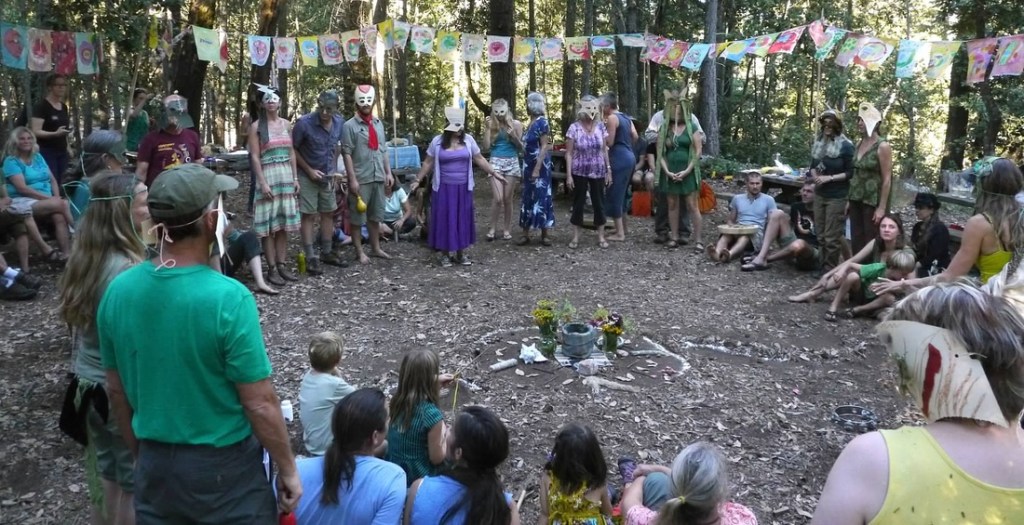
In the mid-1980s participants began calling it Deep Ecology work and by then the work was spreading around the world with workshops often taking the form of so-called “Councils of All Beings”.

Coming Back to Life, co-authored by Joanna Macy and Molly Young Brown, was published in 1998 to provide an up-to-date description of the theory behind the work and some sixty of its exercises. From this book onwards, the group work came to be called “the Work that Reconnects”.

Joanna Macy has created a groundbreaking theorethical framework for personal and social change, as well as a powerful workshop methodology for its application.

The wide-ranging work addresses psychological and spiritual issues of the industrial growth society, the cultivation of ecological awareness and it enables a fruitful resonance between Buddhist thought and contemporary science. It helps people transform despair and apathy in the face of overwhelming social and ecological change.

Joanna Macy has written many books that are broadly distributed. I strongly recommend you start by reading Active Hope, How to Face the Mess We’re in without Going Crazy, which she wrote with Chris Johnstone in 2012. They are currently working together on a reviewed edition to be published in 2022, 10 years after the first. We’ll talk more about the concept of “active hope” on this blog soon.