I’m originally from the UK and this year have taken the opportunity to travel back there to visit family. I haven’t spent much time in the UK recently, what with Covid travel restrictions and the dissonance I feel in terms of my own carbon footprint when I travel by air. As a result the changes that have taken place in the UK to move towards a more ‘eco-friendly’ way of living were very noticeable to me: A huge interest in electric vehicles; plant-based alternatives to meat diets available everywhere; more sustainable packaging options; significant growth in renewable energy (nearly 50% of the UK’s power is now generated from renewable sources, up from just 20% in 2010). While the changes I’ve seen here are truly necessary, at the same time I find myself still asking the question of whether these changes truly have the potential to go to the depths we need in order to ensure a life-affirming future for all, one that regenerates our natural and cultural systems, or are we simply trying to find ways to perpetuate ‘business as usual’, albeit with a green tinge? Things are never simple, and the devil is always in the detail. It feels like we are moving towards ‘less bad’, within the context of the consumer-conformist society we live in, rather than a truly regenerative culture.
Regenerative Urban Culture…
It feels that we urgently need to reframe our actions and responses within a new context: One that moves beyond the story of separation that we have been operating within, towards one of interconnection and regeneration.
Our economic systems have been built on a paradigm of separation, essentially extractive both in terms of ecology and wealth distribution. This sense of separateness from nature began over 500 years ago with the advent of civilisation and the increasing rationalistic portrayal of nature as a resource to be used for human betterment.
While we hear businesses telling customers and investors what they are doing in terms of social and environmental responsibility for most (with a few notable exceptions – check out the incredibly inspiring Patagonia story), this is mainly about minimizing risk in order to maximize profits (business as usual). The fundamental question remains of whether it is possible to shift business models sufficiently in order to meet the culture and nature crisis we find ourselves in, or do we actually need to entirely rethink our economic models? It seems to me that as long as we continue to see the environment as a subset of the economy, and nature as ‘natural resources’ to be used for economic gain, nothing substantial will ever change.
Otto Scharmer’s work is helpful here. Scharmer states that in order to meet the challenges of this century we need to update our economic logic and operating system from an obsolete “ego-system” focused entirely on the well-being of oneself to an eco-system awareness that emphasizes the well-being of the whole. This sounds very much like the African cultural concept of ‘Ubuntu’, an African Nguni word that means ‘humanity to others’ and has a correlated meaning of ‘I am who I am because of others’.
If applied in the operations of business, Ubuntu has the potential to create strong collaboration and business that has a focus on community development. The social enterprise movement provides some hope of genuine alternatives. The gift economy is another way of conceptualising an emergent economic system whose focus is not on profit and growth. However, while gaining significant momentum, both of these are still emergent especially in the South African context. And yet for all of us no matter where we are, we have the opportunity to actively use our economic power to support these alternatives, organisations who are proactively operating in support of a better world.
A shift from the ‘business as usual’ paradigm requires a shift in consciousness. This shift can neatly be articulated as a shift from separateness to interconnectedness. This is about seeing the core truth of who we really are, spiritual beings having a human experience, connected to all other beings – human and non-human – on this home planet Earth. From this place, our decisions look very different from those that are taken within a ‘business as usual’ story.
As Einstein so famously said ‘ If we want to change the world we have to change our thinking…no problem can be solved from the same consciousness that created it’ We are not going to solve the problems created by the industrial growth culture using the rules, methods and mindsets of that same culture.
Reversing climate damage has to do with the creation of a new human story. The role for each and every one of us revolves squarely around the courage to step into this – a story of reconnection and interbeing, a story of regeneration, a story that recognises we are nature and it is us.
If we want things to really change, it will happen because we give ourselves the opportunity to connect with our beautiful home planet, and we acknowledge that the true solutions to the climate crisis are also the solutions that create a profoundly different and better world for everyone.
Ideas and examples of what you can do as part of this emerging consciousness to follow in part 2 of this blog.
Rather than offering its own analysis of causes and solutions for the crises of our time, the Work That Reconnects invites us to take a fresh look at what we see happening around us. The model of “Three Stories of Our Time” helps us do this. Each of these stories reveals a profoundly different lens through which people understand the world we all live in. Taken as a whole, they assist us in both making sense of what we see and experience, and also in choosing how we want to live our own lives and engage in the work of change.
These stories are Business as Usual, the Great Unraveling, and the Great Turning. While all three simplify vastly complex global realities, they can help us to See with New Eyes and clarify our commitment to collective human liberation and the living web of Earth.
1. Business As Usual is the story of the Industrial Growth Society, and the European-based colonial empires from which it emerged. It is the dominant enforcing mechanism of a predatory capitalist, imperialist economic system (in other words, the corporate financial military industrial complex) that perpetuates patriarchy and white supremacy for the profit and power of a few.
The defining premise, which we hear from politicians, corporations, corporate-controlled media, and the military, is that there is little need to change the way we in the industrialised world live. The central plot is about getting ahead and competing for profit and power by “growing the economy.” Economic recessions, extreme weather conditions, and social unrest are just temporary difficulties from which mainstream society will surely recover and from which corporations can benefit. This story functions to maintain the power and privilege of “the 1%” while legitimising the impoverishment and disempowerment of everyone else.
From its beginnings in England three centuries ago, the Industrial Revolution was funded by the enslaving and trafficking of Africans across the Atlantic Ocean, and further enabled by the theft of land and life of indigenous peoples in the Americas, Africa, Australia, and Asia. Business as Usual discredits the essential labor that enslaved and colonized peoples have contributed to the apparent success of industrialized world, even as it has destroyed their lives, freedom, and cultures.
Many people caught up in the Industrial Growth Society assume this story to be the only reality.
2. The Great Unraveling is the story told by scientists, journalists, and activists who have not been bought off or intimidated by the forces of the Industrial Growth Society. Drawing attention to the disasters caused by Business As Usual, their accounts give evidence of the on-going derangement and collapse of biological, ecological, economic, and social systems.
The Great Unraveling may be more apparent today, because of the accelerating rate of change and technological advances in communication, but the living systems of Earth have been unraveling for generations. Under colonial expansion and rule, indigenous, brown, black, and impoverished communities have carried the weight of the unraveling for centuries. Refineries, mines, and toxic waste have been sited in and near their communities, with direct and lethal impacts on the health of the people.
The Great Unravelling
Now the climate itself is unraveling world-wide and the sixth great extinction of species is underway. Hurricanes, earthquakes, floods, and wildfires, amplified by global warming, leave millions of people without shelter, food, or potable water. Bee colonies are collapsing. Whole ecosystems are being destroyed.
Military operations and conflicts, as well as famine and drought, drive staggering numbers of refugees to flee for their lives across borders, often to be turned away, incarcerated, enslaved, or consigned to refugee camps for years on end. Systemic racism and long-standing cultural and religious enmities flare up, taking an immeasurable toll in human suffering.
3. We hear the story of a Great Turning from some who see the Great Unraveling and don’t want it to have the last word. This is the story of the transition from the Industrial Growth Society to a Life Sustaining Society. . Attitudes shift from exploitation to respect, from extraction to regeneration, from competition to cooperation. More and more people come to see how interwoven we areas peoples, and recognize that solidarity with one another is a way through these crises. So we join together to act for the sake of life on Earth.
The story of the Great Turning involves the emergence of new and creative human responses, as well as a reawakening of sustainable indigenous traditions, We gratefully acknowledge the wisdom of indigenous traditions that came before us, and are re-emerging today, bearing strong witness to the interconnectedness of all life. Let us also borrow the perspective of future generations and, in that larger context of time, look at how this Great Turning is gaining momentum, accelerated by the choices of countless individuals as they band together in networks and campaigns all over the world.
The Great Turning
We can see this Great Turning happening simultaneously in three areas or dimensions that are mutually reinforcing: 1) actions to resist and slow down the damage to Earth and all its beings; 2) analysis and transformation of the socio-economic foundations of our common life; and 3) a perceptual, cognitive, and moral shift to biocentric values and world views that affirm our human responsibility to life in all its richness and diversity and to future generations. Many people are engaged in all three dimensions of this Great Turning, all of which are necessary for the creation of a life-sustaining and just society.
If we have any hope of a thriving planet—much less a business—it is going to take all of us doing what we can with the resources we have. This is what we can do.
By Yvon Chouinard
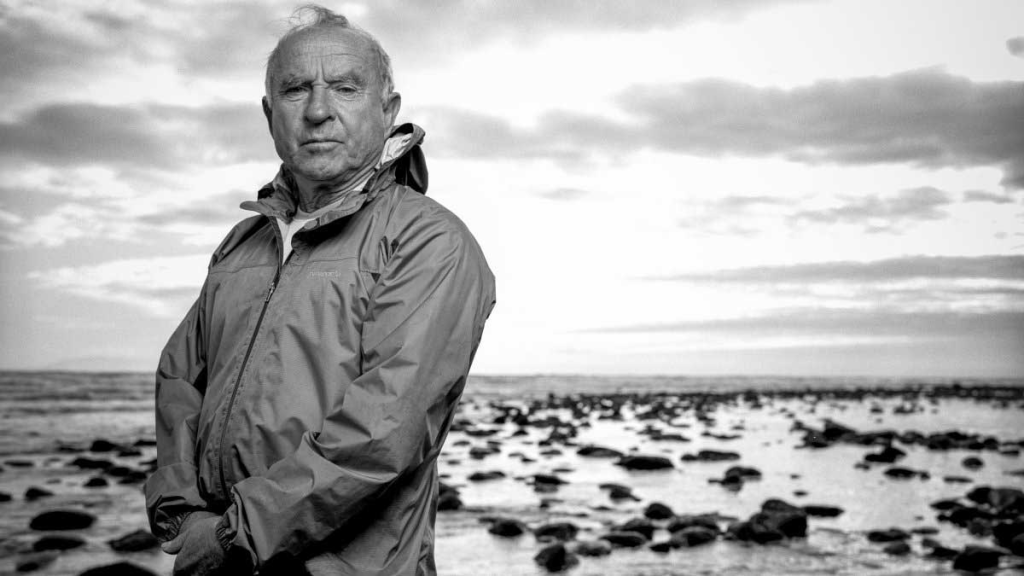
Yvon Chouinard, founder owner of Patagonia
I never wanted to be a businessman. I started as a craftsman, making climbing gear for my friends and myself, then got into apparel. As we began to witness the extent of global warming and ecological destruction, and our own contribution to it, Patagonia committed to using our company to change the way business was done. If we could do the right thing while making enough to pay the bills, we could influence customers and other businesses, and maybe change the system along the way.
We started with our products, using materials that caused less harm to the environment. We gave away 1% of sales each year. We became a certified B Corp and a California benefit corporation, writing our values into our corporate charter so they would be preserved. More recently, in 2018, we changed the company’s purpose to: We’re in business to save our home planet.
While we’re doing our best to address the environmental crisis, it’s not enough. We needed to find a way to put more money into fighting the crisis while keeping the company’s values intact.
“Truth be told, there were no good options available. So, we created our own.”
One option was to sell Patagonia and donate all the money. But we couldn’t be sure a new owner would maintain our values or keep our team of people around the world employed.
Another path was to take the company public. What a disaster that would have been. Even public companies with good intentions are under too much pressure to create short-term gain at the expense of long-term vitality and responsibility.
Truth be told, there were no good options available. So, we created our own.
Instead of “going public,” you could say we’re “going purpose.” Instead of extracting value from nature and transforming it into wealth for investors, we’ll use the wealth Patagonia creates to protect the source of all wealth.
Here’s how it works: 100% of the company’s voting stock transfers to the Patagonia Purpose Trust, created to protect the company’s values; and 100% of the nonvoting stock had been given to the Holdfast Collective, a nonprofit dedicated to fighting the environmental crisis and defending nature. The funding will come from Patagonia: Each year, the money we make after reinvesting in the business will be distributed as a dividend to help fight the crisis.
It’s been nearly 50 years since we began our experiment in responsible business, and we are just getting started. If we have any hope of a thriving planet—much less a thriving business—50 years from now, it is going to take all of us doing what we can with the resources we have. This is another way we’ve found to do our part.
Despite its immensity, the Earth’s resources are not infinite, and it’s clear we’ve exceeded its limits. But it’s also resilient. We can save our planet if we commit to it.
I decided to publish this article on Gaia Speaking blog as a reminder of the deeply meaningful time that was 2020. We are quick to delete images of us wearing masks, no-one wanting to talk about “the Great Pause” anymore although it is invaluable for its representation of the Great Unraveling. In these times historical for humankind, when we play the leading roles, it is a duty to remain aware before we go back to Business as Usual with increased brio. Please may we remember “the collective bardo in which we find ourselves”. (Joanna)
Tibetan Buddhism offers deep insight into the potentiality of the moment
By Adrián Villaseñor-Galarza, an article originally published by Esperanza Project
Adrián Villaseñor-Galarza
Overnight, the daily life of the majority of the inhabitants of this beautiful Earth-home has vanished, leaving us in a kind of transitory reality between the old and known and the new unknown. After I asked someone how she was doing a couple of weeks ago, she replied: “Mmm, not very well. The most serious thing is that I have no idea when normality will return and, if it returns, how it will be.” The usual sense of control, security, and continuity of our lives dissolves amid the jaws of the health crisis we face.
In a way, we are like half-cooked beans—we now recognize the transience of our lives more clearly. We are wanting to finish cooking properly so that we can nurture bodies, minds, and hearts. But the end product of this “collective cooking” is far from being an assured result. It is possible that the beans will turn out burnt or tasteless, or that we simply don’t reach a boiling point that allows us to become wholesome food.
This uncertainty and social apprehension bring to the surface a series of internal reactions that are often overwhelming, leading to a semi-permanent state of crisis, or even trauma. The constant bombardment of the mass media reinforces the chronic sense of overwhelm, stress, and worry.
On a systemic scale, the incidence of Covid-19 highlights the multiple deficiencies in the functioning of consumer societies that rest on a disastrous war against nature, misunderstood as progress and economic development. Furthermore, the mitigation measures put in place to counter the spread of the virus contribute to amplify the already severe sense of disconnection and danger associated with the natural world.
In the midst of this scenario of transition and uncertainty, there’s an almost compulsive need to find an anchor or refuge to provide us a sense of security and stability—something that would end the interlude immediately and allow things to return to normal once and for all. However, the “normality” that we were accustomed to was considerably pathological and destructive. What can we do about it?
What if we take responsibility for producing the needed anchor or refuge in ourselves? And if we ask ourselves: How is it possible to connect with the fertile dimension of the crisis that we face? Or, following the previous metaphor, how can the current collective-cooking state serve as inspiration to become nutritious and tasty beans?
The intermediate view
The forced collapse of our identity connected with the slowdown of the productive mechanisms compels us, sooner or later, to come face to face with ourselves. This inward look usually characterizes the interludes found in places as diverse as ancient rites of passage, in the adventure of biological birth and the process of death, in the natural world, and in initiations of a spiritual and religious nature.
Broadly speaking, these interludes or intermediate spaces carry tremendous potential, because certainties and habitual ways of being cease to operate. Forging a healthy relationship with the uncertainty characteristic of these transitional episodes is conducive to a freedom of expression and creativity not easily found at other times. In this instance, it is useful to recognize that any process of transformation must be preceded by an intermediate state.
Tibetan Buddhism advances a refined understanding of what is surely the most fundamental transition of our lives; the step towards death. Referred to as a bardo, the interval after a human life is an exceptional opportunity to transcend the cycles of suffering and awaken to our true essence, full of plenitude, clarity, and joy. To achieve this, a lifetime of practice in the intermediate spaces is necessary. Practices include amplifying the bardo between one thought and another (a process commonly known as meditation) and bringing refined attention to the bardo between waking consciousness and deep sleep.
Bardo Thodol
It is unlikely for a given person to transcend the cycle of suffering at the time of their death if they weren’t able to familiarize themselves with the nature of the bardo during their lifetime. In such a case, the individual’s consciousness experiences a series of post-mortem adventures and crossroads that lead to a new life, according to some schools of Buddhism.
A basic characteristic of training in the bardo is that the mind finds a certain degree of rest or pause from its incessant action. That is why, according to Tibetan Buddhism, the bardo of life or death works as a space where the radiant light of our essence becomes visible, and what is truly important emerges.
Re-inhabiting the bardo
The episode produced by Covid-19 represents a great pause in our daily lives, characterized by the uncertainty and potentiality of the bardo. As in every transition, in this time we are witnessing structures collapse, both mental and institutional, and the subsequent state of crisis and negotiation that this entails. Yet the bardo brings with it a valuable promise: the ability to re-create the relationship we have with ourselves and with the world.
This is a fertile time to refine our vision and choose the ways in which we wish to continue walking our paths. Today, we can choose where to direct our attention, and reformulate the principles that will oversee the rest of our precious time here on Earth. Today, we can choose to go beyond the individualism and competition of business as usual to recognize the interdependence that weaves all life, that right now knocks so clearly at the door. Today, it is possible to counteract apathy and indifference by forging an attitude of respect and reverence for other beings and for ourselves, however small our steps may be. Today, we are able to choose the path of vulnerability and courage to express what is really important to our hearts. It’s time.
The collective bardo in which we find ourselves invites us to savor the enormous fortune of having a life to live. Perhaps, one of these days, we will be able to glimpse the clear light of reality and realize that we are the beans, the fire, the water, the pot, and the cook at the same time.
Adrián Villasenor-Galarza, PhD, is passionate about human transformation in service of the Earth in order to uncover the regenerative expression of our deep potentials. Adrián is an author, international facilitator, academic collaborator, (eco)systemic and transpersonal therapist, and spiritual practitioner. He actively facilitates Joanna Macy’s Work That Reconnects throughout Latin America and beyond. For more information visit: living-flames.com, bioalkimia.org and eltrabajoquereconecta.org.
Garden Showcase The aim of the Open Gardens is to invite people from across town to visit the gardens, meet the farmers and chat to them about their challenges and even buy organic produce straight from the garden.
To celebrate the organisation’s 40 years of existence, all the Abalimi home and community gardens have been invited to participate in this event where they can show their gardens, meet with visitors and sell their produce. Abalimi will assist with coordinating the routes for visiting and farmer availability. The culmination will be an award ceremony in October where their efforts will be acknowledged.
Come visit our gardens
Visitors are requested to meet at a Garden Centre (either in Nyanga or Khayelitsha depending on the date) around 9:30 to meet the team and explore the Garden Centre, before heading out with a guide to the gardens. Visitors will see a selection of community and home gardens, or pods, which is a group of home gardens within walking distance from each other.
We request that visits are done on Wednesday, Thursday, Friday or Saturday mornings to help with farmer coordination, but alternative arrangements can also be made on special request. Security is a top priority and we believe that you will be safe with us.
Suggested donation per visitor per day is R200. This helps to cover Abalimi’s core costs only and is only a suggestion. Anything towards this cost is most welcome. Section 18A Tax Certificates can be issued.
Programme: each Wednesday, Thursday, Friday or Saturday morning – Meet your guide at the Garden Centre at 9:30 – Tour of Garden Centre with refreshments and agri-resources for sale – Visit to a selection of home and community gardens – time dependent – Depart around lunch time
Gardens to be visited (subject to change) with Google map link to meeting point: – 21 to 24 September 2022 – Khayelitsha GC: Feed the Khaltsha, Ntinga, Masikhanye – 28 September to 1 October – Nyanga GC: Manelisi’s Urban Farm – 5 to 8 October – Khayelitsha GC: Sylvia’s Garden, Sunshine Organic, iThemba – 12 to 15 October – Nyanga GC: Hlumani, Pela Close – 19 to 22 October – Khayelitsha GC: Masiphile, Whitehouse, NOAH Pod – 26 to 29 October – Khayelitsha GC: Ma Pat @J81, Wetland farmers, Lumanyono Pod
Translated and read byJoanna Macy (listen to the audio here)
Quiet friend who has come so far,
feel how your breathing makes more space around you. Let this darkness be a bell tower and you the bell. As you ring,
what batters you becomes your strength. Move back and forth into the change. What is it like, such intensity of pain? If the drink is bitter, turn yourself to wine.
In this uncontainable night, be the mystery at the crossroads of your senses, the meaning discovered there.
And if the world has ceased to hear you, say to the silent earth: I flow. To the rushing water, speak: I am.
Sonnets to Orpheus II, 29
This audio is reproduced from a resource on the website “On Being Project”… “We explore the big questions of meaning at the intersection of spiritual inquiry, science, social healing, and the arts:
What does it mean to be human? How do we want to live? Who will we be to each other?
I invite you to read more poetry and listen to their podcasts.
The Work That Reconnects is the result of decades of development by Joanna Macy and her colleagues, integrating their core knowledge of Buddhist Nonduality, modern systems thinking, deep ecology and first nations’ ancestral wisdom and ritual. The Work is also informed by the lived collective experience of thousands of Work that Reconnects workshops and retreats held throughout the world since the 1970s. Hundreds of facilitators across the planet have empowered themselves and others to engage in the Great Turning in meaningful ways and to also share and adapt the Work to meet the needs of their unique places, times and communities.
Tell us about the Spiral of the Work That Reconnects.
The Work That Reconnects, based on the teachings of elder Joanna Macy, unfolds as a Spiral journey through four stages. Each of these stages leads naturally to the next.
Firstly, the Spiral begins by “coming from gratitude”, because that quiets the frantic mind and brings us back to source, stimulating our empathy and confidence. It helps us to be more fully present and opens psychic space for acknowledging the pain we carry for our world.
Secondly, in owning and “honouring our pain for the world” -and daring to experience it – we learn the true meaning of compassion: to “suffer with.” We begin to know the immensity of our heart-mind. What had isolated us before in private anguish now opens outward and delivers us into the wider reaches of our interbeing.
Thirdly, experiencing the reality of our interbeing helps us to “see with new eyes”, or sometimes, in fact, with the ancient eyes of our ancestors. We can sense how intimately and inextricably we are related to all that is. We can taste our own power to change, and feel the texture of our living connections with past and future generations, and with our brother and sister species.
Lastly we go forth into the actions that call each of us, according to our situation, gifts, and limitations. With others whenever and wherever possible, we set a target, lay a plan, step out… And we can return to the Spiral again and again, with each day, each project and each circle of beings. The journey helps us experience first hand that we are larger, stronger, more creative – and more deeply interconnected – than we knew.
All the events that Gaia Speaking organises integrate this Spiral work, including our Song Circles (Songs that Reconnect), our “Screening&Sharing” Sessions (Films that Reconnect), our day workshops or our retreats
What is the Great Turning?
Joanna Macy wrote, “In the 1990s a name emerged for the purposeful and earth-based solidarity we were experiencing and for the promise it carried – the Great Turning.”
In the Work That Reconnects, we refer to it as the transition from the Industrial Growth Society to a Life Sustaining Society. It’s a goal we all work for, in countless different ways. We long passionately for its full realisation. To counteract the painful witnessing of the daily acts of destruction of the “Great Unravelling”, we engage the hope for this transition within us and through our actions. Although we cannot undo the encroached “Business as Usual” as fast as we would want to, at least with our soulful participation in this transition, we hope to collectively activate the change that we yearn for.
In which ways does human society take part in the Great Turning?
As we explain in our workshops, The Work that Reconnects describes the Great Turning as happening simultaneously in three areas or dimensions that are mutually reinforcing. If you are reading this, you are probably already engaged in all three, as they are all part of our calling as agents of transformation.
So, firstly there are Holding Actions led by activists on the forefront to slow the damage to Earth and its beings, for example documenting the impact of the Industrial Growth Society or organising protests and lobby movements. In South Africa, we can mention for example the recent and successful lobbying against the damaging prospection led by some oil companies.
Secondly, there is an industrial and economical movement towards Sustainable or Gaian Practices in our society, in the form of cooperatives, sustainable housing, renewable energy farming for example, and initiatives to reduce the extraction of resources and their consumption. In South Africa in particular we have many renewable energies that we can use to reduce our dependency on fossil fuels.
Thirdly, these dimensions both depend on a fundamental Shift in consciousness, one that shall modify our world-view and values and instil spiritual awareness. Through somatic practices to connect to our bodies for example, local community networking, or a resurgence of shamanic practices, we can awaken in us and in others our capacity to act as agents of transformation. This is the area in which Gaia Speaking is mainly engaged, although we also network with other initiatives through our events and in the blog articles that we share. The seeds of consciousness spread by the Work that Reconnects and by many other transformation movements happening at the moment are taking root across all communities of South Africans, for we all hold in common the love for our freedom, our wilderness and our ancestral lands and traditions. Deep social and cultural emancipation can only happen if we all increase our attention now to the fires that burn our home planet.
I’d like to end with two quotes by Joanna Macy:
“The most radical thing any of us can do at this moment is be present to what is happening in the world.”
“Active Hope is not wishful thinking. Active Hope is not waiting to be rescued. Active hope is waking up to the beauty of life on whose behalf we can act”.
The soils of the Earth, to the children of the flowers
In the meadows and the trees in the forest, to
All those children who roam over the land
And the winged ones who fly with the winds,
To the human children too, that all the children
May go together into the future ….
— Thomas Berry”
Children may not know all the details about climate change, for example, but they know that adults are worried about something called that. Children pick up feelings of anger, fear and sadness from adults around them, without necessarily knowing what’s stirring those feelings.
“Almost three-quarters of young people aged 11–16 are concerned about how climate change will impact on their lives and two-thirds of young people are worried about how climate change will affect other children and families in developing countries. ” (as per a study by Unicef UK, 2013)
Children, at least younger ones, generally adopt their parents’ point of view about the world, but that doesn’t necessarily reassure them.
When children feel despair for the future, they develop fewer defenses than most adults; they are not as numbed and detached. Adults depersonalize the peril, talk in abstract terms, while children see it in concrete terms, which can be based on terrorising concepts or images.
The Effects of Silence
Adults’ silence on all these threats to safety and well-being, and our desire to carry on business as usual take a high toll on children and adults alike. Silence conveys fatalism, seeming to say that our collective future is out of our hands, and that there’s nothing we can do to change it.
Silence can also convey indifference. If parents don’t talk about these issues, a child can conclude that they don’t care — perhaps even wonder if their parents don’t care what might happen to their children.
Silence reinforces repression. Adults’ difficulty in communicating in these areas teaches that certain feelings are taboo: feelings like grief, fear, anger and even compassion for the suffering of people and animals. In turn, this repression of feelings can breed cynicism. Teens may begin to wonder whether feelings of anguish over destruction and injustice even exist in many grown-ups. If we do have these feelings, then we are hypocrites for pretending everything is all right. If we really don’t have such feelings, we deserve their contempt. They may try to shock us awake through their behaviour, so we see the horror of what we are doing to the Earth and one another.
And of course the toll is wider yet. The rising incidence of drug and alcohol abuse, crime, suicide and screen addiction among teenagers and even children is sad evidence of the erosion of meaning. A sense of alienation, both from family and future, is pervasive, manifesting not only in anti-social and self-destructive behaviors, but less visibly in the loss of the capacity to make meaningful choices and commitments.
Suggestions for overcoming the fear and the silence
Take joy in life with them, especially in nature.
First and foremost, help your children ground themselves in nature by taking them into natural settings as much as possible (and leave your cell phone behind). Take time to watch a snail, admire a flower, hug a tree.
Know and honour your own feelings.
Identify for yourself your own fear, anger and sorrow for the world. While we want to be honest and open with our children, we don’t want to use our conversations with them to vent our own feelings.
Invite children to share their feelings and knowledge.
Begin by asking open questions, such as “What troubles you about the world today?” or by briefly sharing your own feelings about an item in the news; then ask about their feelings. Talk about an action you are engaged in, why you are doing it, and then ask how they feel about it.”
Help children affirm and define their feelings.
What remains unspoken and unacknowledged is more frightening than a danger we can talk about together. Many children and adults do not know what they are feeling before they express it. Help children put their vague apprehensions into words or images, even act them out. At the same time, don’t think you must relieve your children of their emotional pain. Just sharing will help relieve their fear of the feelings — and your fear as well.
Acknowledge what you don’t know.
Children will ask questions you can’t answer. Remember that questions are often veiled statements about concerns and fears. Invite children to express the concern behind the question — that may help them more than any answer you can give. Your job is to help the child explore questions and feelings, not necessarily to provide answers. So whether or not you have an answer, you can simply say, “I’ve wondered about that, too. What do you imagine might happen? How do you feel about that?” Or, when appropriate, “What do you think we might do about that?
Support them in taking action in their own right.
We all feel empowered when we act on behalf of our world. Children and teens are no different. They feel validated when we take their ideas seriously and help them find immediate, practical ways of putting these ideas into action. Encourage them to draw or write their imaginings and to share them with one another. Then be ready to help if a project emerges.
There are many ways that children can work for the Great Turning, especially hands-on within in their own community. Many children love environmental cleanups in nearby parks and natural areas, because they can see tangible results in the bags of debris collected and in the litter-free landscape they leave behind.
This text includes extracts from the book Coming Back to Life, by Joanna Macy and Molly Young Brown, a foundational collection of practices for the Work That Reconnects worldwide. Much gratitude.
Gaia Speaking facilitates “ReGeneration” workshops for parents and children in and around Cape Town, South Africa
In a conversation with a friend yesterday the question arose, “What are we to expect to happen in the next decade?”
Elon Musk had come up earlier in the conversation, and I said, “You know, if we asked Elon Musk that question, he might take it very differently. His answer might start with, ‘I’ll tell you what’s going to happen,’ and then describe what he intends to make of the world.” Maybe he would say, “There will be twelve thousand low-orbit satellites circling the earth. You’ll be able to get broadband internet in the Alaskan wilderness. We’ll all be linked together in an Internet-of-things.”
A kind of fatalism haunts predictions about the future, as if it were an objective, pre-existing reality that simply happens to us. Tell me what is to be, so that I may plan my life accordingly. Elon Musk’s answer takes the question in a different way by assuming his own power and agency in determining what that future will be. He is speaking from a metaphysical truth—that self and world, inner and outer, are not entirely separate, and that the question of what the future will be intimately involves ourselves.
One might easily agree that we can shape the future as a collective “ourselves,” but my hypothetical Elon Musk makes it about himself. Why does he think that? It isn’t only because he has vast wealth. Lots of extraordinarily wealthy people feel helpless in the face of the future, and their attempts to create it end in failure. The power he wields is what I call prophetic speech. Prophetic speech is the ability to speak a potentiality into reality. (It also includes the prophetic warning, which speaks a potentiality out of reality.)
Elon Musk seems not to feel at the mercy of a predetermined future. No one assured him before he launched them that there would be tens of thousands of satellites beaming millimeter frequencies onto every nook of the planet. No one assured him that it was realistic to start a new electric vehicle company. Quite probably a lot of people said the opposite. Yet he knew better. Therefore, he did not say, “Tell me what is to be, so that I may know what to do.” He said, rather, “Here is what is to be. Now I know what to do.”
Elon Musk owns assets worth some $162 billion. My assets are less than half that, yet I believe I have something to learn from him and from others who wield the power of word. Not all of them have or had money. Nelson Mandela. Martin Luther King. Neema Namadamu and the women of Maman Shujaa. Subcomandante Marcos. The indigenous peasants who established the Peace Village of San José de Apartadó. A four-year-old orphan named Jacqueline (story starts at 44:40 or 7:45). And many more whose names we shall never know, whose mighty achievements are invisible through the modern lens of scale. Their lack of money did not lessen their power to invoke miracles. That is the kind of creative power necessary to manifest a future I call The More Beautiful World Our Hearts Know Is Possible. It differs from Elon Musk’s vision, but who knows where the twisting paths of creativity, disappointment, regret, and renewal may lead?
Two things are required to wield the power of prophetic speech. First, one must actually see a real vision in order to speak it into existence. The prophet cannot create on whim or fancy. Human beings are the receivers and not the creators of true visions. The vision must be true, and one must actually see it; otherwise, no one will believe you when you say, “Here is what shall be.” No matter how hard you persuade people of its necessity and feasibility, and even if they verbally assent to it, still they will not play the roles necessary for its manifestation.
Put a different way, the world was already pregnant with the possibilities that Musk, Namadamu, Mandela, Marcos, and the rest declared into actuality. Please understand that I am not putting these individuals into the same moral category. Yet they have something in common: the power of word, which can be the instrument of any potentiality, good or ill.
The second requirement is the bow into service. The vision granted to the prophet has chosen the prophet as its instrument. She must then agree to be that instrument, for which some kind of sacrifice will be required, a letting-go, a dedication to this, and therefore not to that. To serve one future and not another entails the loss of what might have been and who I might have been. Something will be lost and something will be gained. It is inescapable.
For me a third thing is required as well: community. When I behold a radiant vision and then turn my eyes back to the world as it is, I may come to doubt whether what I saw was real. I need others to confirm it. “Yes, what you saw is real, I have seen it too.” Many who are reading this have played that role for me in times of doubt. Sometimes they do it through words. More powerfully, they do it through the example of devotion. Because, their devotion would waver if they didn’t know that what they served were possible. When I witness kindness, generosity, healing, forgiveness, or courage, I know I’m not crazy. Such acts are the vision showing itself to me anew.
A vision that one can speak into existence, live from and live into, need not be a blinding mystical experience or dream or psychedelic encounter. The future reaches into the present to beckon me, taking the form of all I witness. Many futures do that, asking which I shall choose.
I wrote my last essay, Mob Morality and the Unvaxxed, in the vein of prophetic warning, hoping to undo a future by naming it (and thus making the choice more conscious). My next one will gather threads from a more positive timeline, beautiful and, I hope readers will recognize, possible. It depends on a change in how human beings see each other. Here is a paragraph I wrote already. The rest is still mostly in my head.
The biggest crisis facing humanity today is not vaccines or their skeptics; it is not infectious disease, chronic disease, overpopulation, or nuclear weapons. It is not even climate change. The biggest crisis is a crisis of the word. It is a crisis of agreement. It is a Babelian crisis of communication. With coherency among us, no other problem would be hard to solve. As it stands, the prodigious powers of human creativity cancel each other out. The crystalline matrix of our co-creation has burst into shards. Why? It is not from lack of skill in communicating. It is from a habit of perception, a way of seeing each other that shares a common root with Girardian scapegoating.
In my meditation now I am mapping society’s crisis of the word to the ways in which I too have fallen short of deploying its full power. By analogy, it must come from a way of seeing myself that is not true.
The mistaken ways I see myself (and that modern people are conditioned to see each other) are not simply the result of a wrong idea. The wrong idea—that anyone is less than fully and divinely human—is just one level of a multi-dimensional state of being, state of culture, state of trauma, and state of evolution.
In short, the ways I undercut myself, judge myself, and confuse genuine uncertainty with self-negating false doubt all scramble the inner communication required to speak a true vision into form. I’m learning that to be who I am, unapologetic and unafraid, is crucial to being able to say, “Here is what shall be.”
A few years ago I had a session with a healer who worked entirely on my solar plexus. He said, “I want you to be more like Donald Trump.” No, not to belittle others, but to dare to take up some space in the world, to dare actually to be here. A profound death/rebirth in a psychedelic journey reinforced the message as I rediscovered the power of the primal words “yes” and “no.” I realized that I’d lost touch with both, listening instead to what I or others thought they should be. Is it OK to feel a yes? A no? Is what I feel valid? Looking outside myself for validation, I’d ceded the ground of creativity and robbed my visions of their animating force. If the prophet himself isn’t a full yes to the prophecy, he is no prophet at all.
It is edgy for me to claim the right to say what the future shall be. One stumbling block I encounter in embracing the power of word is the idea that I would be a dictator, imposing my will over others. However, dominating force has no part in the power of prophetic speech. The naming of a potentiality is an invitation for others to come into agreement with the named. Elon Musk could not put twelve thousand satellites in the sky himself or force it to happen, not with all the money in the world. A lot of people—regulators, bankers, investors, board members, etc.—had to come into agreement. Why did they? Because they shared certain values, perhaps. Because it fit their conception of progress. Because it redounded to their financial interest. Because they all draw inspiration from the defining myth of modernity that I call Ascent. One of its expressions is the myth of technological utopia. It is not the future, but it is a future.
Another future beckons, and in the spirit of invitation I will speak it more directly and less abashedly in coming months and years. It is quite different from the vision of technological utopia, although perhaps in some mysterious way convergent with it, as it bears the similarity of denser and denser interconnection. Because I know many others have seen it too, I also know that many will hark to and amplify the invitation. This is not a single person’s vision; it is a vast potentiality that speaks with a million visionary voices. Again, visions are not created, they are not owned, they are not even found; they are beings in their own right that reveal themselves to those who seek them. A More Beautiful World is seeking us. It finds us through our seeking of it. I will share what I have been shown, so as to kindle the fire of recognition in those who have seen it too, who have also walked the path of half-belief, doubt, and healing.
A lot of scary futures are showing themselves to us today: totalitarianism, social breakdown, ecological collapse, civil conflict. People want to know, will these really happen? What will the next year bring? Let us take ownership of those questions. Yes, what is going to happen? Let us no longer ask. Let us tell.
This essay is shared by Charles Eisenstein, an American public speaker and author. His work covers a wide range of topics, including the history of human civilization, economics, spirituality, and the ecology movement. Key themes explored include anti-consumerism, interdependence, and how myth and narrative influence culture. Read more of his essays here
These times require much deep thought of how we are to move forward to heal the separation we feel and grow strong. We don’t always have to reach into prehistory or to our recent Ancestors to reconnect. There are some teachers that are accessing the collective consciousness of this in a new manner.
Arno Naess
27 Jan 1912 – 12 Jan 2009
Deep Ecology is a philosophy of nature, which sees that underlying the environmental crisis there is a psychological disease stemming from the illusion of separation between humans and the rest of the natural world. The late Arne Naess, Emeritus Professor of Philosophy from Oslo University, Norway who coined the term “deep ecology” pointed out that our “ecological ideas are not enough to protect the Earth, we need ecological identity, ecological self”.
John Seed’s Spirit experience was a profound realisation. In his words the saying “I am protecting the rainforest”, becomes “I am part of the rain forest protecting myself. I am that part of the rainforest recently emerged into thinking. What a relief then, the thousands of years of perceived separation are over, and we begin to recall our true nature.”
That change is a spiritual one. Take a few breaths, close your eyes, and come with me on a brief journey.
Let me hold your hands, and lets all move towards the forest, taking careful steps, in unity we move, and we gradually file in in a long row, of footsteps gently stepping on our mother, all of us breathing prayers, the cold air making our silent words visible. We hear bird song and enter the loamy smell of the Standing Nation leaves composting, and move deeper and deeper into the darkness of their canopy. We walk for a long while,…up ahead we see a glimmer of a fire and smell the smoke. There are many seats around this fire, and we all sit down reverently and listen.
There are faces I know that will be speaking, Joanna Macy is holding hands with John Seed, they have tears running down their faces. They speak in unison – I am the rainforest protecting myself, that part that has recently emerged into thinking. Some of us feel the relief of a thousand years of separation dropping away; we know our true nature. Another who is in the Spirit world already, Arne Naess, looks around and says – “Ecological ideas are not enough to protect the Earth, we need ecological identity, ecological self”.
A Medicine Person stands and seems to tower over all of us – and says in many tongues: “Welcome, welcome family. You all have finally woken up.” They take up their drum, and begin to play as we listen, we are taken to a world as if we have ingested Los Niños Santos.
We see the streams of energy emanating from one another, the fire, the trees, the other beings. We become aware of the sentiency of the plants, their indignation of being manipulated, their codes destroyed. Flowers who give off fragrance signals to say, we re ready to be pollinated. We hear a voice that says “Your ideas of deep ecology are standing on the shoulders of giants; you have merely forgotten your roots.
Many many years ago, back in deep time, we your ancestors lived closely to Our Mother, we understood the nature of give and take, we understood that like the bees we only take enough. The Shaman was asked to do ceremony when harvesting, they crossed over between reality and non ordinary reality, with their deep seeing, and sharing the signs of the natural world knowledge and also calling upon the guides and spirits to help the community. In the really old ways, when we your ancestors lived in small bands of people, a sense of reciprocal oneness existed. We also understood that we were not apart from any cycle.
And that our lives were as precious as the Elk or Eland whose life we took to feed our family, and that everything was used, nothing went to waste. We understand that in your time it is very different. But each of you can listen to your new teachers who live among you, who are accessing this collective consciousness in a new manner, using language and methods that make sense for those of you that are emerging out of the unnatural chrysalis of the Industrial Mind.
As a Shaman I am telling you do not forget that the Spirit world is there to assist you, call upon your Shamans who can see these things, do ceremony. What happens in non-ordinary reality changes ordinary reality. Use these powerful tools to change and shift into a world where a community of reverence exist”
The drum beats cease, and an elder stands, John Seed calls on a prayer breathed from his lips – “We call on the spirit of Gaia, awaken in us a sense of who we truly are – tiny transient blossoms on the tree of life, make the purposes and destiny of that tree, our own purpose and destiny.”
We look around us and see that each of us is a branch, some of us Shamans, some of us Medicine people, and others who give equal gifts to the world with feeding their hungry brothers and sisters, living wildly close to the planet, and energy healers, poets, singers and more.
And you see the threads of life between you, and that you are all one – each leaf of who you are is essential to change the state of our Mother, and the dignity of all our relations. We understand what the Deep Ecologists are saying and that their words and teachings are what our Shamans say too.
That all life forms have an intrinsic right to exist, and that we need to find a way in a dignified manner The day is coming quick, and we need to leave this space, we offer tobacco and other sacred offerings to this holy space, and to the elders, we bow deeply with reverence in our hearts and we slowly leave. Moving towards daylight we are moved not to forget.
We become aware of our surroundings and give thanks to all the teachers that will share their wisdom. And so, it is… it is so.
Tass Two Crows Flying will be co-facilitating the retreat ReAwakeNing to Life with Joanna Tomkins and Rachael Millson in October. Please join to experience first and her insights into spiritual ecology.









 Gaia Speaking