Articles, Legal Rights, Work that Reconnects (WTR)

African Animist Antidotes

In animist traditions, such as those practiced by the Khoisan or the Xhosa for example, who settled and prayed on this Southern tip of Africa I inhabit, nature is viewed as animated and alive with spirit. Every river, tree, animal, and mountain has life-force and agency. Humans are not separate from nature; rather, they exist in a reciprocal relationship with it, shaped by mutual respect, responsibility, and acknowledgment of interconnectedness. This worldview supports practices that honour the Earth, such as rituals to ask permission from the spirits of plants and animals before hunting or harvesting, ensuring balance and respect for all forms of life.
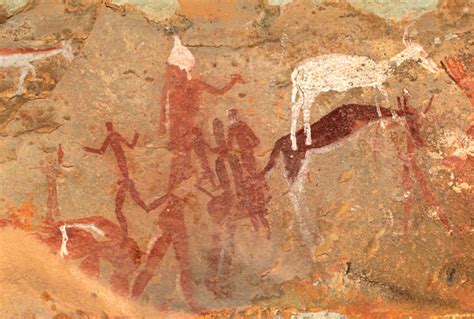
Spirituality and respect for ancestors also play a vital role in Southern African animism. Ancestors are seen as mediators between the human world and the natural world, guiding and protecting their descendants. Through ceremony, people maintain relationships with ancestors, believing that their wisdom and presence can provide insights, blessings, and protection. In these ways, animism emphasises a holistic understanding of existence where spiritual, social, and ecological health are inseparable.

“The term animism was coined by an early anthropologist, Edward Burnett Tylor, in 1870. Tylor argued that Darwin’s ideas of evolution could be applied to human societies; he classified religions according to their level of development.

He defined animism as a belief in souls: the existence of human souls after death, but also the belief that entities Western perspectives deemed inanimate, like water, rocks and trees, and plants had souls.

Animism was, in Tylor’s view, the first stage in the evolution of religion, which developed from animism to polytheism and then to monotheism, which was the most “civilized” form of religion. From this perspective, animism was the most primitive kind of religion, while European, Protestant Christianity was seen as the most evolved of all religions.” [1]

By embracing animist traditions, without claiming they pertain to any particular religion, which tends to create polarity, we can contribute to revalorise them, overcoming these old colonial judgements of inferiority. As this worldview gets adopted more widely, we become more free to embrace gratitude for nature’s abundance and reinforce our right to connect to the environment and cultivate respect, without being judged. Animist beliefs are at the core of our humanity and do not contradict the alignment with any particular religion.

Our Western religious dominion theologies gave humans – first through Adam and Eve for example – dominion over the Earth. They set up a dichotomy between inanimate matter and animate spirit that lifts humans above creation and turns the rest of the world – from animals and plants to soil and water – into “resources” to be used. Unfortunately this vision has given shape to the Business as Usual story we participate in today.

By shifting perception from an isolated, human-centered worldview to one that honors the spirit within all living things, we can access a deeper, animist-inspired understanding of interdependence. This expanded awareness fosters empathy, reverence, and responsibility toward the natural world.

The Work That Reconnects invites individuals to cultivate a similar reverence and sense of kinship with the Earth. Rooted in systems thinking and inspired by Buddhist concepts of interconnectedness, Joanna Macy’s work incorporates animist traditions in its recognition of the living, interconnected nature of existence. It seeks to restore relationships between individuals, communities, and the more-than-human world, helping people to heal disconnections and remember their place within the larger ecological web.

“Animism is not a religion one can convert to but rather a label used for worldviews and practices that acknowledge relationships between nature and the animal world that have power over humans and must be respected.

These practices […] can also be forms of environmental care, farming practices or protests, such as those conducted by water protectors [around the world]. New Zealand’s 2017 act recognizing the Whanganui River as a legal person, the culmination of decades of Maori activism, could be described as animism taking a legal form.

Animist practices are as variable as the peoples and places engaging in such relationships.” [1]


[1]Justine Buck Quijada for theconversation.com

Articles, Legal Rights, Resources & Networks, Uncategorized

To Protect Nature, our Law Should be Based on Interconnection

By Alex May – Earth Jurisprudence to Defend the Rights of Nature

Hereunder is an extract from an essay by British author Alex May, which explains how the writing of new biocentric laws is instrumental in the Great Turning.

Reviewing our jurisprudence means studying and rewriting the principles on which our laws concerning the rights of Nature are based. These Gaian Practices are crucial for the regeneration and rewilding of our planet. On the one hand, Holding Actions denouncing crimes against other-than-human beings will achieve stronger arguments and rally wider groups of population if they are backed by official laws. And, on the other hand this regulatory approach to the rights of Nature will have a snowball effect on prescription and adoption of new laws across all areas of our capitalistic societies, and this will eventually have a incremental impact on the global Shift in Consciousness, therefore affecting all Three Dimensions of the Work that Reconnects.

Atomised

We know that radical change is needed to avoid catastrophe, and it is vital that we think about this in terms of system change. Relying on each person to doing their bit, in a political framework based on individual responsibility, has failed, and we must change the systems that we all act within.

For the most part, we know what sort of change is required in terms of social change, political change and economic change, with reports, targets, frameworks and new systemic approaches proposed. But law as a system has been, for the most part, overlooked.

Our law should shift to looking at relationships, such as between humans and their ecosystems, instead of just being about individual rights and rights-claims.

Our legal system is an interwoven part of our society and our economy. It structures human activity and social relations, and it affects how we understand the ourselves and the world.

For example, the way law focuses on individual rights reproduces our individualistic conception of society and the way we think of freedom as individual entitlement without responsibility. Yet despite this role law plays, it has mostly faded into the background, seen as a neutral and technical social system instead of a powerful influence in our way of life that itself must be changed.

Humans are interconnected with each other and with the natural world. Yet our society, economic models and legal systems do not recognise this, seeing us instead as atomised individuals.

Harmonious

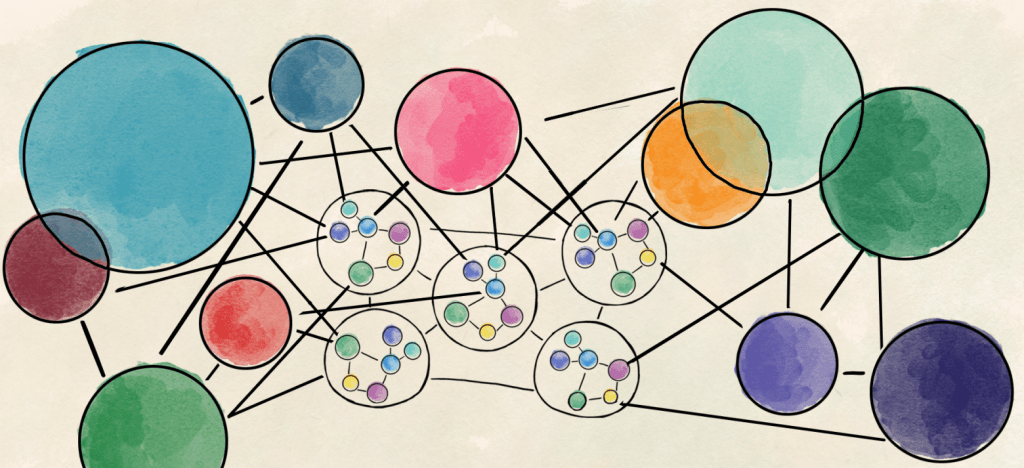
In our legal systems, individual (and corporate) rights are the primary building block, and when we think about freedom, it is individual freedom that we think about. This is mistaken: in our interconnected world, individuals live in a dense network of relations and relationships. Society is not an aggregation of individuals, but a dense, interwoven web.

Our legal system is based in this flawed individualistic model, seeing us as separate from each other and from the natural world. Instead, it must shift to a paradigm based on interconnection, recognising and working to change the network of relationships we live in.

The network of relationships which make up our society can be empowering and sustaining, or they can be harmful and destructive. They can create conditions of freedom and allow us to live fulfilling and sustainable lives, or they can smother, abuse and exploit us. Law, as part of this, can be used to oppress people or to liberate them.

Once we recognise this, we should see that law’s role should be to transform this web of relationships – social, economic and ecological relationships – from harmful to harmonious.

To be clear, the argument is not that law should be used to influence these relationships, and nor is it that law is the only way we should do this.

Life

Instead, the point is that law already influences all sorts of relationships in society, and that our legal system itself must be transformed as part of the broader social and political change that is needed.

Earth Jurisprudence points to the way that the relationship between humans and the rest of Nature is currently mediated by law. In our legal systems, nature features chiefly as property which can be owned, dominated and plundered by human owners.

Individuals and corporate actors are free to destroy ecosystems and cause ecological harm in their search of profit. Environmental law is secondary, almost an afterthought. Instead, protecting Nature should be the norm, not the exception, and sustainability should be a core principle across our entire legal system.

Earth Jurisprudence proposes a transformation of legal systems to address this: to make Nature an equal part of our legal system by granting it rights. This would give Nature the ability to protect itself, via human intermediaries.

Recognising Nature’s rights in our legal system would also help us to see nature as valuable in its own right, instead of just as a resource for us to use. It would also embed in our culture the idea that we are part of a community of life on this Earth, instead of that our environment is some ‘other’ which we are separate from and more important than.

Personhood

Legal transformation has been mostly overlooked in the last decade, with one exception: the idea of ecocide.

The Stop Ecocide campaign seeks to make the destruction of nature an international crime. This call has been picked up by the Extinction Rebellion movement and mentioned by youth climate strikers as part of the change they call for. Making ecocide a crime is certainly welcome, but the transformation that our legal system needs is far bigger, and it is a shame that ideas like Rights of Nature have not yet received broader recognition.

Legal rights of nature have been introduced in some places around the world. They are recognised in Ecuador’s constitution, and have entered the court in legals challenges seeking to protect nature reserves from mining permits.

In New Zealand, a particular river system was given legal personhood, and in Colombia and India courts have developed rights for particular ecosystems.

Transform

Rights of Nature is only one part of the transformation of law that we need. The idea of interconnection can be the core of this framework, helping us to see the broader shift that is needed.

Our law should shift to looking at relationships, such as between humans and their ecosystems, instead of just being about individual rights and rights-claims. It has the potential to help change how we relate to each other, seeing ourselves collectively instead of individually.

We could also see the role of law as being about transforming the network of relationships that make up our society, instead of being about protecting individual right and individual freedoms. In this view, law could be used to transform social relations which are unjust or exploitative to being just, harmonious and empowering.

About the Author

Alex May is the founder of the Interconnected Law Project which seeks to develop and share ideas about law and ultimately transform our legal systems.

Interconnected Law is an approach to law based on interconnection, care, nurture, community and love. 

With Gratitude to Alex May for this sharing for our blog and for the clarity of other students of nature’s jurisprudence around the world.

I also recommend reading the Bioneers website for more information on the Rights of Nature: https://bioneers.org/earthlings/

Articles, Legal Rights

Holding Actions: Success in Stopping Glyphosate in Scarborough and Misty Cliffs

by Rachael Millson

This last month has seen a huge community effort in our community, here at the Southern tip of South Africa. We’ve been collaborating with Poison-free Peninsula, national organisation Unpoison SA, and numerous other communities who have been working to counter the City of Cape Town’s plans to spray chemical herbicides onto streets and sidewalks across the City. In order to control the ‘weeds’ on roadsides, the City has contracted for the use of KleenUp, whose main ingredient is glyphosate. Glyphosate, most commonly known to be the main ingredient in Monsanto (now Bayer’s) product RoundUp has been under scrutiny since 2015 when the International Agency on Research on Cancer found glyphosate to ‘probably’ cause cancer. Since then many countries have restricted use, with some looking to ban it completely.

EPA Regulatory Review: Glyphosate Has No Human Health Risks- Crop ...


Not only is glyphosate dangerous for human health, it negatively impacts soil health and biodiversity. Glyphosate binds tightly to soil. It can persist in soil for up to 6 months depending on the climate and the type of soil it is in and has been found to kill populations of micro-organisms and fungi, changing the balance of soil ecosystems, in turn affecting longer-term plant health.


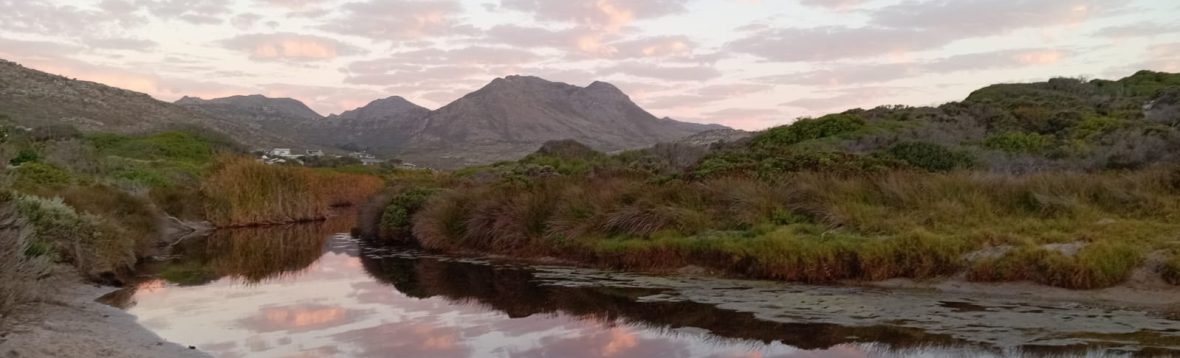
Here where we live in the iconic Cape Peninsula, there is a concentration of unique and rich biodiversity and eco-system diversity, found no where else in the world, and in Scarborough we are also guardians of a critically endangered wetland that supports precious populations of plants, amphibians and birds. Spraying glyphosate had to be stopped!


We are delighted that through a huge community effort of demonstrating the lack of support for chemical spray, and willingness within the Community to take over the responsibility for weed control on roads, Scarborough and Misty Cliffs are two suburbs that have been added to the City’s spray exemption schedule. It’s a huge local win, and at the same time, there’s lots more work to be done to remove glyphosate and other chemical herbicides entirely from South Africa. It’s still being used prolifically by the City on roads, in school grounds, on golf courses and within our food systems.


If you are interested in joining in the campaign to Unpoison South Africa, get in touch with Anna at unpoisonsa@gmail.com.

Articles, Legal Rights, Resources & Networks

UN: “Children have the right to a clean, healthy and sustainable environment”

I am excited about this news from the United Nations, an excerpt of which is hereunder. Of course we know that within traditional institutions like this, with slow heavy politically-engineered routes to actions, big steps like this on paper are only baby steps on the ground, and we have no time to spare. Yet it gives me courage to read this vision from this global bureaucratic body. And hopefully this will encourage states to adopt new laws in that respect.

This immediately gives credit to the work of countless NPOs working with children on the one hand and with environment on the other, and can possibly also fuel more synergy between both those areas of focus. I think this can also create a much needed bridge between the field of education and environmental and ecospiritual awareness. With conventions like this isn’t it time to reform the curriculum so that we are not teaching our children how to destroy their future?

The Rights of the Planet also need urgent recognition on a global scale. These rights are essential to support the work of other activists working on the front line today, defending what is left of wilderness and regenerative life. Together with the rights of our children and the future generations, rights for the Earth herself leave no space for more plundering. – Joanna Tomkins

See hereunder an extract from the UN press release: