Uncategorized

A Grief Council with Joanna Macy

Climate Change as Spiritual Practice

Quiet friend who has come so far,
feel how your breathing makes more space around you.
Let this darkness be a bell tower
and you the bell. As you ring,

what batters you becomes your strength.
Move back and forth into the change.
What is it like, such intensity of pain?
If the drink is bitter, turn yourself to wine.

In this uncontainable night,
be the mystery at the crossroads of your senses,
the meaning discovered there.

And if the world has ceased to hear you,
say to the silent earth: I flow.
To the rushing water, speak: I am.

Rainer Maria Rilke

For many of us, when we look at the enormity of the challenges facing humanity at this point in time, it can feel truly overwhelming. Reports about climate change, and concurrent ecological collapse can bring up a range of feeling, from despair, to fear, to deep sadness.

It can feel easier to look in the other direction, to turn away from the reality of what is happening on our planet right now. Somehow find ways to numb our pain. And yet, when we don’t allow ourselves to truly feel our pain, experience fully those emotions that appear for us, we are also cutting ourselves off from experiencing the fullness of all emotions, including joy, genuine happiness and bliss.

On 14 June, Shortly after her 93rd birthday, Joanna Macy (Earth Elder, Buddhist Scholar, Author, Seed teacher for the Work That Reconnects) and Jonathan Gustin (Founder of Purpose Guides Institute) held a live grief council under the title ‘Climate Change as Spiritual Practice’.  You can find the recording here.

Shooting Stars by AkagenoSaru

Ecological grief can be defined as “the grief felt in relation to experienced or anticipated ecological losses, including the loss of species, ecosystems, and meaningful landscapes due to acute or chronic environmental or climate change.”  By connecting fully to our grief, and honouring that grief rather than trying to push it away, we sit fully in compassion with our fellow beings, both human and non-human, and their current or future suffering. The word compassion means ‘suffering with’. The fact that we are able to grieve for the suffering of our planet and for other beings reminds us of our interconnectedness. We are not separate. What happens to one, happens to us all.

One of Joanna Macy’s most famous quote is “The most radical thing any of us can do at this time is to be fully present to what is happening in the world.” By allowing our hearts to truly break open, it brings us a new way of seeing the world. We don’t ‘move on’ from grief, but we can move forward with it, holding it in our hearts. Once our hearts have cracked open, we see just how miraculous life on Earth is, and how wonderful it is to be here. It’s from this place that we can take mindful, concerted action on behalf of all life.

I fully recommend taking the time to watch the recording of this beautiful Council.  The zoom room was at full capacity, with many others watching on Youtube livestream. Or me it also serves as an important reminder that we stand in community with many others, who care equally about this beautiful planet we call home. A reminder that we are not alone. Only together can we move forwards, hand in hand, co-creating the more beautiful future we dream of.

Here at GaiaSpeaking, our aim is to build a community of Earth lovers right here in South Africa. Changemakers, each answering our own unique calling to act in service of all life.

Love deeply, live gently. A better world is possible.

Written by Rachael Millson

Uncategorized

Amazon

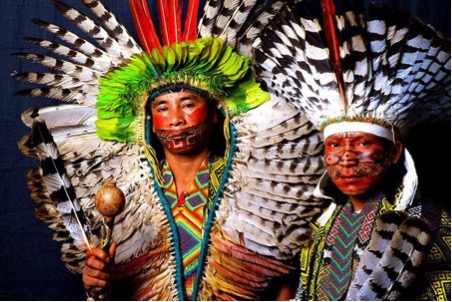
Over the past week,  both Joanna and I have had the incredible honour of being together with a group of indigenous leaders from the Huni Kuin tribe in the Brazilian Amazon, as they made an annual visit to South Africa.  I’m struck by the depth of their connection and reverence for nature, their dedication to a life of trust, guided by Spirit, and the joy that emanates from their songs of beauty and love for our home planet and all of humanity.

Here are people who truly experience themselves as nature,  with a pristine clarity about our place in the ecological web of life, living in harmony with the rainforest and its wildlife.  The Huni Kuin peoples or “true people,” (from huni, “people”, and kuin meaning “true.”)  bring an important and positive message. It’s time for a new era – a time of reconciliation between mankind and Mother Nature.

And yet the Amazon, this place of wonderous cultural and natural biodiversity, and home to this tribe and many others,  is seriously under threat.  More than 20 percent of the Amazon rainforest has already gone. Deforestation abounds at an average rate of 10,000 hectares per day.

The cattle sector of the Brazilian Amazon, incentivized by the international beef and leather trades, is one of the major perpetrators of Amazonian deforestation, responsible for around 14% of the world’s total annual deforestation. Equally devastating is the continued drilling of oil and gas from the Amazon, funded by American banks.  Leaks from pipelines pollute rivers used for drinking water, harming people and wildlife, while the cutting-through of roads to enable drill operations, trigger rapid deforestation, as was seen in the 2019 Amazon wildfires.

Scientists predict that once the Amazon has lost more than 25% of its tree cover, it will become a drier ecosystem, all because deforestation changes weather patterns (due to how trees respire), which in turn reduces rainfall. We will also see species decline as fragmented pieces of forest, surrounded by pasture lands, cannot sustain the current levels of biodiversity.

As Brazilian environmental activist, Chico Mendes, assassinated by ranchers in 1988, said ‘Destroy it, and we, the human race, will end up destroying ourselves’. The Amazon rainforest is sacred, as is all nature. Let us not forget this.  In this moment it feels so important to join forces to safeguard the most biodiverse forest of the world, and the indigenous tribes who protect it.  Save the Amazon, and we just might save ourselves.

Here’s what you can do:

1. Let your voice be heard. Educate your family and friends about the importance of the Amazon, which is home to 10% of the known species on Earth. Then ask them to speak out for its protection.  You can also sign numerous petitions such as this one that looks to hold JP Morgan Chase and CitiGroup to account for their continued funding of oil and gas exploration in the Amazon. Protect the Amazon, Protect the Planet! | Amazon Watch

2. Become a discerning consumer. Ask how your food and other purchases have been produced. Are any wood products sustainably harvested and certified to prove it?  One of the best ways to protect forests like the Amazon is to buy products that have the FSC® label.

3. Reduce your use of fossil fuels, and your impact on the planet. The less fossil fuels used, the less impact climate change will have on the Amazon and other important natural areas, plus the less demand there will be for new sources of oil and gas. Support and demand renewable energy wherever you can. Turn off electric appliances when you’re not using them. Walk, bike or liftshare and avoid unnecessary car trips.

Written and compiled by Rachael Millson

Uncategorized

Words that Reconnect: “Hieroglyphic Stairway”, a poem by Drew Dellinger

It’s 3:23 in the morning 
And I’m awake 
Because my great great grandchildren 
Won’t let me sleep.
My great great grandchildren 
Ask me in dreams 
What did you do while the planet was plundered? 
What did you do when the earth was unraveling? 
 
Surely you did something 
When the seasons started failing? 
 
As the mammals, reptiles, birds were all dying? 

Did you fill the streets with protest 
When democracy was stolen? 
 
What did you do 
 once 
 you 
 knew? 
 
I’m riding home on the Colma train 
I’ve got the voice of the Milky Way in my dreams 
 
I have teams of scientists 
Feeding me data daily 
And pleading I immediately
Turn it into poetry 
 
I want just this consciousness reached 
By people in range of secret frequencies 
Contained in my speech 
 
I am the desirous earth 
Equidistant to the underworld 
And the flesh of the stars 
 
I am everything already lost 


The moment the universe turns transparent 
And all the light shoots through the cosmos 
 
I use words to instigate silence 


I’m a hieroglyphic stairway
In a buried Mayan city 
Suddenly exposed by a hurricane 
 
A satellite circling earth 
Finding dinosaur bones 
In the Gobi desert 
I am telescopes that see back in time 
 
I am the precession of the equinoxes, 
The magnetism of the spiraling sea 
 
I’m riding home on the Colma train 
With the voice of the milky way in my dreams 
 
I am myths where violets blossom from blood 
Like dying and rising gods 
 
I’m the boundary of time 

Soul encountering soul 
And tongues of fire 
 
It’s 3:23 in the morning 
And I can’t sleep 
Because my great great grandchildren 
Ask me in dreams 
What did you do while the earth was unraveling? 
 
I want just this consciousness reached 
By people in range of secret frequencies 
Contained in my speech 
 
©2003, from the collection of poems “Love Letter to the Milky Way” by Drew Dellinger

Uncategorized

Songs that Reconnect: How Singing Heals the Earth

In these distraught times, it is no longer possible for any individual or for any private or public collective to turn a blind eye to the Unravelling that is happening in all ecosystems and in all human societies, affecting all natural phenomena that englobe them. Simultaneously, there is rising awareness that it is not the problem we need to tackle, but the solution and that the solution lies in ourselves. If we are the originators of the cataclysmic chaos that is upon us, if we have the power to create such disruption, we also have the power for positive transformation.

First Nations all have their own unique musical traditions, with many different musical genres and instruments, incorporating with singing and chanting. The voice- used for both singing and chanting- is the most important instrument in First Nations music. Every song had an owner, be that a society, rite, clan, ceremony, or individual. The information available is scarce, for greed and power-driven conquerors forbade the practice of ceremonies across most original cultures.

Tswana women singing

Today, the rediscovery of traditional lyrics and the reconnection to the power of our singing voice are in the zeitgeist, both for professional music and in personal healing practices.

Many facilitators and participants in the Shift of Consciousness – as Joanna Macy coined one of the dimensions of the Great Turning – use creative practices to complement the Work that Reconnects methodology. It helps to use the techniques like painting, doodling, clay work, dance or song to drop out of the head and into the body to better unblock our feelings for the world. Music and song are particularly effective in that sense. In the words of Lydia Violet:

“Music has been cultivated for centuries to help sustain the human spirit and the heart and help us feel expressed and seen. I think we can take for granted the things that nourish and keep us resilient in doing the work of change. I think about the civil rights movement—music was integral. There was no march without music. In that community there was already a thriving intelligence that knew how fundamental music was to keep spirit going.” 

Lydia Violet is a musician and facilitator of the Work that Reconnects in America and has been receiving direct teachings from Joanna Macy for many years. By co-facilitating many of her workshops and regularly engaging with her in deep conversation, she is an honour-bound recipient and sharer of her broad wisdom. Lydia is one of the lead facilitators of a growing generation of facilitators Work that Reconnects, adapting tools and methods to the accelerating unravelling of our current civilisation.

Lydia Violet

“It’s fundamental and valuable to be an artist in the Great Turning. Artists sustain us in internal ways that we forget are a fundamental part of our experience being humans. We have internal landscapes that need nourishment, just like our bodies do. “

“It’s also a fundamental way that I think we metabolize pain. Music is one of the last healthy ways that on a mass level we self-soothe. There’s a lot of unhealthy ways that we on a mass level self-soothe. “

I think it’s also a very natural part of the human experience to want to create beauty in some way, in some form in the world. Someone might create it through a meal, and someone might create it through a phone call. Someone might create it through a painting. Someone creates it through a song. Again, those things aren’t necessarily valued in a culture where engineered productivity is the most valuable resource. 

Singing in a group is a particularly cathartic activity. My co-facilitator Rachael Millson and I organise songs circles every month, under the name Songs That Reconnect. On a physical level, the act of singing and, in general, the vibrations of music produce oxytocin in the body. It also increases oxygen flow in the blood, boosts the immune system and strengthens the diaphragm and the core posture among other health benefits. Additionally, not only does it have social benefits, which are primordial in these times of isolation, but it also has great psychological value, as it responds to our need of belonging, a most essential one.

Indeed, when we project sound or song into a collective space, we create music together, without any need to “know” how to sing. This is deeply fulfilling, as we become part of that song and that song becomes part of the universe. As simple as this may seem, this simple notion has incredible healing powers. The imaginal realm, the domain of music and imagination, powered by the unique qualities of human creativity, is a place where magic can happen, a catalyst for human transformation. And so, to make our personal intention manifest through our singing voice, and to do so with the multiplying strength of the collective, is undeniable medicine for the world.

Further viewing: an interview between Joanna Macy and Lydia Violet.

Uncategorized

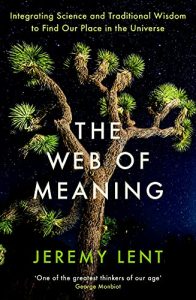
Words that Reconnect: “The Web of Meaning”, a book by Jeremy Lent

Hereunder is an extract from Chapter 1 in Jeremy Lent’s book called The Web of Meaning, where he talks about the “Tao” and why “yu-wei” steered human civilisation away from the wholeness of ecological considerations. This book provides great philosophical pointers towards the regeneration of an “ecological civilisation”, the type of civilisation that Earth needs today.

THE NAMELESS UNCARVED WOOD

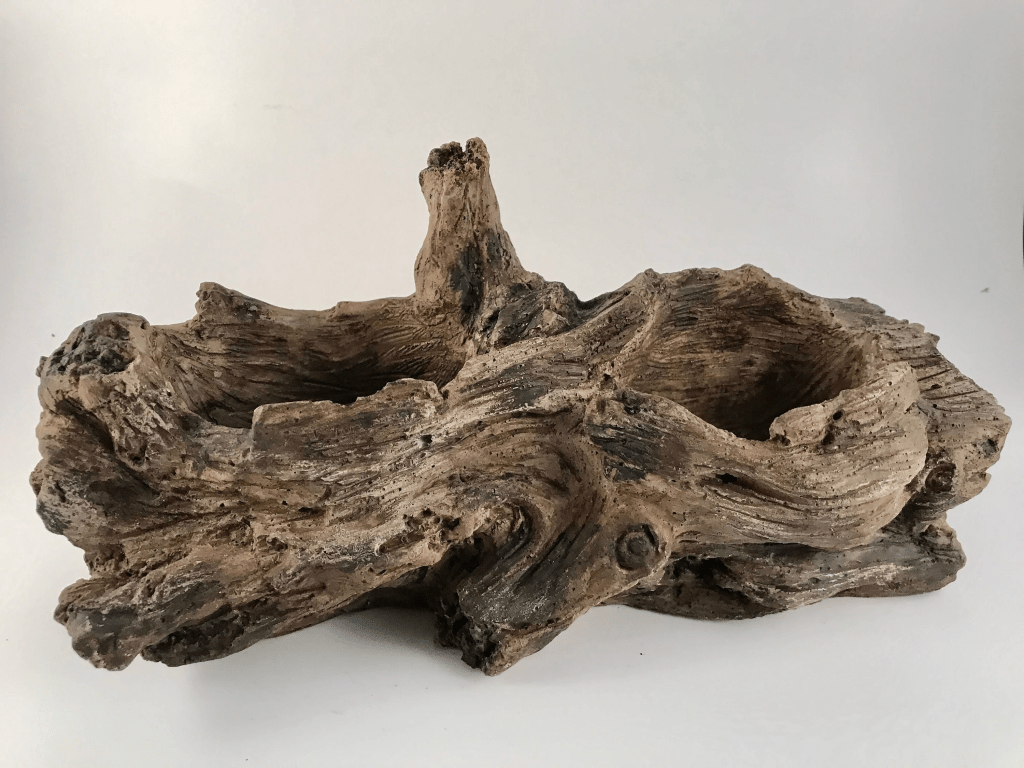
“There it sits, on top of a chest. A piece of ancient driftwood. I picked it up some years back on the windswept beach of a California seashore. It’s not that big, about the length of my forearm, and it’s shaped a bit like a bone. A femur, perhaps, with a big knobbly end tapering to a narrower point. If you look at the knobbly part from the right direction, you can almost see an animal face. A porpoise, maybe, or the cute bulbous snout of a beagle. Its grayish- blond color hints of the eons of sea and sun that have bleached everything else out of it. While smooth to touch, it still boasts a myriad of rippling lines showing its annual growth rings, along with sporadic perfectly round tiny dots of bygone worm holes.

It’s just a piece of wood. But it’s a beautiful piece, sculpted by nature, and it feels to me like the natural world peeking into my office, keeping me company. Above all, for me, it represents the Tao. ‘Tao everlasting,’ declared the ancient sage, ‘is the nameless uncarved wood. Though small, nothing under heaven can subjugate it.’

The Tao (pronounced dao and o en spelled like that) is one of the oldest concepts from antiquity that have survived to the present day. Emerging from the mists of ancient Chinese tradition, it is translated literally as ‘way’ or ‘path’, and it refers to the mysterious ways in which the forces of nature show up in the world around us. The ancient conception of the inscrutable Tao is about as far away as you can get from the grindingly busy, technology- based civilization that has come to dominate our world. And it’s partly for that reason that it’s a perfect place to begin our journey into the web of meaning.

[…]

A clue can be found in another Zhuangzi story about an archery contest. When the archers are playing for cheap tiles, they show top-notch skill. When they play for fancy belt buckles, they lose confidence; and when playing for gold, they become nervous wrecks. That’s because when the prize becomes more valuable, their goal orientation gets in the way of their natural skill, and they lose touch with their te.
The Chinese word for goal orientation, yu-wei, was the opposite of wu-wei, and represented the antithesis of living according to the Tao. As a result, according to the Taoists, it was a failing strategy. ‘ The world,’ states the Tao Te Ching, ‘is a spirit vessel which cannot be acted upon. One who acts on it fails, one who holds on to it loses.’

But isn’t acting on the world the very basis of our entire human civilization? Absolutely, argued the Taoists, and that’s precisely the point. Looking to the dawn of history, even before the birth of civilization, they saw the beginning of human separation from Tao as far back as the emergence of language. Language, in their view, was anathema to the Tao. In fact, the very first words of the Tao Te Ching read, paradoxically, ‘The Tao that can be spoken of is not the true Tao.’ The piece of wood sitting next to me represents the Tao not just because it’s uncarved, but because it’s nameless. It has no name, no purpose.

It’s not just language that the Taoists see as yu-wei. It’s the kind of knowledge that leads humans to use language in the first place, and by corollary the kind of knowledge that language can transmit. ‘One who knows [Tao] does not speak,’ declares the Tao Te Ching. ‘One who speaks does not know.’ Being in touch with the Tao leads to a different type of knowledge that doesn’t need language either to apprehend or communicate.

But, of course, the language-based type of knowledge arising from yu-wei is necessary to build civilization. Realizing this, the Taoists portrayed an earlier golden age, before civilization, when people lived in harmony with the Tao. ‘The men of old,’ declared Zhuangzi, ‘shared the placid tranquility which belonged to the whole world … at was what is called the state of perfect unity.’ At that time, ‘people lived in common with birds and beasts, and were on terms of equality with all creatures, as forming one family.’

It was only when ‘sagely men’ appeared, with their new kind of knowledge, that everything changed. ‘People began everywhere to be suspicious. With extravagant orchestras and gesticulating ceremonies, men began to be separated from one another. The pure solidity of wood was cut about and hacked to make sacrificial vessels, even colors were confounded to make ornamental patterns. This was ‘the crime of the skillful workmen.’ As Zhuangzi tells it, it is as though every human act that built civilization was a crime against the Tao.”

[…]

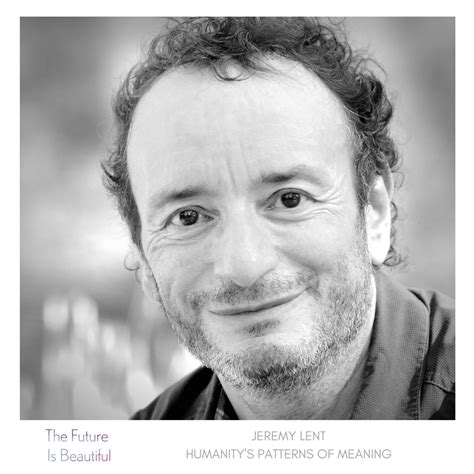
Jeremy Lent

The book ‘The Web of Meaning’ is available in print and ebook at New Society Publishers

Uncategorized

A Council of all Beings in Scarborough, Cape Town

As the Work that Reconnects gathers momentum in the Western Cape of South Africa with the work of various facilitators responding to the imperious calling of our Mother Earth, one of the novel events that happened last year was this Council of All Beings celebrated in Scarborough, a village of the Cape Town municipality that has coined itself “Conservation Village” many years ago. Some “Scarborites” and residents from neighbouring suburbs embodied some of the more-than-human-species that have been inhabiting the area, in natural connectedness, for thousands or millions of years!

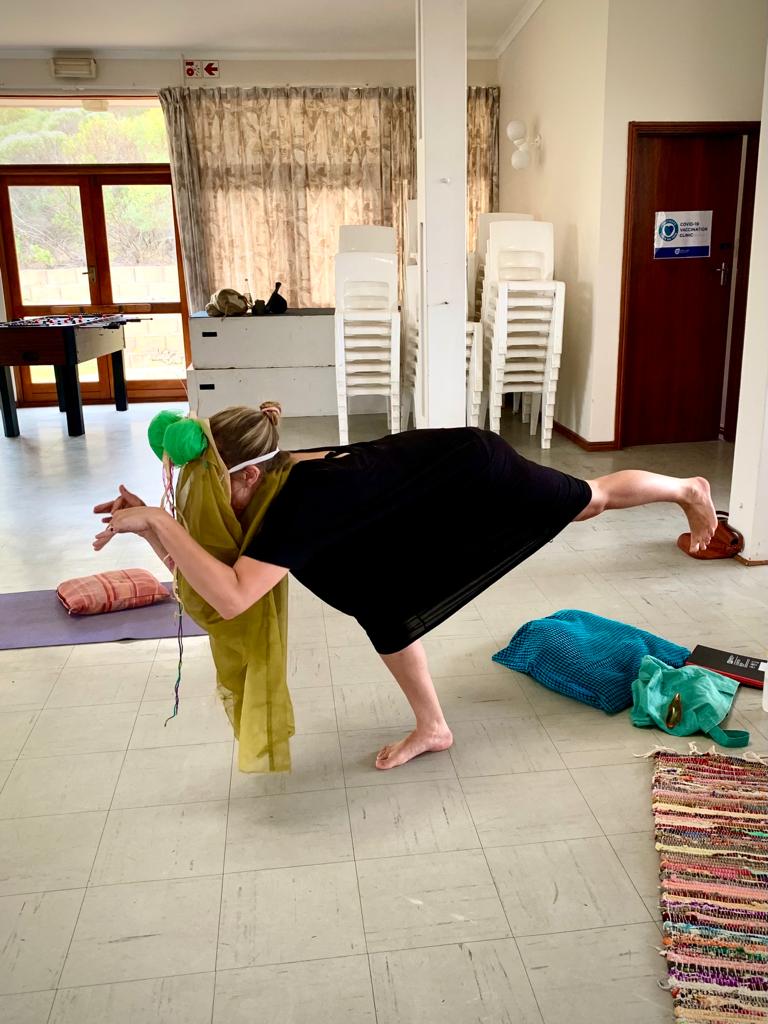
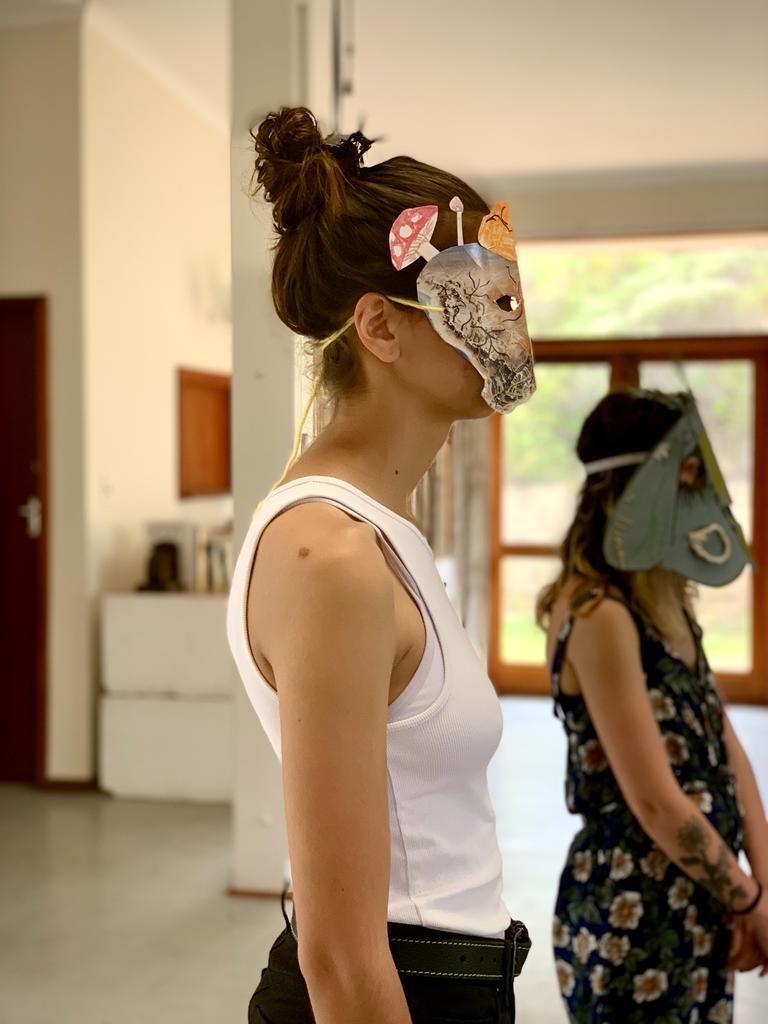
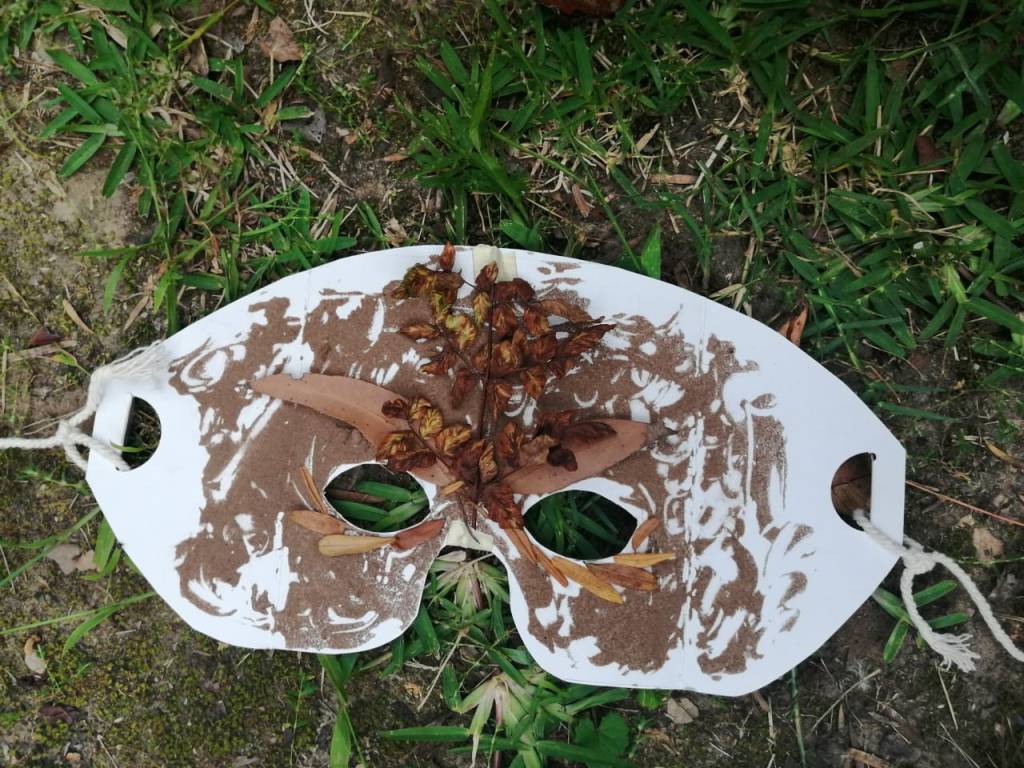
Us humans were given the opportunity to experience collective invocations to prepare the Council space for this interspecies experience, one which I believe to be documented for the first time in South Africa, and was facilitated by Joanna Tomkins and Simric Yarrow. Firstly, it involved grounding practices and invocations to prepare the Council space and secondly a short vision quest in nature to receive our individual callings. A couple of Seals and a couple of Ants, Fungi, Tree, Moth, Bee, Millipede and Tortoise asked to be represented. We then put recycled materials to use – some of which were sourced at the SEG recycling depot – into creative masks that would help to embody these Beings and drop out of our proud human masquerade to humbly channel their concerns.

We experienced that when we make a deliberate effort to “become” these Beings the enormity of the “Great Unravelling” – as the Work that Reconnects calls it – feels more real and frightening. Yet, at the same time, to experience our interbeing with more-than-human species with such closeness, and to acknowledge the communality of our feelings with other humans felt like an honour and a true honouring.

We hope to see regular Councils spring up in the country to consolidate these interspecies bridges. Through them we can give voice to the unspoken and the unheard, bringing more consciousness to our lives and creating a positive container for the Great Turning.

After ritualistically relinquishing our Council of All Beings identities, we shared our feelings in a circle as humans once again, listening deeply to each other, more prepared to step back into the harsh reality of the “Great Turning”, as custodians of Gaia.

Hereunder are two reviews we received after the Council. The beautiful pictures were taken by Isabeau Kamil. Thank you.

“Although I was very curious and drawn to the workshop, when I read the description I also felt that it was a little bit outside of my comfort zone, just because it sounded as though it had a theatre element and I am not a natural performer or public speaker. 

The workshop was sensitively and gently facilitated, I do think it helped that the space was neutral and there was a lightheartedness and recognition that people may have felt a little silly at times and that it was totally fine.

I found the experience powerful. I personally got a lot more into this than I expected to, on the one level I enjoyed getting into character and looking at things from the point of view of another being for a change, I found it surprisingly easy and I think it is good for us to expand ourselves at times. I also found that the experience stayed with me and resonated on a spiritual level as well.

I feel that there was an authenticity to this workshop and I really appreciated that it didn’t seem elitist in any way and that the goal was open-ended and felt collective and not purely individual. It definitely flipped a switch where some magic can occur and I feel like this way of looking at things is perfectly timed and very much needed in the world at the moment. 

Definitely eye-opening for me, and I thought that each section led into the next perfectly.”

Zoe Mafham, Participant

The Council of All Beings practice has the power to give valuable perspective and deepen our compassion for the other living beings that we share the planet with.

Stepping out of our own persona, and empathically embodying the experience of another creature allows us to shift out of the modern day human-centered paradigm and deeply understand the impact our actions are having on our wild relatives.

This more direct way of understanding is sorely missing in most mainstream academic education systems. I think the Council of All Beings practice could really help ignite care and heart centered environmental activism.”

Anna Kent, Participant

Uncategorized

Soil-Soul Messages from the Garden Route

by Joanna Tomkins

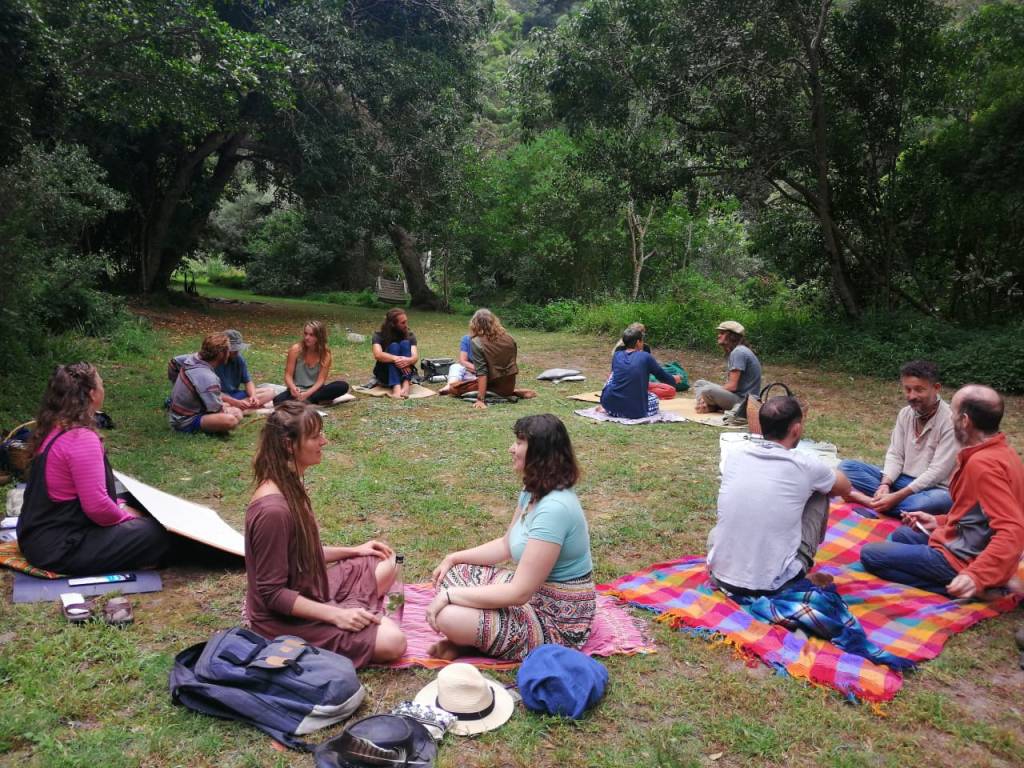
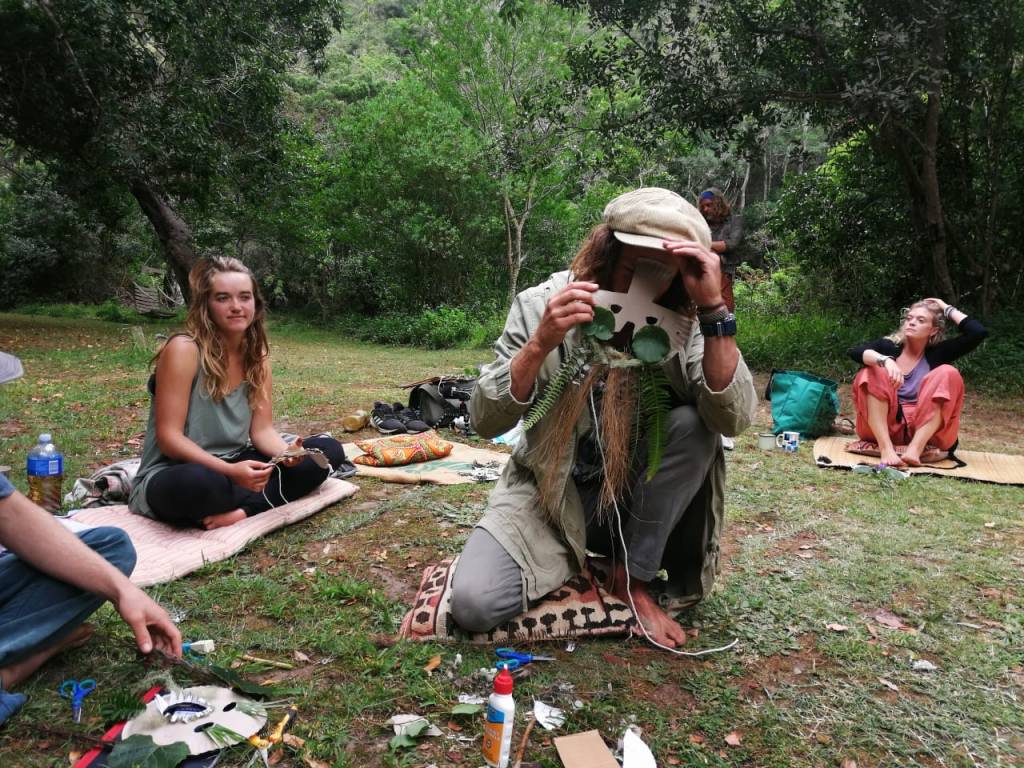
Kate Curtis, our colleague and WTR facilitator from the Garden Route in South Africa (Western Cape), facilitated an encounter called “Soil-Soul Messages from the Underworld” last month. It was based on the Spiral of the Work That Reconnects and led to a Council of all Beings where they used masks to speak for the soil. It was a beautiful day in a magical setting next to a river. Hereunder we have posted a video that was produced after the event and some of the pictures Kate shared with us.

Next week, from 15th to 17th March 2022, Kate Curtis will also be one of speakers at the Soil4Life online Conference. You can find more info and register here:

https://ccivs.org/soil4life-conference/registration/

You can find out more about Greenhearted, a non profit organisation where Kate implements the use of the WTR Spiral in permaculture, educational and outreach projects on website http://www.greenhearted.net

Uncategorized

Messages from my Mother

The size of the networks of solidarity expressing and providing support to Ukrainian refugees is another sign of the capacity of human populations to come together to share their feelings and act upon them. When we open our hearts to the other, individual or collective, human or more-than-human, we are apparently able to reverse years of injustice.

Let us take good note, as Gaia teaches us how to come together. Whilst we fight opinion wars around the scary viruses and the dark oils she produces from her bowels, we are coming together through networking. We are developing the capacity to respond en masse to disaster. We are developing resilience as we slowly come to realise that we need to drop what we are doing to run helter-skelter to the bedside of our sick Mother.

Aaah, here you are, she smiles. I Knew you would come! So you took me for granted, did you?, she cries. As Mother squeezes black oil out of her body, she moans, Can you not see me crying!?

Although our planet shows signs of illness daily with unbalanced ecosystems, biodiversity loss and climate change, she is widely ignored. So, she sent a message for all to receive, from the tyrants of the Kremlin to the humblest Amazonian tribesmen, one that at the core of our ego, one that can threaten our life if we ignore it. This hyper-sophisticated virus carries varying ethos-changing messages for all, whether awoken by fear of suffering, or toppled into passionate love for life, no-one has been left unshaken. Have we heard her plea now? Can we decrypt and put to good use the information we received as individuals, who are also part of the human collective and part and parcel of the Earth? As first world refugees are in the spotlight, do we remember the hunger-stuck refugees who have been huddling in tents in the desert for years? As we breathe through plastic ventilators or clad our beautiful faces with plastic masks, do we remember how our bodies deserve to be fed and cared for, the bodies that our Mother gave us?

Our collective Pain for the World is breaking free now so that we can prioritise and get our response armies trained and organised… Yet, can we feel the urgency in the ecological unravelling that we still perceive as intangible? Surely, yes! If we are able to feel pangs of solidarity in response to these recent crises, even at a distance, our fingers brushing our screens, we must be reviving the muscles of our natural response to danger, we must be noting that it is all connected. And when our fingers brush the leaves, our eyes sweep the horizon, our hearts will open to the realisation that we Knew, we always Knew, that this is why we are here. Close to eight billion individuals have a role to play, with two hundred thousand newcomers daily. We have been called to be a part of the Great Turning.

Let us pick up our weapons of compassion now.

©Artwork by Amanda Vela

Uncategorized

The United Nations “Climate Change 2022” report has been published and globally unnoticed

by Joanna Tomkins, sharing a press release from IPCC

Whilst the public eye is riveted on the events Russia, has this important document received the attention it deserves?

Climate change: a threat to human wellbeing and health of the planet.

Taking action now can secure our future“.

BERLIN, Feb 28 – Human-induced climate change is causing dangerous and widespread disruption in nature and affecting the lives of billions of people around the world, despite efforts to reduce the risks. People and ecosystems least able to cope are being hardest hit, said scientists in the latest Intergovernmental Panel on Climate Change (IPCC) report, released today.

“This report is a dire warning about the consequences of inaction,” said Hoesung Lee, Chair of the IPCC. “It shows that climate change is a grave and mounting threat to our wellbeing and a healthy planet. Our actions today will shape how people adapt and nature responds to increasing climate risks.”

The world faces unavoidable multiple climate hazards over the next two decades with global warming of 1.5°C (2.7°F). Even temporarily exceeding this warming level will result in additional severe impacts, some of which will be irreversible. Risks for society will increase, including to infrastructure and low-lying coastal settlements.

The Summary for Policymakers of the IPCC Working Group II report, Climate Change 2022: Impacts, Adaptation and Vulnerability was approved on Sunday, February 27 2022, by 195 member governments of the IPCC, through a virtual approval session that was held over two weeks starting on February 14.

Urgent action required to deal with increasing risks

Increased heatwaves, droughts and floods are already exceeding plants’ and animals’ tolerance thresholds, driving mass mortalities in species such as trees and corals. These weather extremes are occurring simultaneously, causing cascading impacts that are increasingly difficult to manage. They have exposed millions of people to acute food and water insecurity, especially in Africa, Asia, Central and South America, on Small Islands and in the Arctic.

To avoid mounting loss of life, biodiversity and infrastructure, ambitious, accelerated action is required to adapt to climate change, at the same time as making rapid, deep cuts in greenhouse gas emissions. So far, progress on adaptation is uneven and there are increasing gaps between action taken and what is needed to deal with the increasing risks, the new report finds. These gaps are largest among lower-income populations. 

The Working Group II report is the second instalment of the IPCC’s Sixth Assessment Report (AR6), which will be completed this year.

“This report recognizes the interdependence of climate, biodiversity and people and integrates natural, social and economic sciences more strongly than earlier IPCC assessments,” said Hoesung Lee, the Chair of the Intergovernmental Panel on Climate Change (IPCC). “It emphasizes the urgency of immediate and more ambitious action to address climate risks. Half measures are no longer an option.”

To access the report, you may use the following link:

https://www.ipcc.ch/report/ar6/wg2/

Uncategorized

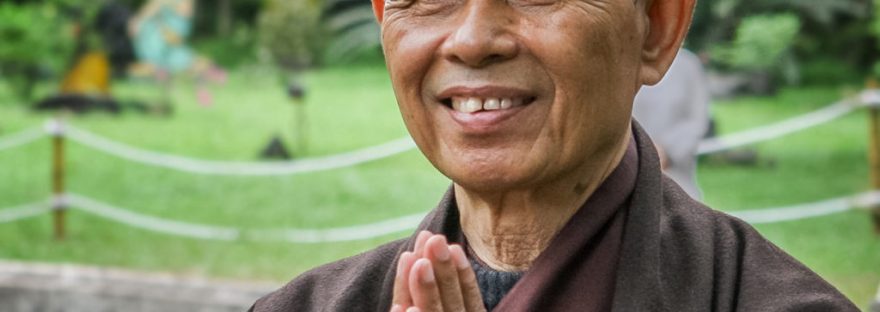
A “Buddha of our time” passed away on 22nd January 2022 at 00:00

A great influencer in my life and that of many of my family members, his books have been at my bedside for over 20 years now.

I wish to honour Thich Nhat Hahn today by sharing the resources hereunder so that you can participate in the knowing and in the commemorating of this wonderful being.

The first article by the buddhist review Tricycle gives a good overview of his influence and the second two links will take you to the Plum Village website, where all memorial services and ceremonies during this week of commemoration, as well as other meditations and practices – throughout the year – are available for his disciples and followers.

Sending prayers for the peaceful passing of this great man.

– by Joanna Tomkins