Uncategorized

SA could become the renewable energy powerhouse of Africa

By Judy Scott-Goldman, originally published on 21 April 2025 for Daily Maverick

Dr Judy Scott-Goldman is a spokesperson for Extinction Rebellion Cape Town.

How feasible is it to meet a country’s energy needs from renewable energy? Uruguay recently ran on 100% renewable power for 10 straight months and has become a net exporter of electricity.

My husband tells the tale of his great-grandfather, who lost an extraordinary opportunity because he couldn’t see what was coming down the road. He was a wagon maker in Johannesburg. The story goes that one day he was approached by Ford and offered the Ford Agency in South Africa. He refused. Why? Because he didn’t see a future in the motor car.

This inability to catch the zeitgeist and seize the opportunity seems to be plaguing South Africa. Some of our politicians are enthusiastic about 20th-century fuels such as coal, oil and gas, but show no excitement about the power and potential of fast-developing solar, wind and storage technologies.

Why are some in our government rubbing their hands with glee at the prospect of digging up oil and gas wherever they can find it, while having a yawn-yawn reaction to the miracle that is renewable energy?

Tuesday, 22 April, is Earth Day 2025. This year’s theme, “Our power, our planet”, encourages everyone around the globe to unite behind renewable energy, with a call to triple global electricity generation from renewable energy by 2030. There are many forms of renewable energy, but South Africa’s strengths are in solar and wind power, both of which have extraordinary positives.

First up, solar and wind energy are cheap and getting cheaper all the time. The CSIR showed back in 2014 that in South Africa, the cost of new solar PV and wind is 40% cheaper than new baseload coal.

The Presidential Climate Commission (PCC) has also stated, based on extensive modelling, that renewable energy, supported by storage solutions, is the cheapest form of electricity generation in South Africa.

Renewable energy is getting cheaper because experience and innovation is happening all the time all over the world and “the more one does it, the cheaper it gets” to quote Tobias Bischof-Niemz, of the CSIR .

It is cheaper because of something so obvious but so game-changing that we struggle to get our minds round it. The fact is that once you have forked out the money to get your solar or wind plant up and running, you don’t have to buy any fuel to feed it.

Think about it. If you build a power plant that produces electricity from coal, which is our major fuel for producing electricity in South Africa, every single day someone has to feed coal to the plant. This means that someone somewhere has to dig up the coal, which is a hard, dangerous, lung-damaging job, and the mining process leaves ugly coal ash dumps and water-polluting acid mine drainage.

The coal then has to be cleaned, stored and transported to the power plant, often in heavy, road-damaging trucks. Then it is crushed before it is burned to fuel huge turbines.

But no one has to dig up, clean, refine, crush or transport the wind or the sun to keep a wind or solar farm running – it just arrives by itself. It costs nothing. You can’t be side-swiped by a sudden increase in the price of your feedstock fuel, you can’t run out of stock, no one can steal it and no one can manipulate the price of it either.

Another extraordinary fact that we have not really taken on board is that renewable energy is a flow, not a stock, so it does not deplete.

If you dig a well to source oil or gas, the stock of oil or gas will be limited and gets harder to access over time. Sun and wind are not a depleting stock. A small town that grows up around a solar farm does not have to fear the day in the future when its energy source will be depleted.

No combustion is taking place at a solar or wind farm either, so no one is breathing in pollutants that cause respiratory diseases, shorten lives and create health costs.

And small renewable energy projects are great for providing energy solutions to rural areas where no one wants to pay to extend traditional grid infrastructure as the number of users is too small to cover the cost.

But the downside is that the sun doesn’t always shine and the wind doesn’t always blow. This is the intermittency problem which people have worried about for so long.

The good news is that huge strides are being taken to overcome this challenge. For instance, batteries store excess energy during peak production and release it during low generation periods, and batteries are getting cheaper and better.

Alongside the well-known lithium-ion batteries, mechanical forms of storage are being developed – gravity storage, for example. When there is excess renewable energy, it is used to drive a winch which lifts a weight. When the energy supply is too low to meet demand, the weight is released, releasing its stored energy. Research is happening in repurposing mine shafts for gravity batteries because the shafts can have drops of more than a kilometre.

Another answer to the intermittency problem is to site a solar farm and a wind farm close together so that the production of each can complement the other and they can share the same grid connection infrastructure. This is called co-location.

Also, countries, or distant areas within a country, are starting to connect cables to each other so that they can send energy back and forth to each other to balance supply and demand in their respective locations. There really is lots of exciting innovation and problem-solving going on.

So how feasible is it to meet a country’s energy needs from renewable energy? Uruguay recently ran on 100% renewable power for 10 straight months. Power production costs have declined, new jobs have been created and Uruguay has become a net exporter of electricity.

At least 10 countries are on track to get more than two-thirds of their electricity from wind and solar by 2030, and 19 could have more than half their electricity produced from the two technologies by 2030. Chile is aiming for 80–90% renewable electricity by 2030 and will have phased out coal by 2030.

South Africa could easily follow suit because it has tremendous untapped solar and wind potential spread over many provinces. It could become a renewable energy powerhouse of Africa.  

Why is it essential that we seize this renewable energy potential, phase out coal and don’t go down the oil and gas route? Some politicians would argue for a diversity of energy sources.

It is hard to see why we would choose more expensive options but the really urgent and pressing argument is this: we have to generate huge amounts of energy to power our modern world but it has become essential that we do so with a lighter footprint on the Earth.

The human and non-human world lives or dies by our ability to function within the physical, chemical and biological systems of planet Earth. Scientists (and Earth itself) are shouting loudly at us that we are overshooting Earth’s planetary boundaries and all our metrics show that Earth and its creatures are steadily declining in health and resilience.

Using coal, oil and gas for energy is far more polluting and environmentally destructive than using renewable energy. A rapid transition from fossil fuels to renewable energy is vital to arresting this decline in planetary health.

My husband’s ancestor thought that the future was business as usual. Stuck in old ways, he failed to seize the opportunity. Let’s not make the same mistake. 

Dear Judy, thank you for sharing this article with us! We appreciate the work that you do.

Uncategorized

Welcome

Delivered during a Transition Town workshop and adapted by WTR facilitator Silvia di Blasio

We are so honored to welcome you and all you bring to this healing circle. 

We welcome your excitement and your trepidation. We welcome your open hearts and skepticism. You are welcome here. 

Your culture is welcome. Your ethnic origin is welcome. Your race, your skin hue, accent, food preferences, and all of the complexities that make up your cultural identity are welcome here. 

The histories, herstories, and experiences of your ancestors are honored and welcomed. 

We welcome you with all of the connections you bring with you to the children in your lives, your partners, siblings, parents, the animals in your lives, your ancestors and spiritual allies and other loved ones. All your connections are welcome here. 

We welcome your spiritual practice, your religious affiliation, your spiritual walk. However you hold that aspect of your life is welcomed. 

Your love is welcome here. How you love, who you love, and your understanding of what love is, are all welcome. We welcome you in all of the ways your sexuality and gender are unfolding. 

We welcome you in your ignorance. We welcome you in your privilege. We welcome you in your grief. We welcome you in your guilt and shame.  You are welcome if you have been harmed by racism and white privilege or have caused harm to others because of your social conditioning. 

Your quirks and ambiguities are welcome. We welcome your humor and we welcome your silent contemplation. We welcome the parts of yourself that you’re still figuring out. We welcome you in your roles as activists, healers, feelers, intuitives, parents, caretakers, students, artists, witches, diviners, change agents, magicians, educators, and warriors. 

We welcome you at whatever level of mental and physical wellness you are currently functioning. We welcome your introversion and your extroversion. We welcome all of the experiences that led you to this moment. We welcome your wounds and scars. Your emotions, ALL of them, are welcome as well. 

Thank you for bringing your ancestors with you; we welcome them also. Ancestors, please be with us, collaborating with us to anchor the healing and what is most needed in these times. We welcome your sacred connections to the lands on which you were conceived, the lands that hosted your births, and the lands of your ancestors. The lands that you are currently standing upon and all the life that came before you – the animals, the indigenous peoples of the land you stand upon. we now collectively prepare the soil on each of our own lands through our intentions and sow the seeds of our visions for all beings. 

Let your roots sink into this nutrient dense soil, intertwining with the roots of everyone else here, and connecting to the root systems of all of the other living things around here as we collectively build our power to create a healing circle across continents. 

Settle in. 

Welcome.

Uncategorized

Directing our Creative Story

Art connects us to the Sacred. Sacred like a deep conscious in-breath. Like the lull between words or pauses to dig our hands in the soil. It slows us down—down to the core of the heartbeat, sparing time to see the sensuous colours of autumn leaves, to take in the patience of trees… And it also depicts the nuances of our story better than most classic dialectic born of the human brain!

Yet, whilst I invent ceramic sculptures in my studio, I often wonder about the relevance of plastic arts in the midst of this helpless, dramatic anthropocene of ours. Why use more materials and energy to produce and sell more objects? Am I not just adding weight to our fierce and fast capitalistic economy and depleting more resources?

I also ponder on the harmful twists given over time to the gift of human creativity. After all it’s got us here now, and can’t seem to get us out, can it?

Named “Trimurti”, the Hindu holy trinity of Brahma, Vishnu and Shiva represents creation, preservation and destruction and is said to govern the world inexorably, consequently and simultaneously. In human embodied form though, our souls have misused the power of consciousness-fuelled creativity? Unlike other-than-humans who abidingly follow the rules of Mother Nature, we have transgressed the tacit contract of our role of guardians of the Sacred. We invented narcissistic and rebellious materialistic gods that separated us from Her and gradually entitled us to trade in our creativity for pernicious personal profit and to aggrandise a handful of two-legged, five-fingered beings. Free-willed creativity is what makes our species unique, and it also endows us with the responsibility to respond to the needs of wider Earth communities. Creativity helped us to design all the machines that our Business as Usual relies on now, drilling holes in the body of the Earth and sucking Her blood, and lately also enclosing us in isolated internet-driven, cement-walled physical and psychological traps or time capsules. Gaia’s Life is pending on a thread! And so what? I’m on to the next creation of mine…

The wisest pagan songs sing ” Hoof and Horn, All that dies shall be reborn. Corn and Grain, All that falls shall rise again…” Yet we cannot claim to slot in to the natural cycles of creation harmoniously or purposefully if we do not create mindfully. We cannot be excused by natural cycles of death and rebirth, if we do not take seriously the production in our lives.

And to make the control of our weaponised creativity even more complex now “As machines become more proficient at generating art, music, literature and solutions, we must reflect on the unique role of human intuition and experience in the creative process and explore the delicate balance between the advancements of AI and the irreplaceable nature of human creativity.” (Joseph Fowler, Head, Arts and Culture, World Economic). Well, there goes another strained train of though; we might want to park that one for now.

Back to the questioning of plastic art, and also applicable to poetry, fictional prose, performance, and even “creative solutions”, one answer may be that you cannot produce beauty with a more-is-better mentality. It just doesn’t hit the mystic spot. A tree cannot plan the majestic beauty of its outcome. It happens through it, connected to all the other beings that make up the forest and the knowledge that time does not belong to it. And when you buy a piece of art because it speaks to you – and not as a financial investment – you don’t follow the parameters of reason, you just fall in love and decide to surround yourself with something that has meaning for you. This something reminds you of a connection that is bigger than you. It may be a spiritual reminder, a piece of intimately familiar story-telling, a mirroring of your vision of nature, or a bonding to simple lines or angles, connecting to the strings that pull your own heart.

Creating something for the sake of beauty is a kind of meditation. In movement, in feminine flow with a masculine holding in the form. It’s the kind of meditation where you lose track of time and suddenly remember who you are. Where you feel the eternal essence of the materials under your fingertips, your grandmother humming in the background as you shape a line, or a bowl, or a prayer. There is no need to control your thoughts, She controls your thoughts in her becoming.

And then, sometimes, something extra happens. There’s this magic moment when the liminal sparks. A doorway opens, and suddenly you’re not just a person making something—you’re in deep conversation with Life itself. The boundaries blur. You feel yourself woven into a much wider web of interbeing. You are not separate. You are a thread in the great tapestry—co-creating, remembering, belonging. You’re not just on time; you’re in deep time. Held by all that came before, and all still to come.

Art is how we listen to what’s older than human language to praise our Mother. When our eros is aroused by the desire to birth beauty we have tools to give back to Gaia what we she gave us when she made us creative souls. In this reciprocal artistic exchange we take note and are inspired by the extraordinary images she displays in front of our retinas, and the miraculous, erotic, infinite experiences of Life unfolding that she gifts us.

“In a relationship, the narcissist asks, “How can I mine this relationship for my own benefit?” The lover asks, “How can I use my gifts to contribute to us.” Exploitative technology asks, “How can we extract as much as possible from the land, for our own ends?” Ecosexual technology asks, “How can we create greater wealth and harmony for people and land both?” Or, since the land wants to give, we might ask, “What is the dream of the land?” and on a planetary level, “What is the dream of Earth?”[…]” (Charles Eisenstein)

Art can be a ritual of remembering the Earth’s dream. A renewal of vows for a loving partnership, saying: This matters. You matter. I won’t look away.

So, perceiving and creating art can help us remember and move towards a more beautiful story for humanity—not by fixing it but by telling it differently, by engaging with Gaia in a different way. By reviving our erotic wild selves. By reconnecting us with what is timeless.
One verse, one pinch of clay, one slow, creative chapter at a time.

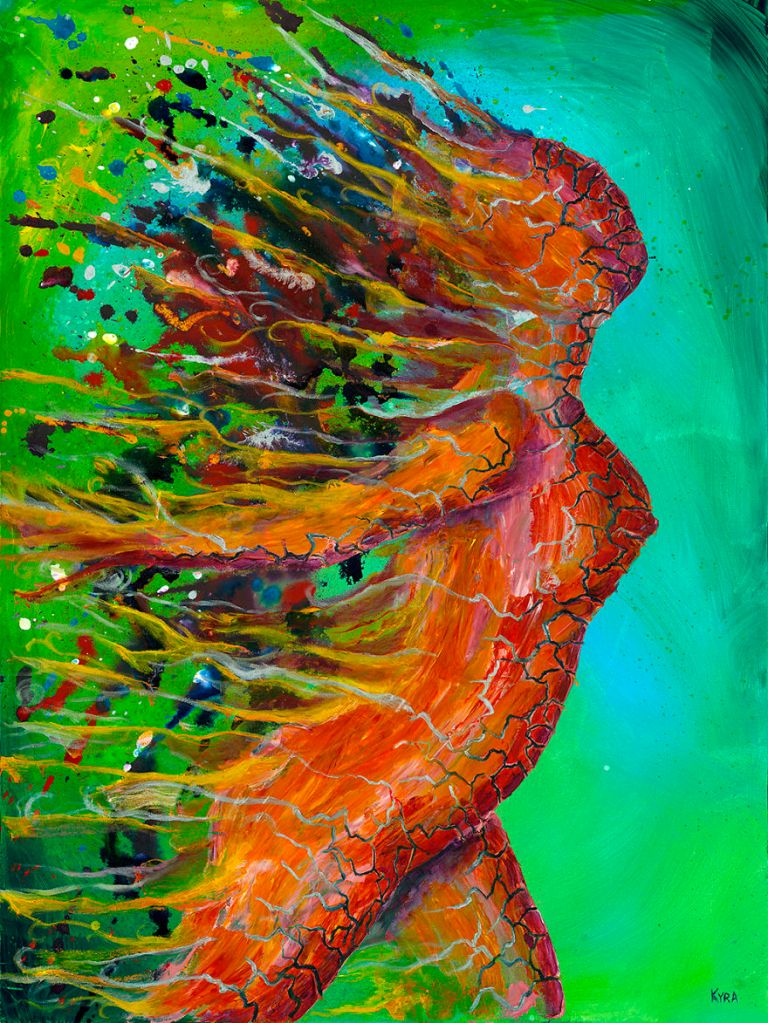
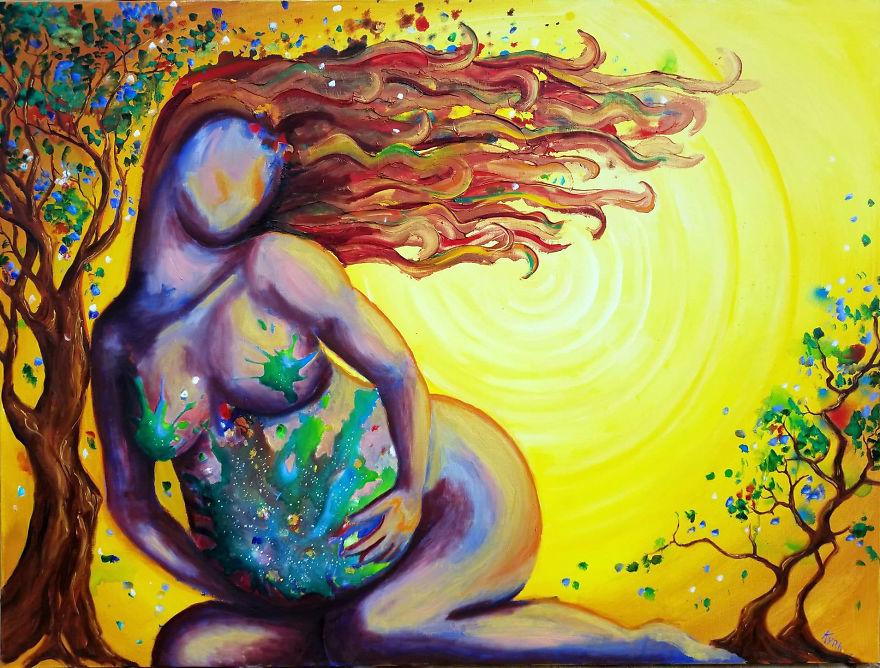
The two artworks on this page are by artist Kyra Coates: Breakthrough and The Most Common Miracle

WTR facilitator Joanna Tomkins creates a collection of handbuilt ceramic sculptures and ritual objects called Artwork that Reconnects, from her shared studio in Kommetjie, South Peninsula, Cape Town

Uncategorized

From Polarising to Weaving

by Joanna Tomkins

COMING FROM GRATITUDE

Breathing in, I know I am breathing in.

Breathing out, I know I am breathing out.

Breathing in, I notice my in breath has become deeper.

Breathing out, I notice that my out-breath has become slower….

Thich Nhat Hanh

HONOURING OUR PAIN FOR THE WORLD

In recent years, societies worldwide have faced unprecedented challenges—economic upheavals, political crises, and environmental disasters, and the heightened awareness of these through fast-speed internet. These crises have deepened a growing division between ideologies and communities. The roots of this divide are complex and its impact on resilience—the ability of societies to withstand and recover from sudden change—is profound. When people become entrenched in ideological or social oppositions, their ability to collaborate and find common ground weakens, making it harder to respond effectively to crises. With the acceleration of the Great Unravelling, which we perceive everyday in our lives, as division within ourselves, and separation from our collective Web of Life, we know that it is time now to find unity, if we want to have any chance of moving through this Great Turning in a good way.

This fragmentation is not a new phenomenon. Some trace its epicentre back to the bloody era of pre-industrial Western colonial and religious territorial invasions, cultural annihilation and societal plunder in the XVth and XVIth Century. Soon after, the scientific introduction of the predominant concept of Cartesian Split, generated originally by René Descartes, reinforced a worldview that separates mind from body, reason from emotion, human from nature, individual from collective, soul from reality, right from left, etc, etc. Most will agree that that era was most terrorific and machiavellic in terms of unravelling of moral values. Thereafter ensue four centuries that lead us to now this disastrous and compelling threshold for humanity; and this is infinitesimal in the wider view of Deep Time – which sees humans arriving on Earth less than a minute ago. And yes, indeed, many saints and great leaders proceeded these times and others have blossomed like lotus from mud throughout human history. We follow in the footsteps of these wise men, relearning the wisdom of pre-colonial Bodhisattvas.

Modern formal education reinforces these mental divisions through rigid structures that prioritise competition over collaboration. Standardised testing, hierarchical grading systems, and strict disciplinary measures condition students to equate self-worth with performance and single mindedness. Instead of being encouraged to explore different perspectives and develop emotional intelligence, children are often taught to seek external validation and fear failure. The system rewards obedience rather than curiosity, fear rather than love, creating individuals who hesitate to question authority, challenge assumptions, or engage in nuanced discussions. A student who learns that disagreement leads to punishment rather than understanding will later struggle to accept perspectives different from their own.

The consequences of societal fracturing are vast in our established institutions too. Political division makes cooperation on critical issues—such as overpopulation, mass production overshoot, lack of integral healthcare, disregard of human rights and the rights of our planet —nearly impossible, as factions focus more on defeating each other than solving problems. Cultural and social globalisation together with fragmentation erodes the fabric of local communities too, making collective action more difficult. Community resilience—our ability to support one another through crises—relies on strong social bonds. However, when divisions grows, following this detrimental programming, the willingness to collaborate diminishes when it is most needed, leaving societies vulnerable in times of uncertainty.

SEEING WITH NEW AND ANCIENT EYES

To rebuild resilience, we can actively cultivate the qualities that transcend social division. These values are not abstract ideals but essential human traits that, when nurtured, have the power to transform individuals and communities. Empathy allows us to connect with others beyond ideological differences. It enables us to see the world through another’s eyes, fostering understanding and reducing hostility. To cultivate empathy, we can engage in active listening, expose ourselves to diverse perspectives, and create spaces for open, nonjudgmental dialogue, role-playing, myth and story-telling and writing, art and poetry, community gatherings and rituals, nature immersion, etc, which will all challenge us to see the world from another’s perspective.

Compassion moves us to act, fostering a sense of shared responsibility that encourages people to support one another rather than compete. To reinforce compassion in society, we must create environments where acts of gratitude, kindness and service are valued as much as personal achievement. Recognising and rewarding cooperative efforts in schools, workplaces, and communities can shift the focus from individual success to collective well-being.

Adaptability is vital in an era of uncertainty. Rigid thinking leaves individuals and societies at continuous risk of collapse, whereas adaptability ensures resilience. Encouraging lifelong learning, curiosity, and openness to new experiences can help people embrace change rather than fear it. In education, fostering interdisciplinary learning—where students are exposed to different fields of knowledge and ways of thinking, beyond the rigidity of the classic classroom—can promote intellectual flexibility and innovation. I visualise a sense of excitement as we see the old unravelling and catch its threads in time to reweave them into something different, unknown, yet promising.

A society divided by ideological entrenchment struggles to work together in times of crisis. Strengthening collaboration means prioritising shared goals over individual or ideological victories. This requires a shift in how communities function, promoting cooperative projects, dialogue-based decision-making, and inclusive leadership. Encouraging collective problem-solving in schools, workplaces, and governance fosters a culture where people learn to work together despite differences.

How can we encourage education to shift away from rigid curricula and move toward fostering open-mindedness, emotional intelligence, and dialogue? Many educational initiatives, in particular small community based schools or extracurricular programmes so encourage critical thinking, teaching students not just to absorb information but to analyse and question it. Life skills such as emotional intelligence, a basic requirement for psychological and integrative health and thriving, could be integrated in formal education too, helping young people develop self-awareness, empathy, and conflict-resolution skills. By shifting from a system based on individualism, isolation and fear of failure to one that encourages exploration, trust and cooperation, we can raise generations better equipped to navigate the differences that we inevitably face in these times of radical shift rather than watch them fall victim to ideological entrenchment again, repeating the destructive cycles of our past.

GOING FORTH

I’m sure you perceived its tingling as you read these paragraphs that call us to Go Forth, for you will indeed notice that perhaps the most powerful force in sustaining resilience is hope. In times of crisis, hope gives us the strength to carry on, to envision a better future, and to find meaning in struggle. Hope is not passive optimism but an active commitment to creating positive change. To cultivate Active Hope, societies can nurture creativity, celebrate progress (however small), and build narratives that emphasise possibility and a sense of individual and collective purpose. By showcasing stories of resilience, reconciliation, and innovation, instead of doom and negativity, we reinforce the belief that healing is possible. We all know the limitless power of our beliefs when we put them into action and the exponential power that comes from doing that as a group. acting on behalf of our world.

The “Great Unraveling” threatens to divide humanity when we fight for survival, yet our resilience depends on choosing unity over separation. By strengthening our ability to listen, understand, and collaborate we can prepare for the challenges ahead. Going Forth in the “Great Turning” requires transcending the ignorant divisions of the past and the patriarcal competition enabled by our current Industrial Growth Society and embracing our collective responsibility to foster understanding, connection, and shared humanity. In doing so, we do not merely survive the future—we shape it.

Uncategorized

A Workshop at the Save our Seas Foundation Shark Centre in Cape Town

By Diony Lalieu, Ocean Pledge founder and director,

After the workshop held in Kalk Bay on 6th March 2025

“A single tear can carry a heart of many emotions. When it falls, it’s not just about sadness, it’s about letting go. Sometimes, after we cry, we find ourselves smiling because we’ve allowed ourselves to truly feel, to release the weight we’ve been carrying. Now, picture a group of people coming together in a safe space, each person with their own story, their own journey, their own struggles and challenges. But they’ve arrived here, together, to share their hopes for a better world. In this space, they can talk about their sadness without guilt or shame, and share their dreams without fear, knowing they’re supported and their vision for a better tomorrow is held. In the Work that Reconnects, there is a deep acknowledgment that each person’s journey has shaped them into who they are today. Some paths were hard, others full of joy, but all have led them here, where they can listen, understand, and re-connect with themselves, with the planet and with all forms of life who share the planet with us. As they share their hopes, they realise that by being open with one another, they’re not only healing themselves but helping to support each other in shaping a better world. With deep gratitude to Joanna Tomkins from Gaia Speaking for holding this space. And for the Shark Centre for a gloriously educative morning of learning about sharks and interacting with life below the ocean.”

For more information on these groundbreaking Ocean-based leadership initiatives, please contact Ocean Pledge https://www.facebook.com/OceanPledge,

For more info on the Shark Centre and SOSF programmes visit https://saveourseas.com/sosf-shark-education-centre/

Uncategorized

Work that Reconnects: Indra’s Net

by GaiaSpeaking.com

Indra’s Net, a profound metaphor from Mahayana Buddhism, illustrates the universe as an expansive web where each node holds a jewel reflecting all others. This imagery encapsulates the concept of radical interdependence, suggesting that every entity is interconnected and mutually influential. Joanna Macy, a scholar of Buddhism and deep ecology, draws upon this metaphor to articulate our intrinsic connection within the web of life. She describes Indra’s Net as “a huge net where at every node is a jewel, and each jewel reflects the other jewels and catches the reflections back and forth,” emphasizing the tapestry of universal interconnectedness.

​This vision resonates with contemporary understandings in systems theory and deep ecology, which recognize that life is not organized hierarchically but through intricate interdependencies. Macy highlights that “nature doesn’t work that way, and great mystics of many traditions have seen this radical interdependence of all life.”

By embracing this perspective, we acknowledge that our actions ripple throughout the entire web, affecting all beings and the environment.​

In the context of the Great Turning—a term Macy uses to describe the essential shift from an industrial-growth society to a life-sustaining civilisation—recognising our place within Indra’s Net becomes transformative. It fosters a sense of mutual belonging and shared responsibility. Macy asserts, “We belong to each other. We belong to the living body of Earth and nothing can ever separate us. We are already home.” This understanding compels us to act for the well-being of the whole, knowing that individual and collective destinies are intertwined.​
(Source: Article on the Deep Time Journal of the Work that Reconnects International Network)

By internalising the metaphor of Indra’s Net, we move beyond the illusion of separateness and embrace our role as active participants in the web of life. This shift in perception is vital for the Great Turning, as it encourages actions rooted in awareness, compassion, and a deep commitment to the flourishing of all beings.​

For a deeper exploration of these concepts, you may find Joanna Macy’s talk “Waking Up in Indra’s Net: Acting for the Sake of Life on Earth” insightful.​

Listen to Audio on dharmaseed.org

Events & Reviews, Organisations, Resources & Networks

At Boulders Beach with the Disa Primary eco-warriors

by Joanna Tomkins, 3rd March 2025

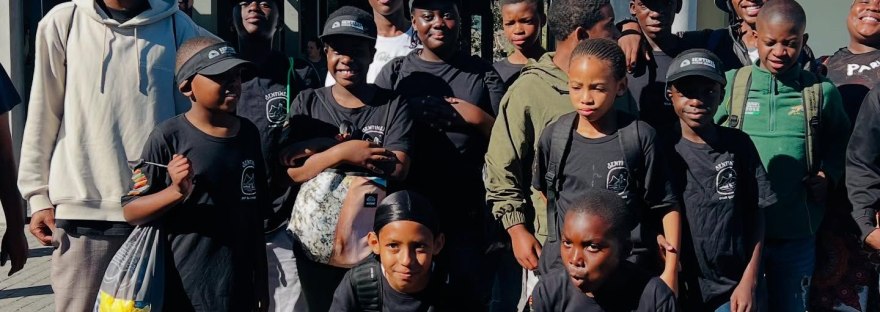
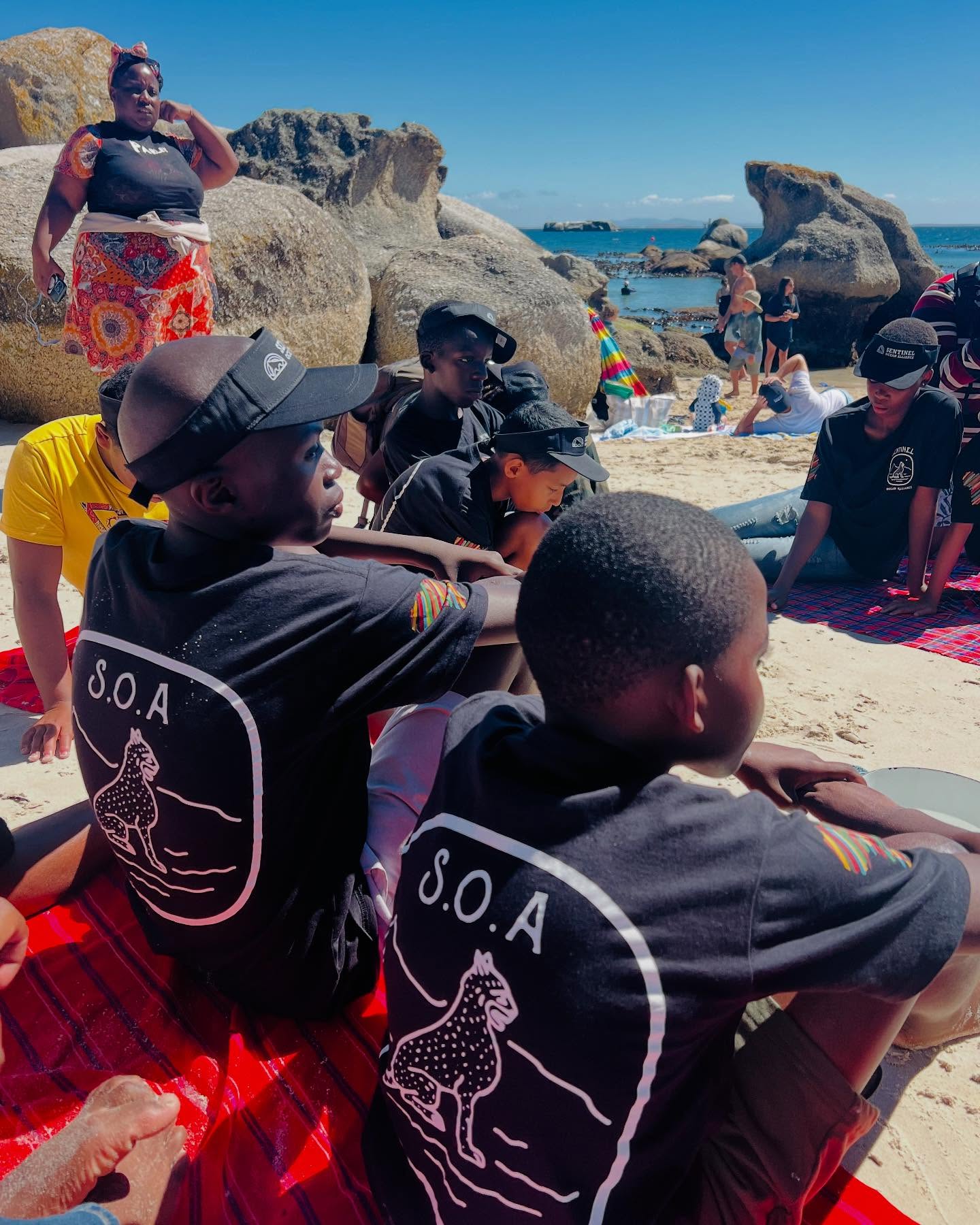
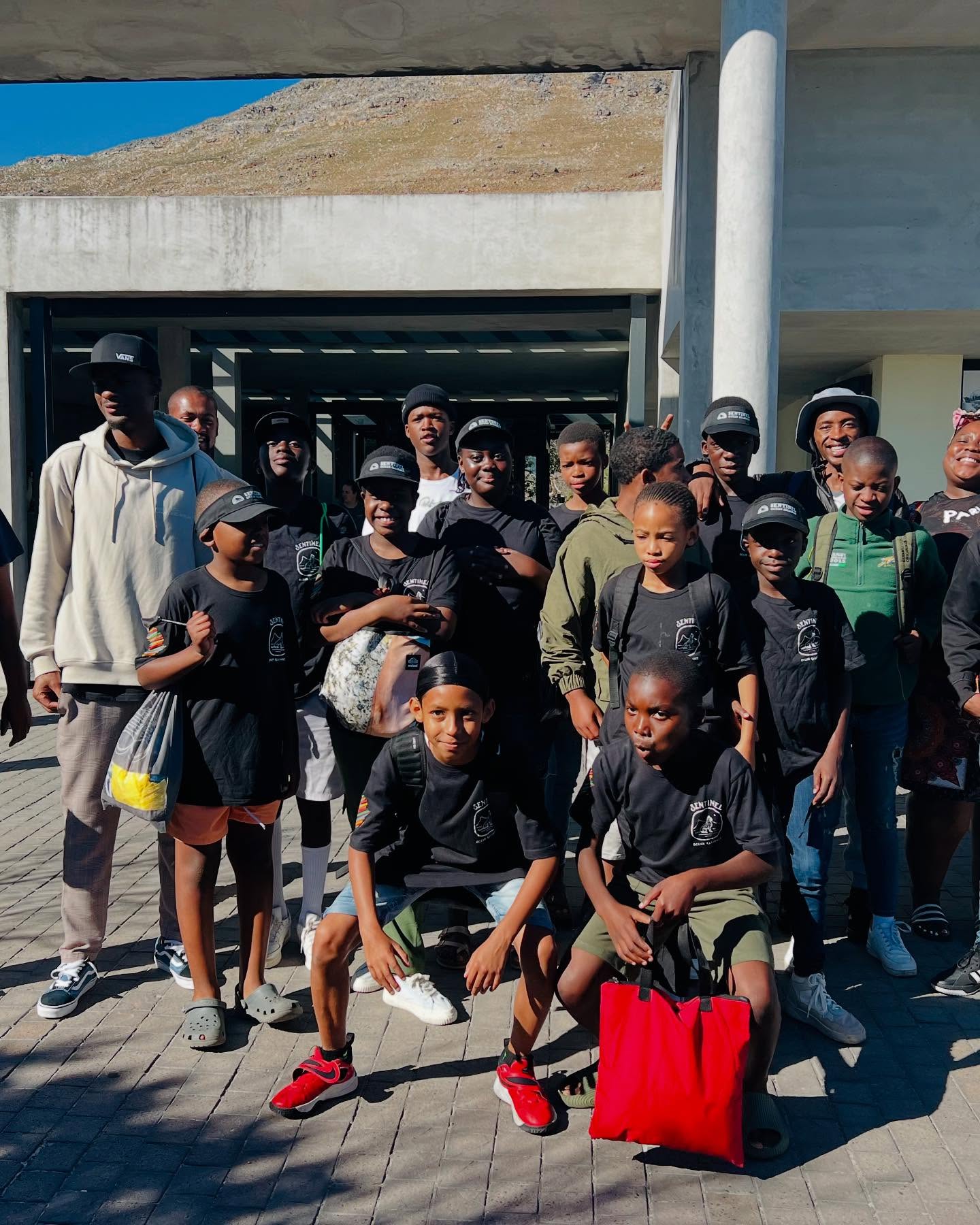
The Ocean Pledge NPO, led by Diony Lalieu, gathered a group of eco warriors from Hout Bay’s Disa Primary last month at the iconic Boulders Beach San Parks nature reserve in Cape Town.

It was an honour to facilitate a workshop for these young pioneers from Disa Primary. Although they come from historically disadvantaged families, and facing or witnessing many social challenges in their communities, they have chosen to be with us today, with their monitors from Sentinel Ocean Alliance, who offer educational programmes for the children to learn about ocean conservation, and to nurture their connection to their natural environment.

Diony and I had created a programme that would satisfy their playfulness and at the same time allow them to ask some deep questions about their own relationship to their feelings about the extinction of species or overfishing, plastic pollution, etc…

To kick it off we went on an educational outing to visit the penguins in the Boulders colony in Simonstown and to be guided by a knowledgeable and passionate expert of SANCCOB, who told us how we could help the penguins avoid extinction. SANCCOB recently calculated that African Penguins, endemic to our coast in South Africa and Namibia, are threatened to go extinct by . The students got a chance to meet an inspiring conservation volunteer, as he answered all our questions about all the penguins’ behavioural facts and monitoring tools.

At the end of our tour Ocean Pledge then decided to ‘adopt’ a penguin on behalf of the kids, whereby they will provide enough funds for one individual rescue penguin to be monitored and cared for. Read more about this on SANCCOB’s page.

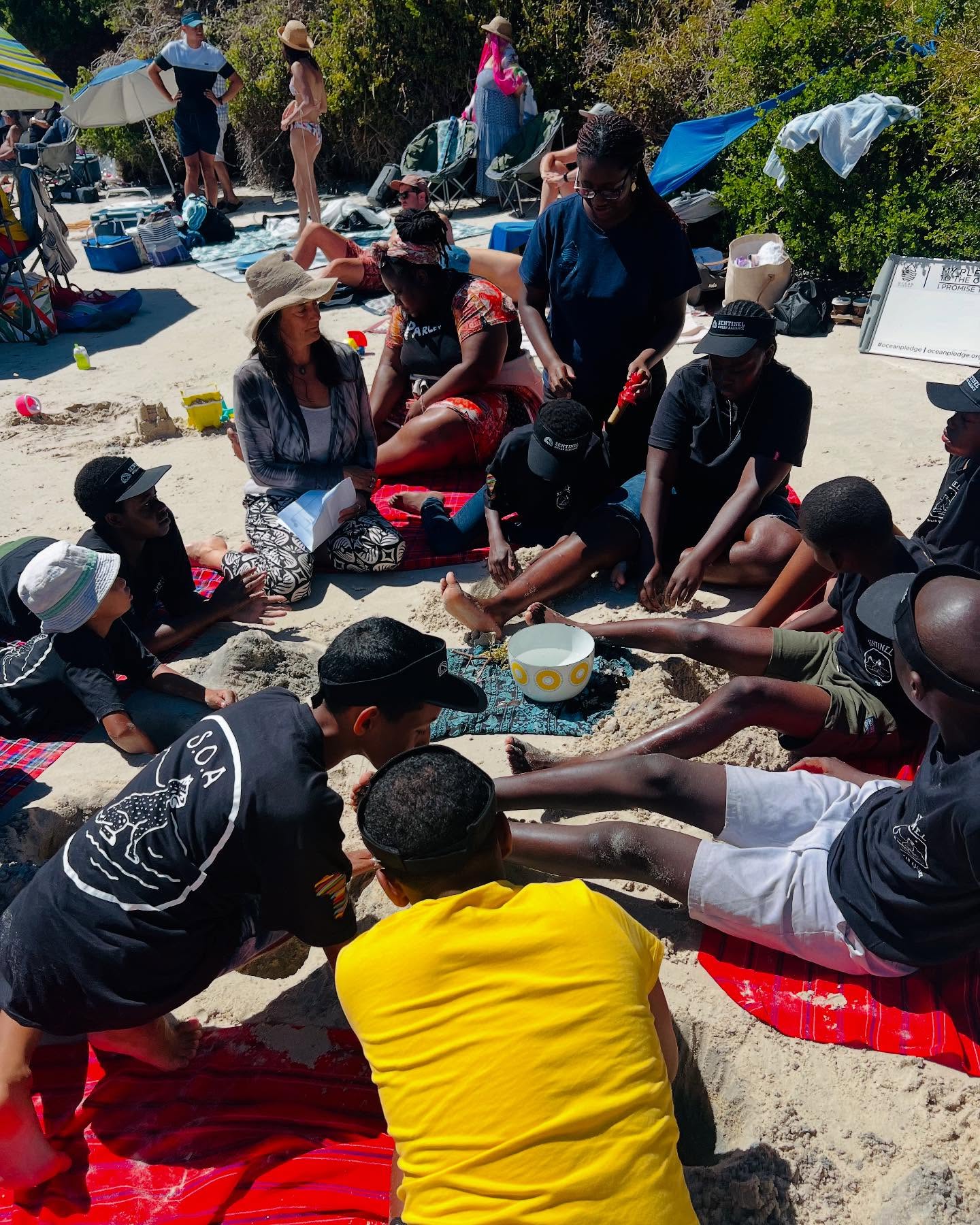
After that we went to the Boulders Beach nearby for a 60 minute workshop that we jointly facilitated, going around the spiral of the Work that Reconnects. I was impressed at the youth’s interest and capacity to focus and to open up about their feelings about our natural world. This was a highlight for me, as a facilitator of the WTR and I feel deeply grateful for this opportunity.

“In these times in which we live, our feelings of pain and inner suffering are so often undermined and even pathologised. We are told things like: ‘boys don’t cry’, to ‘pick up and carry on’, or to ‘eat a teaspoon of cement’- there is little space for tears. Daily we are overcome with messages around murders, wars, famine, injustice, devastating fires or storms, and, to deal with the barrage of destruction, some of us just switch off – feeling empty is better than feeling overwhelmed, right? Yet, the experience of this pain and suffering stems from a deep compassion and a shared connectivity with all beings. It is precisely in feeling this pain that we can release our fears so that we can make way for the desire to spark new life-sustaining realities.” This is an extract from the Chapter for Children and Teens of the book “Coming Back to Life” by Joanna Macy and Molly Young Brown.

“This deep reconnection to ourselves, our feelings and mother nature was the focus of our work today. After all, the most powerful speakers are the ones that speak from the heart ♥️“, said Diony Lalieu, director of the NPO Ocean Pledge, after our workshop on 1st February on Boulder Beach in Simonstown, Cape Town.

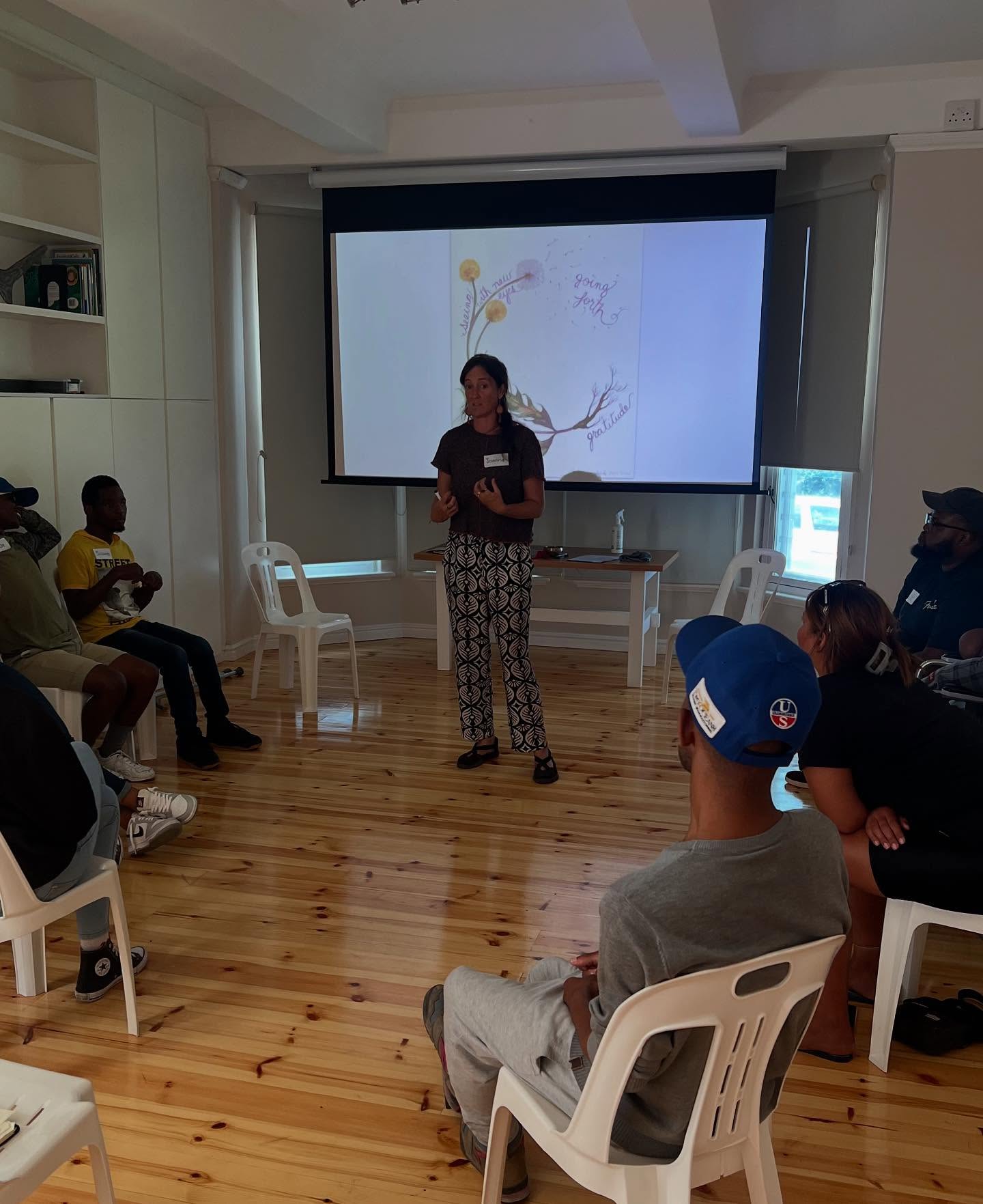
And she continues: “Based on work of deep ecologist, Joanna Macy, the students were guided through a 4-staged spiral starting with Gratitude; Honouring our Pain; Seeing the World with New Eyes and culminating in ‘Going Forth’, with an inspired vision of how we can all play our part in building back better.

“Thank you to Gaia Speaking and to our sponsors and partners for making this long-time dream come true.”They are the Sentinel Ocean Alliance and Mission Blue, in partnership with Plum Foundation, Naure Connects, the Table Mountain Fund and the Ocean Family Foundation. “

Community of Practice (CoP), Poems, Resources & Networks

Poem that Reconnects: “Please Call me by my True Names”

Don’t say that I will depart tomorrow —
even today I am still arriving.

Look deeply: every second I am arriving
to be a bud on a Spring branch,
to be a tiny bird, with still-fragile wings,
learning to sing in my new nest,
to be a caterpillar in the heart of a flower,
to be a jewel hiding itself in a stone.

I still arrive, in order to laugh and to cry,
to fear and to hope.

The rhythm of my heart is the birth and death
of all that is alive.

I am the mayfly metamorphosing
on the surface of the river.
And I am the bird
that swoops down to swallow the mayfly.

I am the frog swimming happily
in the clear water of a pond.
And I am the grass-snake
that silently feeds itself on the frog.

I am the child in Uganda, all skin and bones,
my legs as thin as bamboo sticks.
And I am the arms merchant,
selling deadly weapons to Uganda.

I am the twelve-year-old girl,
refugee on a small boat,
who throws herself into the ocean
after being raped by a sea pirate.
And I am the pirate,
my heart not yet capable
of seeing and loving.

I am a member of the politburo,
with plenty of power in my hands.
And I am the man who has to pay
his “debt of blood” to my people
dying slowly in a forced-labor camp.

My joy is like Spring, so warm
it makes flowers bloom all over the Earth.
My pain is like a river of tears,
so vast it fills the four oceans.

Please call me by my true names,
so I can hear all my cries and my laughter at once,
so I can see that my joy and pain are one.

Please call me by my true names,
so I can wake up,
and so the door of my heart
can be left open,
the door of compassion.

Thich Nhat Hanh tells the story of the poem:

After the Vietnam War, many people wrote to us in Plum Village. We received hundreds of letters each week from the refugee camps in Singapore, Malaysia, Indonesia, Thailand, and the Philippines, hundreds each week. It was very painful to read them, but we had to be in contact. We tried our best to help, but the suffering was enormous, and sometimes we were discouraged. It is said that half the boat people fleeing Vietnam died in the ocean; only half arrived at the shores of Southeast Asia.

There are many young girls, boat people, who were raped by sea pirates. Even though the United Nations and many countries tried to help the government of Thailand prevent that kind of piracy, sea pirates continued to inflict much suffering on the refugees. One day, we received a letter telling us about a young girl on a small boat who was raped by a Thai pirate.

She was only twelve, and she jumped into the ocean and drowned herself.
When you first learn of something like that, you get angry at the pirate. You naturally take the side of the girl. As you look more deeply you will see it differently. If you take the side of the little girl, then it is easy. You only have to take a gun and shoot the pirate. But we can’t do that. In my meditation, I saw that if I had been born in the village of the pirate and raised in the same conditions as he was, I would now be the pirate. There is a great likelihood that I would become a pirate. I can’t condemn myself so easily. In my meditation, I saw that many babies are born along the Gulf of Siam, hundreds every day, and if we educators, social workers, politicians, and others do not do something about the situation, in twenty-five years a number of them will become sea pirates. That is certain. If you or I were born today in those fishing villages, we might become sea pirates in twenty-five years. If you take a gun and shoot the pirate, you shoot all of us, because all of us are to some extent responsible for this state of affairs.

After a long meditation, I wrote this poem. In it, there are three people: the twelve-year-old girl, the pirate, and me. Can we look at each other and recognize ourselves in each other? The title of the poem is “Please Call Me by My True Names,” because I have so many names. When I hear one of the of these names, I have to say, “Yes.”

Note by Joanna Tomkins:

After Thay’s death, in 2022, I listened to the podcast hereunder, a conversation between Joanna Macy, founder of the Work that Reconnects and presenters of the podcast “The Way Out is In: the Zen Art of Living” Brother Phap Huu and Jo Confino. Here is the link if you want to listen too:

Articles, Resources & Networks, Work that Reconnects (WTR)

I am part of the rainforest protecting myself

By John Seed,

I am part of the rainforest protecting itself– John Seed

It may seem altruistic to protect nature. For me, it’s self-preservation.

ASSUMPTION OF A DIVIDE

If I see a strong divide between me and nature, then nature can easily be seen primarily as a source of resources, a place to put waste, and a place to occasionally enjoy. If I do something to protect nature, it’s altruistic and often a bit peripheral. It’s a nice thing to do but not terribly important.

INTERCONNECTEDNESS OF ALL LIFE

If I realize the interconnectedness of all life, then I recognize – in a more visceral way – that my own well-being and my own life is utterly and intrinsically dependent on the health and existence of the larger ecosystems and this living planet I am part of. Here, protecting nature becomes self-preservation. I am dependent on the health and vibrancy of nature locally, regionally, and globally.

I AM NATURE PROTECTING ITSELF

I can also go one step further and recognize that I am nature protecting itself. I am a part of this living evolving system protecting itself. I am a separate self, and more fundamentally I am a temporary and local expression of this larger living and evolving system. I am a temporary and local expression of the living and evolving Earth. I am a temporary and local expression of the evolving universe and all of existence.

GETTING IT MORE VISCERALLY

Getting this more viscerally is a big and important shift. It brings us more in alignment with reality. It gives grounding. It’s nourishing. It makes us less dependent on the more temporary surface experiences and situations.

SYSTEM CHANGE

And, of course, it doesn’t mean I am or need to be “perfect” in terms of my own life. I am also a child of my culture. I am also embedded in our social and cultural systems.

As all of us, I live in an economic and social system that rests on the assumption that humans are somehow separate from nature, that the resources of nature are limitless, and that the ability of nature to absorb waste is equally limitless. We live in a human-created social system where what’s easy and attractive to do is also, in most cases, destructive to nature.

And we have another option. We can create an economic and social system that take our ecological realities into account, and where what’s easy and attractive to do – for individuals and businesses – supports life and our ecosystems. It’s possible. We can do it. We even know quite a bit about how to do it.

And yet, it does require a profound transformation of our whole civilization – our worldview, philosophy, economics, energy sources, production, transportation, education, and everything else. And that requires a deep collective motivation. Will we find it? Perhaps. But likely not until we are much further into our current ecological crisis. (Which is a socal crisis since all of our human systems are embedded within our ecological systems.)

John Seed is an Australian environmentalist and director of the Rainforest Information Centre, which campaigned to save the sub-tropical rainforests of New South Wales. He is also a prominent figure in the deep ecology movement and co-creator of the Council of All Beings, and other re-earthing processes.

Community of Practice (CoP), Practices, Resources & Networks, Work that Reconnects (WTR)

Who Are You?

(60 minutes)

Practice extracted from the book Coming Back to Life

This process in pairs serves to move us beyond constricted notions of who we are and what can happen through us. Of a metaphysical bent, it was originally inspired by followers of the Hindu sage Sri Ramana Maharshi. In their enlightenment intensives, persistent inquiry helps participants to free themselves from socially constructed self-definitions and attain a realization of the inherently unlimited nature of consciousness. In our workshop the process is condensed and less ambitious. We use it to remind ourselves that we are not our social roles or skin-encapsulated egos so much as participants in a larger encompassing awareness — or the awakening consciousness of Earth.


METHOD

Each pair sits close enough together and far enough from the others to avoid distraction. The partners take turns querying each other for 30 minutes each way, without comment.
This is a strenuous mental exercise. It can produce extraordinary insights, sometimes with bursts of laughter, but it can feel relentless. It must be undertaken gently and with respect.
Here are the instructions to Partner A, which are repeated to B later:”

“Partner A, you begin by asking B, “Who are you?” You listen. You ask again, “Who are you?” Again you listen, then repeat the question, “Who are you?” Rest assured that the answers will be different. You can vary the question, if you wish, with “What are you?” but you say nothing else. This continues for about ten minutes, until I ring the bell.
Remember, you are not badgering your partner. You’re not suggesting that his responses are wrong; you’re helping him go deeper. You are in service to your partner. The tempo and tonality of your questions will vary; you’ll know intuitively when to ask again quickly and when to pause in silence. Now before you begin, bow to your partner — and to the essential mystery at the core of this being.
After the first ten-minute bell, give the next instruction:

Now shift to a second question, “What do you do?” For the next ten minutes, you listen to those answers and keep repeating the query, “What do you do?” You can also phrase it, “What happens through you?”
After ringing the bell, give the third instruction:”

“Please revert now to the first question, “Who (or what) are you?”
Partner A bows to B once more when the cycle of questions is over. As the partners change roles, let them stand and stretch, without talking. Then repeat the process with B querying A.
At the end of the entire practice, which takes an hour, allow plenty of time for people to digest what has happened for them. They may want to journal or talk quietly with their partners. Then, if there is time, bring them back together in the large group so that they reflect on the process.”