


by Joanna Tomkins
COMING FROM GRATITUDE
Breathing in, I know I am breathing in.
Breathing out, I know I am breathing out.
Breathing in, I notice my in breath has become deeper.
Breathing out, I notice that my out-breath has become slower….
Thich Nhat Hanh
HONOURING OUR PAIN FOR THE WORLD
In recent years, societies worldwide have faced unprecedented challenges—economic upheavals, political crises, and environmental disasters, and the heightened awareness of these through fast-speed internet. These crises have deepened a growing division between ideologies and communities. The roots of this divide are complex and its impact on resilience—the ability of societies to withstand and recover from sudden change—is profound. When people become entrenched in ideological or social oppositions, their ability to collaborate and find common ground weakens, making it harder to respond effectively to crises. With the acceleration of the Great Unravelling, which we perceive everyday in our lives, as division within ourselves, and separation from our collective Web of Life, we know that it is time now to find unity, if we want to have any chance of moving through this Great Turning in a good way.

This fragmentation is not a new phenomenon. Some trace its epicentre back to the bloody era of pre-industrial Western colonial and religious territorial invasions, cultural annihilation and societal plunder in the XVth and XVIth Century. Soon after, the scientific introduction of the predominant concept of Cartesian Split, generated originally by René Descartes, reinforced a worldview that separates mind from body, reason from emotion, human from nature, individual from collective, soul from reality, right from left, etc, etc. Most will agree that that era was most terrorific and machiavellic in terms of unravelling of moral values. Thereafter ensue four centuries that lead us to now this disastrous and compelling threshold for humanity; and this is infinitesimal in the wider view of Deep Time – which sees humans arriving on Earth less than a minute ago. And yes, indeed, many saints and great leaders proceeded these times and others have blossomed like lotus from mud throughout human history. We follow in the footsteps of these wise men, relearning the wisdom of pre-colonial Bodhisattvas.

Modern formal education reinforces these mental divisions through rigid structures that prioritise competition over collaboration. Standardised testing, hierarchical grading systems, and strict disciplinary measures condition students to equate self-worth with performance and single mindedness. Instead of being encouraged to explore different perspectives and develop emotional intelligence, children are often taught to seek external validation and fear failure. The system rewards obedience rather than curiosity, fear rather than love, creating individuals who hesitate to question authority, challenge assumptions, or engage in nuanced discussions. A student who learns that disagreement leads to punishment rather than understanding will later struggle to accept perspectives different from their own.
The consequences of societal fracturing are vast in our established institutions too. Political division makes cooperation on critical issues—such as overpopulation, mass production overshoot, lack of integral healthcare, disregard of human rights and the rights of our planet —nearly impossible, as factions focus more on defeating each other than solving problems. Cultural and social globalisation together with fragmentation erodes the fabric of local communities too, making collective action more difficult. Community resilience—our ability to support one another through crises—relies on strong social bonds. However, when divisions grows, following this detrimental programming, the willingness to collaborate diminishes when it is most needed, leaving societies vulnerable in times of uncertainty.
SEEING WITH NEW AND ANCIENT EYES
To rebuild resilience, we can actively cultivate the qualities that transcend social division. These values are not abstract ideals but essential human traits that, when nurtured, have the power to transform individuals and communities. Empathy allows us to connect with others beyond ideological differences. It enables us to see the world through another’s eyes, fostering understanding and reducing hostility. To cultivate empathy, we can engage in active listening, expose ourselves to diverse perspectives, and create spaces for open, nonjudgmental dialogue, role-playing, myth and story-telling and writing, art and poetry, community gatherings and rituals, nature immersion, etc, which will all challenge us to see the world from another’s perspective.
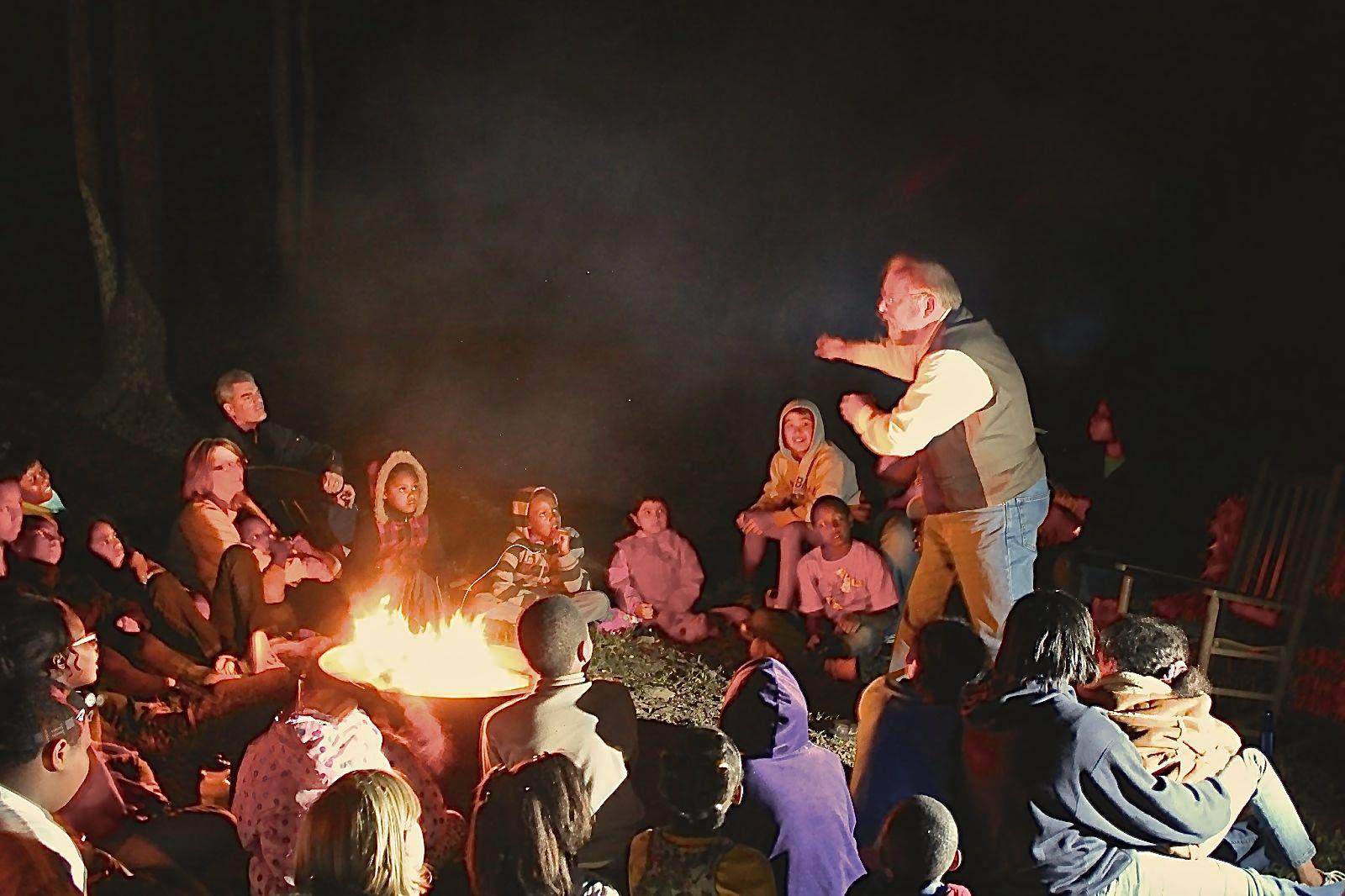
Compassion moves us to act, fostering a sense of shared responsibility that encourages people to support one another rather than compete. To reinforce compassion in society, we must create environments where acts of gratitude, kindness and service are valued as much as personal achievement. Recognising and rewarding cooperative efforts in schools, workplaces, and communities can shift the focus from individual success to collective well-being.
Adaptability is vital in an era of uncertainty. Rigid thinking leaves individuals and societies at continuous risk of collapse, whereas adaptability ensures resilience. Encouraging lifelong learning, curiosity, and openness to new experiences can help people embrace change rather than fear it. In education, fostering interdisciplinary learning—where students are exposed to different fields of knowledge and ways of thinking, beyond the rigidity of the classic classroom—can promote intellectual flexibility and innovation. I visualise a sense of excitement as we see the old unravelling and catch its threads in time to reweave them into something different, unknown, yet promising.
A society divided by ideological entrenchment struggles to work together in times of crisis. Strengthening collaboration means prioritising shared goals over individual or ideological victories. This requires a shift in how communities function, promoting cooperative projects, dialogue-based decision-making, and inclusive leadership. Encouraging collective problem-solving in schools, workplaces, and governance fosters a culture where people learn to work together despite differences.

How can we encourage education to shift away from rigid curricula and move toward fostering open-mindedness, emotional intelligence, and dialogue? Many educational initiatives, in particular small community based schools or extracurricular programmes so encourage critical thinking, teaching students not just to absorb information but to analyse and question it. Life skills such as emotional intelligence, a basic requirement for psychological and integrative health and thriving, could be integrated in formal education too, helping young people develop self-awareness, empathy, and conflict-resolution skills. By shifting from a system based on individualism, isolation and fear of failure to one that encourages exploration, trust and cooperation, we can raise generations better equipped to navigate the differences that we inevitably face in these times of radical shift rather than watch them fall victim to ideological entrenchment again, repeating the destructive cycles of our past.
GOING FORTH
I’m sure you perceived its tingling as you read these paragraphs that call us to Go Forth, for you will indeed notice that perhaps the most powerful force in sustaining resilience is hope. In times of crisis, hope gives us the strength to carry on, to envision a better future, and to find meaning in struggle. Hope is not passive optimism but an active commitment to creating positive change. To cultivate Active Hope, societies can nurture creativity, celebrate progress (however small), and build narratives that emphasise possibility and a sense of individual and collective purpose. By showcasing stories of resilience, reconciliation, and innovation, instead of doom and negativity, we reinforce the belief that healing is possible. We all know the limitless power of our beliefs when we put them into action and the exponential power that comes from doing that as a group. acting on behalf of our world.
The “Great Unraveling” threatens to divide humanity when we fight for survival, yet our resilience depends on choosing unity over separation. By strengthening our ability to listen, understand, and collaborate we can prepare for the challenges ahead. Going Forth in the “Great Turning” requires transcending the ignorant divisions of the past and the patriarcal competition enabled by our current Industrial Growth Society and embracing our collective responsibility to foster understanding, connection, and shared humanity. In doing so, we do not merely survive the future—we shape it.

 Gaia Speaking