


By Chris Johnstone , in Active Hope
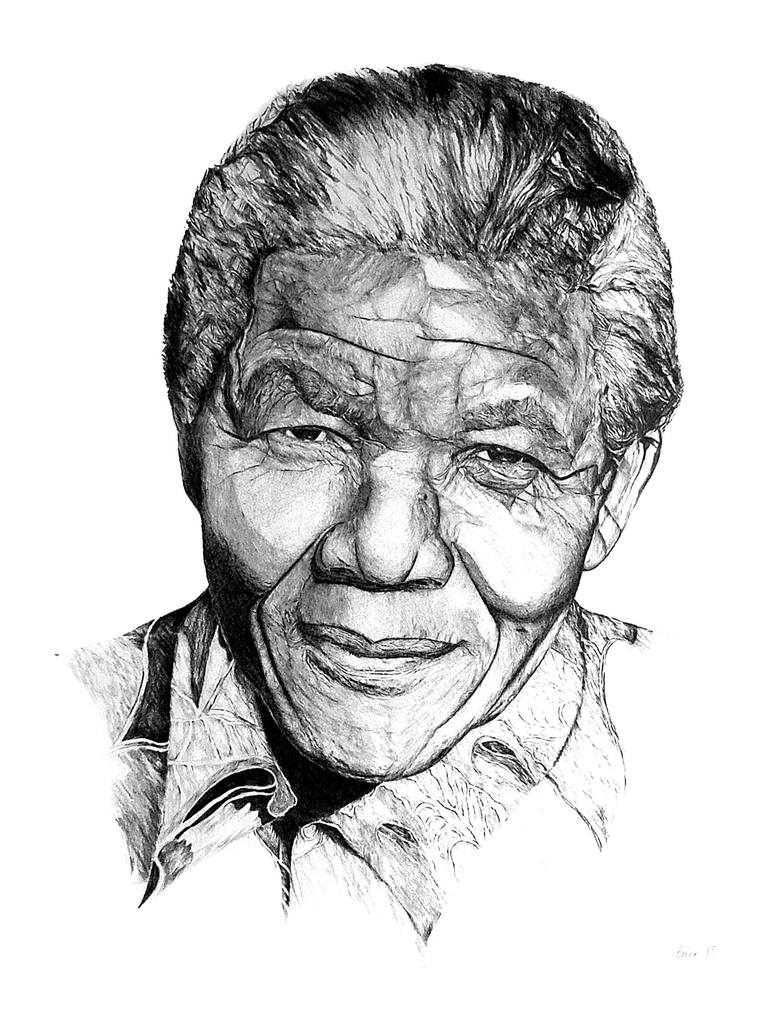
As in South Africa we celebrate Mandela Day on 18th July, we commemorate not only a powerful leader but a symbol of collaborative power. I wanted to include a few words about Madiba on our website and I remembered the references to Mandela that Chris Johnstone and Joanna Macy have quoted in their book Active Hope to illustrate the following…
A NEW STORY OF POWER
The word power comes from the Latin possere, meaning “to be able.” The kind of power we will now focus on is not about dominating others but about being able to address the mess we’re in. Rather than being based on how much stuff or status we have, this view of power is rooted in insights and practices, in strengths and relationships, in compassion and connection with the web of life.
One person who has embraced the collaborative model of power is Nelson Mandela. In the early 1980s, the apartheid government of South Africa had a highly trained army with advanced weaponry and nuclear missiles. Mandela, representing the African National Congress (ANC), had been in prison for more then twenty years. While many feared it might take a civil war to end it, apartheid didn’t end because of victory in battle. Rather, the transformation came about through discussion and agreement. For that process to start, it needed, as Mandela put it, “jaw, jaw, jaw, not war, war, war.” In his autobiography, Long Walk to Freedom, he describes coming to a decision to move this process forward while in solitary confinement:
My solitude gave me a certain liberty, and I resolved to use it to do something I had been pondering for a long time: begin discussions with the government. This would be extremely sensitive. Both sides regarded discussions as a sign of weakness and betrayal. Neither would come to the table until the other made significant concessions…. Someone from our side needed to take the first step.
When we respond to a situation in a way that promotes healing and transformation, we are expressing power. Mandela’s contributions to establishing a multiracial democracy in South Africa offer a wonderfully inspiring example.
Because Mandela didn’t have the authorization of the ANC’s organizing committee, beginning talks with the enemy could have been seen as betrayal or as selling out. Taking this first step for peace took courage, determination, and foresight. Inner strengths like these are often thought of as things some people just have and others don’t. These qualities, however, are linked to skills we can develop and practices we can learn. Thinking of courage and determination as things we do rather than things we have helps us to develop these qualities. They emerge out of our engagement with actual situations and the dynamics that arise from our interactions. This approach is relational, and we call it power-with.
1 + 1 = 2 AND A BIT
The discussions Mandela undertook were effective because both sides recognized that they stood to lose by going to war and that they would gain by finding a way to peace. They moved from a win-lose model of conflict to one aiming for a win-win outcome. The alternative to negotiations was likely to be a war in which both sides lost.
Power-with is based on synergy, where two or more parties working together bring results that would not have occurred if they had worked alone. Because something new and different emerges out of the interaction, we can think of it as “1 + 1 = 2 and a bit.” This is another way of saying “the whole is more than the sum of the parts.”
Emergence and synergy lie right at the heart of power-with. They generate new possibilities and capacities, adding a mystery element that means we can never be certain how a situation will go just from looking at the elements within it. We can know the strength of copper and of tin yet still be surprised by how much stronger bronze is, which comes from mixing the two together. The same thing can happen when we interact with others for a shared purpose.
D. H. Lawrence wrote:
Water is H20,
Hydrogen two parts
Oxygen one
But there is also a third thing that makes it water
And nobody knows what that is.
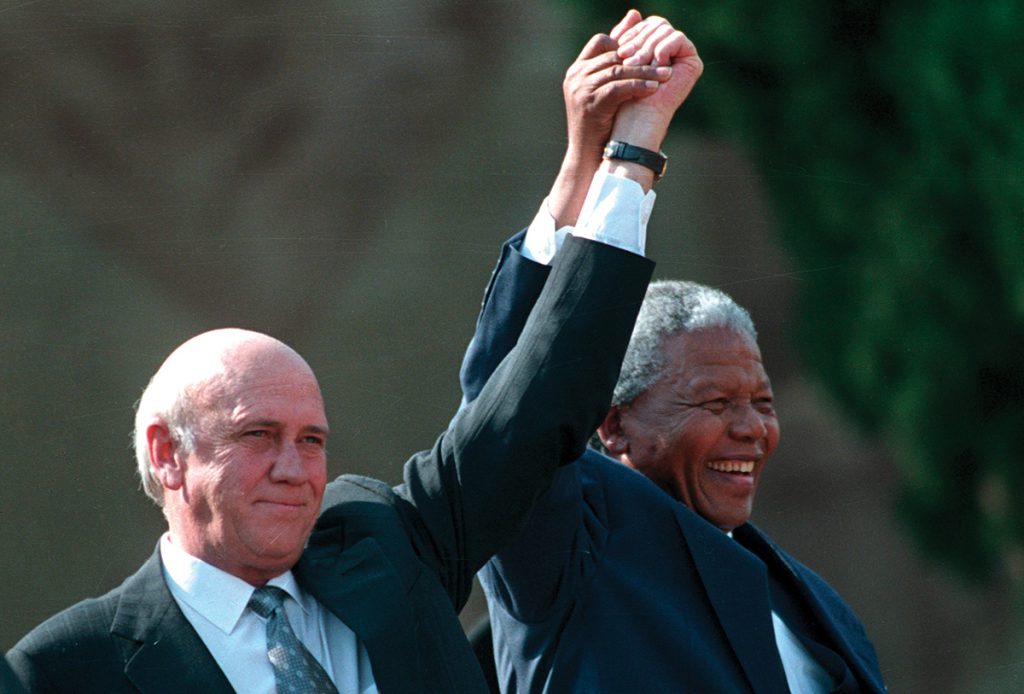
One place we can experience synergy is in conversation. If both sides have the courage and willingness to explore new ground, talking and listening to one another can open a creative space from which new possibilities emerge. That’s what happened in the negotiations between Mandela and F. W. de Klerk, the South African president at the time. This unlikely duo jointly won the Nobel Peace Prize in 1993 for their extraordinary feat of navigating toward a peaceful settlement.
EMERGENCE
While the conversations between Mandela and de Klerk played a pivotal role in bringing apartheid to an end, this historic change wouldn’t have happened without a much larger context of support. Within South Africa, people risked their lives daily to engage in the struggle for change. Around the world, millions of people played supporting roles by joining boycotts and campaigns. If we focus only on each separate activity, it is easy to dismiss it by thinking, “That won’t do much.” To see the power of a step, we need to ask, “What is it part of?” An action that might seem inconsequential by itself adds to and interacts with other actions in ways that contribute to a much bigger picture of change.
Remember our example of the newspaper photograph? When seen under a magnifying glass it appears as just a collection of tiny dots, but when, from a little distance, we see the photo as a whole, the larger pattern comes into view. In a similar fashion, a bigger picture of change emerges out of the many tiny dots of separate actions and choices. This link between small steps and big changes opens up our power in an entirely new way. Each individual step doesn’t have to make a big impact on its own — because we can understand that the benefit of an action may not be visible at the level at which that action is taken.

Shared visions, values, and purposes flow through and between people. Nelson Mandela was deeply committed to a vision for his country that many were holding; the power of that vision moved through him and was transmitted to others. This type of power can’t be hoarded or held back by prison walls; it is like a kind of electricity that lights us up inside and inspires those around us. When a vision moves through us, it becomes expressed in what we do, how we are, and what we say. The alignment of these three creates a whole that is more than the sum of its parts. The words below, from Mandela’s defense at his trial in the 1960s, mean so much more because of the actions that followed them:
During my lifetime I have dedicated myself to this struggle of the African people. I have fought against white domination and I have fought against black domination. I have cherished the ideal of a democratic and free society in which all persons live together in harmony and with equal opportunities. It is an ideal which I hope to live for and to achieve. But if needs be, it is an ideal for which I am prepared to die.
THE POWER OF EMERGENCE
The concept of power-with contains hidden depths; so far we’ve described four aspects. First, there is the power of inner strengths drawn from us when we engage with challenges and rise to the occasion. Second, there is the power arising out of cooperation with others. Third, there is the subtle power of small steps whose impact only becomes evident when we step back and see the larger picture they contribute to. And last, there is the energizing power of an inspiring vision that moves through and strengthens us when we act for a purpose bigger than ourselves. All these are products of synergy and emergence; they come about when different elements interact to become a whole that is more than the sum of its parts.
At every level, from atoms and molecules to cells, organs, and organisms, complex wholes arise bringing new capacities into existence. At each level, the whole acts through its parts to achieve more than we could ever imagine from examining the parts alone. So what new capacities emerge when groups of people act together to form larger complex social systems?
Our technologically advanced society has achieved wonders our ancestors could never have envisioned. We’ve put people on the moon, decoded DNA, and cured diseases. The problem is this collective level of power is also destroying our world. Countless seemingly innocent activities and choices are acting together to bring about the sixth mass extinction in our planet’s history.
Seeing with new eyes, we recognize that we’re not separate individuals in our own little bubbles but connected parts in a much larger story. A question that helps us develop this wider view is “What is happening through me?” Is the sixth mass extinction happening through us as a result of our habits, choices, and actions? By recognizing the ways we contribute to the unraveling of our world, we identify choice points at which we can turn toward its healing. The question “How could the Great Turning happen through me?” invites a different story to flow through us. This type of power happens through our choices, through what we say and do and are.”
For more information on the author Chris Johnstone, please read here

 Gaia Speaking