


By Alex May – Earth Jurisprudence to Defend the Rights of Nature
Hereunder is an extract from an essay by British author Alex May, which explains how the writing of new biocentric laws is instrumental in the Great Turning.
Reviewing our jurisprudence means studying and rewriting the principles on which our laws concerning the rights of Nature are based. These Gaian Practices are crucial for the regeneration and rewilding of our planet. On the one hand, Holding Actions denouncing crimes against other-than-human beings will achieve stronger arguments and rally wider groups of population if they are backed by official laws. And, on the other hand this regulatory approach to the rights of Nature will have a snowball effect on prescription and adoption of new laws across all areas of our capitalistic societies, and this will eventually have a incremental impact on the global Shift in Consciousness, therefore affecting all Three Dimensions of the Work that Reconnects.
Atomised
We know that radical change is needed to avoid catastrophe, and it is vital that we think about this in terms of system change. Relying on each person to doing their bit, in a political framework based on individual responsibility, has failed, and we must change the systems that we all act within.
For the most part, we know what sort of change is required in terms of social change, political change and economic change, with reports, targets, frameworks and new systemic approaches proposed. But law as a system has been, for the most part, overlooked.
Our law should shift to looking at relationships, such as between humans and their ecosystems, instead of just being about individual rights and rights-claims.
Our legal system is an interwoven part of our society and our economy. It structures human activity and social relations, and it affects how we understand the ourselves and the world.
For example, the way law focuses on individual rights reproduces our individualistic conception of society and the way we think of freedom as individual entitlement without responsibility. Yet despite this role law plays, it has mostly faded into the background, seen as a neutral and technical social system instead of a powerful influence in our way of life that itself must be changed.

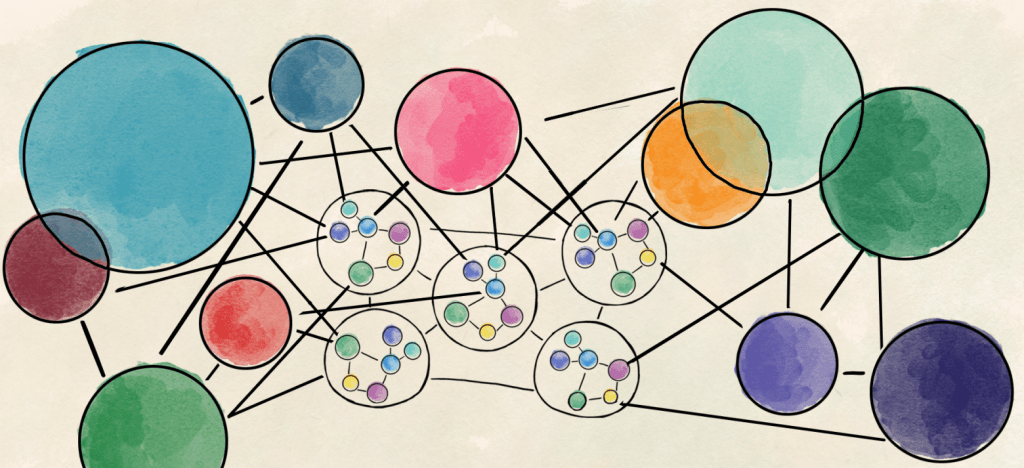
Humans are interconnected with each other and with the natural world. Yet our society, economic models and legal systems do not recognise this, seeing us instead as atomised individuals.
Harmonious
In our legal systems, individual (and corporate) rights are the primary building block, and when we think about freedom, it is individual freedom that we think about. This is mistaken: in our interconnected world, individuals live in a dense network of relations and relationships. Society is not an aggregation of individuals, but a dense, interwoven web.
Our legal system is based in this flawed individualistic model, seeing us as separate from each other and from the natural world. Instead, it must shift to a paradigm based on interconnection, recognising and working to change the network of relationships we live in.
The network of relationships which make up our society can be empowering and sustaining, or they can be harmful and destructive. They can create conditions of freedom and allow us to live fulfilling and sustainable lives, or they can smother, abuse and exploit us. Law, as part of this, can be used to oppress people or to liberate them.
Once we recognise this, we should see that law’s role should be to transform this web of relationships – social, economic and ecological relationships – from harmful to harmonious.
To be clear, the argument is not that law should be used to influence these relationships, and nor is it that law is the only way we should do this.
Life
Instead, the point is that law already influences all sorts of relationships in society, and that our legal system itself must be transformed as part of the broader social and political change that is needed.
Earth Jurisprudence points to the way that the relationship between humans and the rest of Nature is currently mediated by law. In our legal systems, nature features chiefly as property which can be owned, dominated and plundered by human owners.
Individuals and corporate actors are free to destroy ecosystems and cause ecological harm in their search of profit. Environmental law is secondary, almost an afterthought. Instead, protecting Nature should be the norm, not the exception, and sustainability should be a core principle across our entire legal system.

Earth Jurisprudence proposes a transformation of legal systems to address this: to make Nature an equal part of our legal system by granting it rights. This would give Nature the ability to protect itself, via human intermediaries.
Recognising Nature’s rights in our legal system would also help us to see nature as valuable in its own right, instead of just as a resource for us to use. It would also embed in our culture the idea that we are part of a community of life on this Earth, instead of that our environment is some ‘other’ which we are separate from and more important than.
Personhood
Legal transformation has been mostly overlooked in the last decade, with one exception: the idea of ecocide.
The Stop Ecocide campaign seeks to make the destruction of nature an international crime. This call has been picked up by the Extinction Rebellion movement and mentioned by youth climate strikers as part of the change they call for. Making ecocide a crime is certainly welcome, but the transformation that our legal system needs is far bigger, and it is a shame that ideas like Rights of Nature have not yet received broader recognition.
Legal rights of nature have been introduced in some places around the world. They are recognised in Ecuador’s constitution, and have entered the court in legals challenges seeking to protect nature reserves from mining permits.
In New Zealand, a particular river system was given legal personhood, and in Colombia and India courts have developed rights for particular ecosystems.
Transform
Rights of Nature is only one part of the transformation of law that we need. The idea of interconnection can be the core of this framework, helping us to see the broader shift that is needed.
Our law should shift to looking at relationships, such as between humans and their ecosystems, instead of just being about individual rights and rights-claims. It has the potential to help change how we relate to each other, seeing ourselves collectively instead of individually.
We could also see the role of law as being about transforming the network of relationships that make up our society, instead of being about protecting individual right and individual freedoms. In this view, law could be used to transform social relations which are unjust or exploitative to being just, harmonious and empowering.
About the Author
Alex May is the founder of the Interconnected Law Project which seeks to develop and share ideas about law and ultimately transform our legal systems.
Interconnected Law is an approach to law based on interconnection, care, nurture, community and love.
With Gratitude to Alex May for this sharing for our blog and for the clarity of other students of nature’s jurisprudence around the world.
I also recommend reading the Bioneers website for more information on the Rights of Nature: https://bioneers.org/earthlings/

 Gaia Speaking