
By Joanna Tomkins
Today we took yet another ‘combi’, this time from Chinchero, our last stop in Peru, where my kids and I have spent 5 weeks, during our visit to South America.
I feel my heart breaking during the ride. It’s not a bad feeling at all, it’s a feeling of openness, a sensitivity around the heart. I will miss these trips in public transport. These trips in public. It’s been very useful for me to speak Spanish, but I know that the warmth of these intimate connections of people on the go, together, would have melted any language barrier.
A very old man, with a cane, hails the bus.
‘Necesita ayuda’, he needs help, a lady says from behind. One lady bends over to open the door, I bend over to help him up by his other blackened hand, immediately enveloped by the scents of boiled corn cobs and infinite layers of wood smoke. I remember entering a Himba hut. He asks me if we are at ‘la terminal’ a few times and I help to prop him up when he slips on the seat in the abrupt Andean bends in the road. He sips on the ‘chicha morada’ (black corn fermented drink) he brought for the ride in an ancient 20cl Inka Cola bottle, reused time and time again.
‘Gracias Mamita!’… He trusts me like his daughter. When we all get off in Cusco he can’t find his money, and remembers he forgot to remember his other bag. ‘Pago para los cuatro’ I say as my kids slip out from the front row, where they had found two free seats. It seems natural to all. And we drift off in between the busy Saturday market stalls.
I wonder if he remembers where he is going. I wonder who will help him find his way home today. I wonder when he lost his wife. I wonder who will take care of him, when his eyesight and his memory get worse, yet I know there will be care for him, for there is community.
Nowadays, my heart breaks open in a similar way when it feels sorrow and when it feels joy. Sorrow feels like gladness when there exists a non dual sense of greatness that binds them both together. That I have felt strongly here in the Andean mountains and the creases of the Sacred Valley: the greatness of the mountains, revered for their divinity, named Apus. And how men can ‘move mountains’ when led by a vast and sacred sense of purpose. This purpose was driven for the Incas by their trust in their kings and leaders, trust in their elders, trust in the nature gods, and trust in themselves. I quote Robert Bly, whose book ‘Iron John’ I took on travel: ‘The inner King is the one in us who knows what we want to do for the rest of our lives, or the rest of the month, or the rest of the day.’
Each stone in the Incan temples in Peru is a masterpiece. Some of them weigh several tons (one in the Sacsayhuaman -pronounce ‘sexy woman’- weighs 125 tons!) and have been quarried several kilometres away. It is a miracle of human will power that we can admire here today. The Spanish used these works of art as convenient bricks for their monotheist humancentric churches, with the added excuse of ‘extirping idolatry’ from the minds and hearts of the invaded. But they could not move the greater of the stones!

Some of the original Incan pieces have up to 20 different angles that are adjusted without mortar to the next stones, forming a mosaic that not only is creatively diverse in its assembly but also has the perfect structure to resist the earthquakes that the dramatic Pachamama bestows upon this region every few decades. Archaeological prowess is everywhere: in the exact inclination of each temple wall, the drainage of each terrace, the elaboration of door hinges and jambs so that each element collaborates with the others to defy the tricks of gods.
What I have felt all around in the communities that inhabit the Andes is a great sense of belonging, deeper than the Western scattered, individual pursuit of purposefulness. What wisdom the atrocious conquests tried to eradicate is still alive with roots as deep as the mountains are high. Quechuan sounds powerful, indigenous rhythms transpire in the music…, there is no legacy from Spain that has not been blended and sublimed with Incan heritage, more ancient, seeped with spirit, hence more coherent.
And what makes more sense than to revere the nature gods, Inti/Sun the highest of all? And what is more kingly than to present them with the gift of a lifetime of labour? These walls were not built for oneself, for one’s own, they were built for the generations to come, for the Empire, for the Sun itself. Imagine how many lives communed to place each Intipuntu/Sun gate in the exact position where Sun can kiss through it at the exact hour that honours Him?
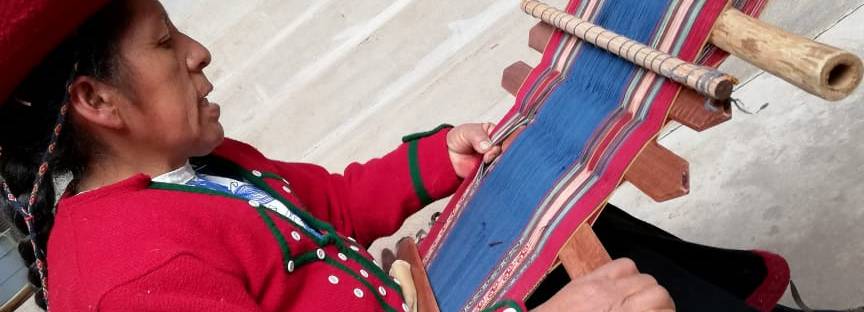
Yesterday we watched Mama Sonia weave, the inner King in her thumbs knowing which string to move next, which colour to represent her tribe, which shape to represent her land. The tradition of weaving withholds the passing of time in the communities of Chinchero, young women still queuing to learn from the elders the traditional ways, fully aware of the privilege of their culture.

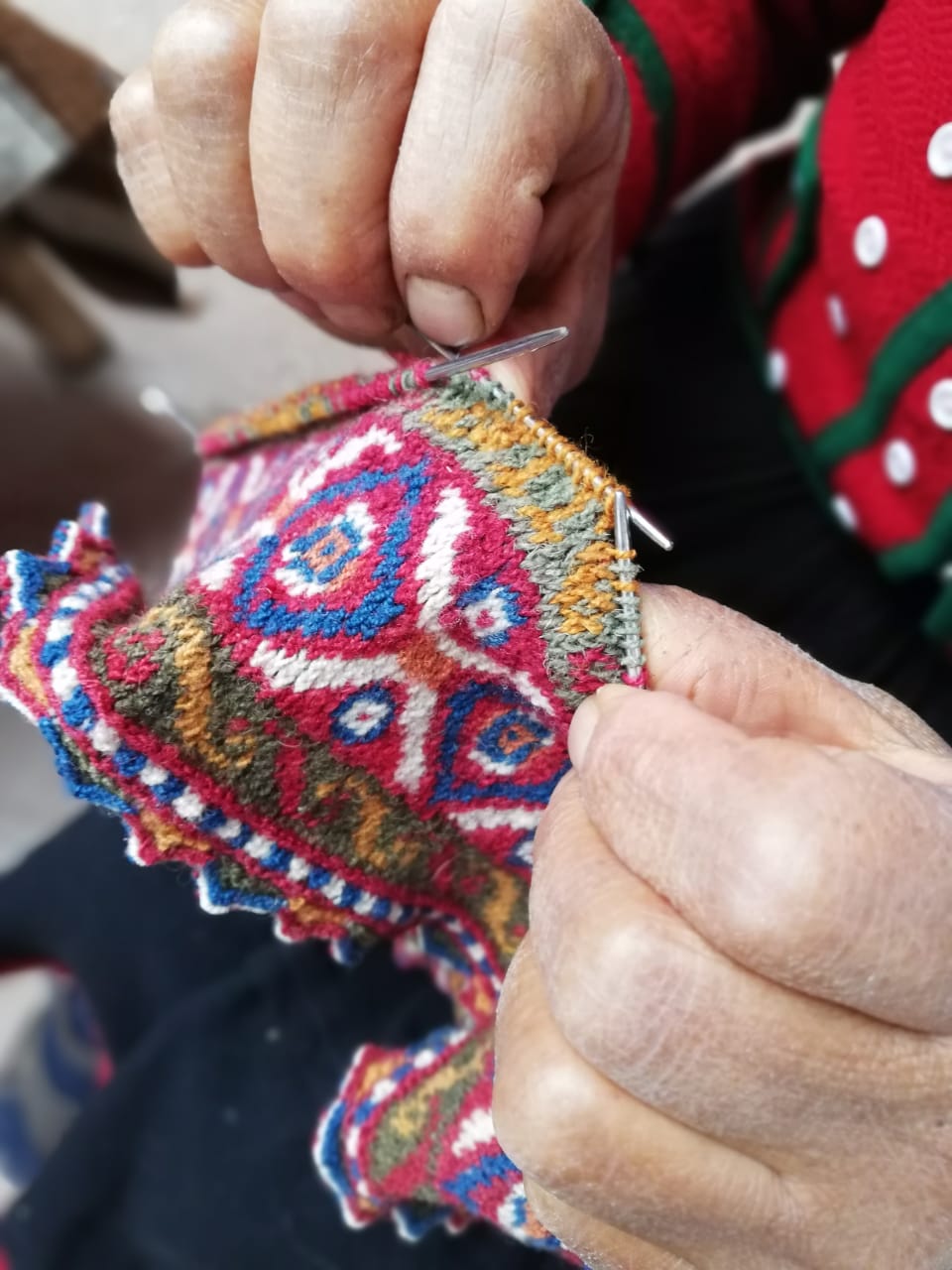


In different ways, this witnessing breaks my heart.
The heart that breaks open can contain the whole universe.
A Quote by Joanna Macy

 Gaia Speaking